Flightsim.to
    Back to Radar
    Latest Devlogs

    All Devlogs

    The latest devlog updates from every Radar project, in one place.

    Devlog from
    LOWW - Vienna International Airport - Reboot
    Gaya Simulations
    Gaya SimulationsAnnouncement
    LOWW is almost ready!

    We’ve been quiet, but Vienna has been keeping us busy.

    At Gaya, quality comes before quantity. We’re adding those final details, polishing every corner and optimizing. A LOT.
    Our release campaign and date announcement are coming very soon. That tiny game called GTA might have a little influence on our timing too. 😉

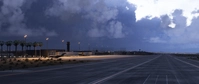
    Meanwhile, we couldn’t leave you empty-handed. Enjoy these fresh screenshots showing just how close we are!

    💬 Come be part of our Discord community! Share your flights, meet fellow simmers and follow what’s coming next.
    👉 https://discord.gg/pdcYTR73Zc

    Devlog from
    Carenado Dornier Do 228-200
    Carenado
    CarenadoAnnouncement
    More seats, more connections!

    The DO228-200 is the stretched version of the DO228, featuring a longer fuselage and greater passenger capacity than the model 100—and the most widely produced variant of the family.

    A regional airline favorite, it combines excellent short-field performance with the ability to connect remote communities. Coming soon to MSFS2024 with regional airline liveries and optional Aspen Avionics!

    Already own the DO228-100? Add the 200 at a low upgrade price, or get both models together at a special bundle price!

    Devlog from
    FlyingIron Simulations Spitfire V2
    FlyingIron Simulations
    Eight Ways to Fly a Spitfire

    G'day Pilots!

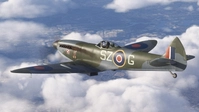
    The Spitfire V2 comes with eight variants across three different marks of Spitfire, so here's a quick rundown of what you'll be getting, along with a little of the history behind each one.

    The Mk.IX

    When the Fw 190 turned up over France in late 1941, it completely outclassed the Spitfire Mk.V. The proper answer was the redesigned Mk.VIII, but that was still most of a year away, so as a stopgap the new two-stage Merlin 61 was fitted to a lightly modified Mk.V airframe. The result was around 40 mph faster at height, and the 'stopgap' stayed competitive right through to the end of the war.

    Our Mk.IX is the LF version with the Merlin 66, which was by far the most common, and it comes in four versions:

    • Mk.IXc: the C wing with two 20mm Hispano cannon & four .303 Brownings, the rounded rudder and a hand wobble pump in the cockpit
    • Mk.IXe: the later E wing, with two .50 cal Brownings in place of the .303s, and the broad-chord rudder
    • Clipped wing versions of both. Clipping the wingtips took around 4 feet off the span, giving a faster roll rate and a little more speed down low at the cost of climb and high-altitude performance. You can expect to feel the difference in the sim of course, as we have taken full advantage of MSFS 2024's modular aircraft design system to ensure that the clipped wing variants have their own unique flight model.

    The Mk.VIII

    The Mk.VIII was the Spitfire designed from the start for the two-stage Merlin, with a strengthened fuselage, retractable tailwheel, broad rudder and a 14 gallon fuel tank in each wing leading edge. By the time it was ready the Mk.IX was already in full production, so the Mk.VIII was sent overseas instead and served almost entirely in the Mediterranean, Burma and the Pacific. Australia ordered 410 of them, with the first arriving in 1943 for the defence of Darwin, so of course this one is a bit special for us!

    In the sim, the Mk.VIII has its own cockpit layout, the wing tanks with their fuel transfer system, and a tailwheel that retracts with the gear. It's also the only variant fitted with a Standard Beam Approach receiver. For those that don't know, this was a wartime blind approach aid; tune it to a runway's ILS frequency and you'll hear dots on one side of the beam, dashes on the other and a steady note when you're on the centreline. There's no glideslope and no needles to follow, so you'll be flying the whole approach by ear!

    The Mk.XVI

    The Mk.XVI is essentially a Mk.IX with a Packard Merlin 266, which is a Merlin 66 built under licence in Detroit. The airframes came off the same production line, but because the engine spares weren't interchangeable, the Packard-engined aircraft were given their own mark number. You can pick one out by the slightly more bulged upper cowling.

    Ours is the late-war version, with the E wing, the cut-down rear fuselage & bubble canopy, two rear fuselage fuel tanks and the gyro gunsight. It comes with both standard and clipped wings.

    The Floatplane

    A Spitfire floatplane was tried three times during the war. The last and fastest was a single Mk.IX, MJ892, converted in 1944 for the Pacific and usually quoted at around 377 mph, the fastest floatplane fighter ever flown. It never flew an operational sortie, but we couldn't leave it out! Our Mk.IXc Floats has the twin floats, enlarged fin and water rudders, and it means you can fly from the lakes, fjords and harbours of MSFS 2024.

    Loadouts

    Each variant can be set up how you like from the EFB. The Spitfire can carry a 30, 45 or 90 gallon slipper tank, or you can hang a 500 lb bomb under the fuselage and a 250 lb bomb under each wing (or swap a wing bomb for a barrel of beer!). You can also fit or remove the seat armour, wartime radio and oxygen, and fuel each tank individually. Everything you fit shows on the aircraft and is included in the weight & balance, realistically altering the flight models behaviour. We've taken full advantage of MSFS 2024's flight modelling tools and then some; going as far as adding custom drag models for loadout choices.

    Oh, did we mention that the guns & bombs are fully functional? More on that later!

    Cheers!
    FlyingIron Simulations

    Devlog from
    U-2 Spyplane
    Miltech Simulations
    Releasing on Friday, November 13th.

    U2 Spyplane for Microsoft Flight Simulator 2024

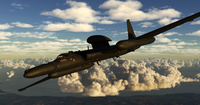
    Fly the U2S, the high-altitude reconnaissance aircraft that first flew in 1955 and is still in service today. Cruise above 70,000 ft with the ASARS-2 radar, the SYERS-2A camera and the optical bar film camera, and land on bicycle gear with the chase car calling your height in the flare. Some claim it is the hardest airplane in the world to fly.

    Includes RAF Akrotiri, RAF Fairford and 1960s-era Groom Lake, plus seven missions for Miltech Mission Hub. The U2R and NASA’s ER2 follow as a free update.

    📅 Release: 13 November 2026
    🖥️ MSFS 2024 only
    🛒 MiltechSimulations.com and iniBuilds store. Microsoft Marketplace soon after.

    Trailer Video by David Ames

    Devlog from
    Project MAX CT-114 / CL-41
    Project MAX
    Project MAXAnnouncement
    Project MAX CT-114 / CL-41G Announcement

    Hi everyone!

    A few months ago, I released my CASA C212-200 for Microsoft Flight Simulator 2020 and 2024, now available across several marketplaces. More information can be found at https://projectmax.store/.

    But before that, we'd like to share a quick announcement about another project currently in development.

    During the development of the C212, I realised that I'd eventually need to become more familiar with the MSFS 2024 SDK, particularly Modular Aircraft and its newer features. With that in mind, I started working on the Canadair CT-114 Tutor back in July as a side project and an opportunity to explore these technologies and establish a new development workflow.

    Progress has been somewhat slower over the past few months due to ongoing C212 updates and work on its native MSFS 2024 version. However, with the CT-114 approaching its final scheduled public appearance with the Canadian Forces Snowbirds in Calgary on November 15, we thought this would be a fitting opportunity to share the project and celebrate the legacy of this iconic aircraft.

    Most of the exterior modelling is being outsourced, allowing me to focus on the cockpit, instruments, and aircraft systems while continuing to work on the C212.

    So far, most cockpit instruments are functional, and the fuel, hydraulic, and engine combustion systems have been implemented using real-world technical documentation and manuals as references.

    Just like our C212-200, the CT-114 will also support Project MAX Missions directly through its onboard EFB. This will allow us to introduce more aircraft-specific mission experiences, including airshow demonstrations and other activities suited to the Tutor's role and capabilities.

    I'm also looking to connect with former CT-114 pilots, aircraft mechanics, or anyone with real-world experience operating or maintaining the aircraft. Any information or insight would be greatly appreciated!

    That's all we can share for now. We'll post more screenshots and development updates as the project progresses.

    Thanks for following our work, and have a wonderful November!

    Devlog from
    SkyHigh Network
    The SkyHigh Network
    SkyPilot Is Finally Released!

    Its time..

    The SkyHigh Staff Team is officially proud to announce that the wait is over. After months of development, starting as a small group of aviation enthusiasts with a vision to create something different, we are finally ready to share our work with a selected number of members of the public. That being, you, our Alpha Testers!

    The Alpha Release will finally be in your hands on November 2nd, 2026.

    And yes, we know what you're thinking. It's only taken us approximately a lifetime to get here. Between development, testing, fixing things that were supposedly already fixed, and the occasional "it'll be ready soon", we're sure the phrase has lost all meaning by now. But we're here, and this time, there's an actual date.

    What to expect?

    The SkyHigh Alpha is your first opportunity to experience what we've been building behind the scenes. From our dedicated Pilot Client to integrated flight planning and essential networking features, this release marks the beginning of SkyHigh's journey towards becoming The Network of the Future.

    The Alpha will give selected testers the opportunity to explore our current features, put the client through its paces, and help us identify issues before future releases. As this is an early stage of development, not everything will be perfect, and there may be bugs, unexpected behaviour, or the occasional moment where SkyHigh decides it needs a flight plan of its own.

    A message from the team

    We want to thank everyone who has followed SkyHigh, supported the project, and put up with our development updates along the way. What started as a small idea among aviation enthusiasts has grown into something we're genuinely excited to share.

    We know the journey has been longer than expected, and we appreciate the patience you've shown us. We've still got a long way to go, but this is an important first step, and we're excited to finally take it with you.

    So, get your simulators ready, prepare those flight plans, and make sure your radios are tuned.

    November 2nd is the day SkyHigh takes its first steps into the public eye.

    And don't worry, we'll try not to delay the next announcement until 2028.

    Devlog from
    BlueBird Simulations Boeing 757
    BlueBird Simulations
    The BlueBird Simulations 757 Is Here

    We have been waiting to write this sentence for a very long time, and honestly it still doesn’t feel real. Thank you for being here for it. Version 1.0 is live, the BlueBird Simulations 757 is available and you can fly it right now.

    A Personal Note From The Team

    We want to say this plainly, because it matters more than anything else in this post.

    Thank you.

    We started this project back in 2021. Along the way the scope of what we were building changed completely, and the aircraft was overhauled from the ground up, more than once. It has been stressful, it has been exhausting, and there were plenty of days we weren’t sure how we would get it over the line.

    That includes the final stretch. We are releasing a day later than we planned, and we have learned a lot from this release. We are only human, and we’re sorry for the wait.

    What kept us going was you. We never expected the support and the kind words the community has shown the 757. Every comment, every message, every bit of encouragement, and every bit of patience when a date moved meant far more to us than you probably realize. Truly, it makes our world.

    We would not be here without you. From the bottom of all of our hearts, thank you, all of you.

    Looking back at where we started and where we are standing today is overwhelming. We are finally crossing the finish line, and we couldn’t be prouder to do it with this community beside us.

    — Everyone at BlueBird Simulations


    What You’re Getting

    The 757 was built around one idea: systems shouldn’t just be checked off a list, they should behave like the real aircraft and react to each other. A few of the things we’re proudest of:

    • A flight management computer built from the ground up. LNAV and VNAV follow authentic airliner lateral and vertical path logic, with SimBrief integration to load your flight plan straight into the FMC.
    • 200+ working circuit breakers. Every breaker is tied to its bus, so pulling one cascades exactly the way it should.
    • Failures, from day one. Engine, hydraulic, electrical, pneumatic, and avionics failures are built into the systems simulation. When something goes wrong, you work the problem.
    • Authentic CRT displays and flight deck. Phosphor glow, scan lines, and instruments that behave like the real equipment.
    • Two engine options. Choose between the Rolls-Royce RB211 and the Pratt & Whitney PW2000, each with its own performance and sound character.
    • Wwise 3D audio. Fully spatialized sound, inside and outside the aircraft.

    How To Get It

    The 757-200 is $80.00 plus applicable taxes, and you can now get it directly from us on the 757 page.

    A BlueBird Simulations account is required no matter where you purchase. You will need to create one to activate your copy, and everything, including your Nest download, lives in your account Dashboard.

    Caption: Short final in the evening light.


    The 757-300 Is Coming

    The 757-200 is the variant released today. The 757-300 is in development and will be a free update for all 757 owners. It will be available on the native MSFS 2024 version only.


    We’re Not Going Anywhere

    Releasing the 757 is the start, not the end. We will be constantly improving it, with fixes, refinements, and new features long after launch.

    We want to be honest with you: with thousands of simmers flying every imaginable route, hardware setup, and peripheral, issues will surface that we didn’t catch in testing. When they do, we want to hear about it. The team is standing by, and we will keep working to track down and patch whatever comes up.

    If you run into something:


    What’s Next

    We are also now working on the 757-300 and the 757F (freighter). There will be much more to share on both of those later on, so stay tuned.

    Thank you again for taking this journey with us. Now go fly the 757.

    — The BlueBird Simulations Team

    Devlog from
    Vector Boeing 787-9
    Vector Simulations
    Development Update 3

    On February 26, we announced the VECTOR 787-9. Nearly eight months later, we are now on final approach, deep into internal Beta and entering the final stages of development, with less than three months to touchdown.

    Our focus has always been systems depth at what we call schematic level: not simply reproducing what a system does, but how it actually works, communicates and behaves. Just like the real aircraft, down to page and synoptic loading times, the way information is drawn onto the displays, response times, fonts, symbology and display behaviour.

    But that philosophy does not stop at the systems. Ultimately, everything comes together in how the aircraft actually flies, moves and feels. The sense of mass, inertia, control response, taxi behaviour, energy management, approach, flare and touchdown are just as important to us as anything happening behind the screens.

    A 787 has to feel like a 787, not simply perform like one on paper.

    This update is about showing you where the aircraft really is today. We’ll go deeper into the systems, flight dynamics, art, sound, performance, testing and final refinement work now underway, with a focus on the details that define the VECTOR 787 as we move through the final stage of development.

    You’ll also find a lot of new screenshots throughout the update, so we strongly recommend opening them full screen and, if your display supports it, viewing them in HDR.

    And one important note about the images: no ReShade, custom shaders or DLSS 5 were used for any of the screenshots. What you’re seeing is the aircraft captured in a completely standard simulator environment.

    As we get closer to release, the frequency of our official updates will increase significantly, and we’ll make sure to keep you much closer to the development.

    As you already know we are going to release the entire 787 series while the 787-9 comes first, followed by the 787-10 and 787-8

    If this is your first VECTOR update, join us on Discord and follow the development with us: https://discord.gg/znEdjAQ8HM

    Also come and talk about the development update on our forums at: https://forum.vector-sim.com/topic/40-vector-boeing-787-9-development-update-3-8102026/

    Without wasting any time, let’s dive into the details…

    Development Status

    This update touches almost every aspect of the aircraft: systems, flight dynamics, performance, art and modelling, animations, sound, lighting, Look Development, testing and optimization. It is not a short update, but then again, this project has always been about depth.

    We are not going to walk through every individual system simply because the list is far too long. Everything in the VECTOR 787 has been built from the ground up, based on our own research, architecture, logic, modelling and implementation.

    We expect to reach Content Complete next week, meaning all planned aircraft content and functionality will be in place. At that point, the focus shifts almost entirely to polish, fine-tuning, optimization, validation, testing, flying, testing again and flying again.

    In parallel, work continues on the broader product experience, including documentation, tutorials, onboarding material and other supporting content designed to make the VECTOR 787 as complete and accessible as possible from day one.

    Systems

    The Alpha phase is complete, and we are now deep into internal Beta testing. At this stage, the core aircraft systems are operational and being refined as one interconnected machine. Among many others, this includes the electrical system, hydraulics, fuel system, Airport Moving Map (AMM), Weather Radar, Terrain Radar, TCAS, checklists, maintenance environment and synoptics, all of which are now in place and undergoing final validation.

    Increasingly, the focus is on system interaction and edge-case behaviour: how electrical availability affects downstream systems and load shedding, how hydraulic states influence aircraft configuration, how fuel logic responds through different phases of flight, and how all of that information is presented back to the crew through the displays, synoptics, EICAS alerts and maintenance pages.

    At this point, our schematic-level approach becomes especially important. We are not only checking that each system works independently, but that the aircraft behaves correctly when those systems interact with, depend on, influence and respond to one another.

    Beyond the underlying logic, equal attention is being given to how the aircraft communicates that logic to the crew: response times, page transitions, synoptic drawing times, fonts, symbology, display behaviour and even the small delays present in the real aircraft.

    One good example is the Airport Moving Map, which uses Boeing-style symbology and is designed to operate across airports worldwide, whether you are parked at a highly detailed third-party airport or a generic airport from the simulator.

    Another is the Weather Radar, which is fully integrated into the aircraft and works as expected whether you are using the simulator’s default weather system or a third-party weather add-on. Terrain and TCAS are similarly deeply integrated into the wider aircraft environment rather than treated as isolated display features.

    Boeing Built-In EFB

    The Boeing built-in EFB deserves a little more attention because it is not simply another display. It is a complete aircraft system in its own right.

    By modern standards, it is a relatively old piece of technology, but that is also part of what makes it so authentic and, frankly, pretty cool to use. Instead of modernising or simplifying it, we chose to reproduce the unit as it actually exists in the aircraft.

    Our implementation was built from the ground up, using the original technical documentation for the real EFB as the foundation for its structure, workflows, logic and behaviour, supported by extensive day-to-day validation on the real unit together with our team members and exceptional technical advisors.

    In total, the system currently includes 53 pages, covering a wide range of functions such as takeoff and performance calculations, aircraft configuration, warnings and recommendations, charts, navigation tools and other flight-planning aids.

    Some of its characteristics may feel unusual compared with modern tablets, and that is entirely intentional. The enroute map, for example, runs at a relatively low visual resolution, exactly as it does in the real aircraft. Certain pages take time to load, some transitions are not instantaneous, and different functions respond at their own pace.

    Those limitations are part of the real system, so they are part of ours too.

    We are not trying to improve Boeing’s EFB. We are reproducing the one that is actually there.

    As with many of the aircraft’s other systems and features, the EFB will also receive its own dedicated video tutorial and documentation, giving users a much deeper look at how it works and how to use it properly.


    Continue reading the full post on the Vector Website: https://vector-sim.com/dev-update-3/

    0
    Devlog from
    OEAB - Abha International Airport
    Vertex Design Studio
    Abha is looming on the horizon

    PROJECT UPDATE

    After obtaining the official airport master plan, we made the decision to completely rebuild the project from the ground up to ensure the highest level of accuracy and quality.

    Since then, we have been working extensively to restore and improve our previous progress, covering every aspect of the project from detailed modeling and texturing, optimizing LODs, with a strong focus on achieving the best possible balance between visual quality and simulator performance.

    After a long and challenging development phase, we are now approaching the final stages of this phase. Only a few remaining adjustments and technical workarounds are left before we move forward to the next stage of development.

    Thank you for your continued patience and support. More updates will be coming soon. ✈️🔥

    Devlog from
    BlueBird Simulations Boeing 757
    BlueBird Simulations
    Official Release Date Announcement

    Hello everyone,

    Today we are officially announcing the release date for the BlueBird Simulations 757. The aircraft will launch on October 23, 2026.

    We want to be straightforward with you: moving past our original Q3 target is obviously not what we had hoped for. We know how eagerly everyone has been anticipating this aircraft, and no one wants to see this bird in your hangars more than our team does.

    To provide full transparency, here is where things stand and why we’ve locked in this date.


    The Aircraft vs. The Backend

    The 757 itself is mostly ready for release. The systems, flight dynamics, soundsets, and avionics suites are receiving final touches. However, building an aircraft of this scale is only half the battle.

    Because this is our very first product release, standing up our initial infrastructure has taken longer than anticipated. Setting up reliable activation services, delivery networks, web portals, and server capacity to support thousands of simultaneous downloads on day one is a massive undertaking. We want to ensure that when launch day arrives, the download, installation, and licensing process is seamless and stable for everyone.


    FS2024 Compatibility & SU7 Beta

    With the recent arrival of Sim Update 7 Beta for Microsoft Flight Simulator 2024, a few quirks have appeared. We will be actively ironing these out leading into release to ensure solid compatibility across the platform until our fully native FS2024 version is ready and rolled out.

    Addressing these platform behaviors now ensures a dependable baseline experience while development on the native edition continues in parallel.


    Setting Realistic Expectations on Day One

    We want to be upfront about the realities of software launches. As much as we strive for a completely flawless launch day, history shows that delivering a complex, high-fidelity airliner 100% bug-free is nearly impossible.

    We have poured an incredible amount of work into performance optimization and hunting down critical issues internally. However, a testing pool of dozens simply cannot replicate the sheer scale of thousands of simmers flying across every imaginable hardware configuration, flight route, and peripheral setup. Minor bugs are bound to surface once the aircraft is out in the wild.

    Please rest assured: we will be on our absolute A-game right out of the gate. Our team will be standing by post-launch to rapidly track, address, and patch any issues that pop up as the community puts the 757 through its paces.


    Lessons Learned and Moving Forward

    This entire journey has been a tremendous learning experience for our team. We recognize the challenges that come with project timelines, and we will be changing how we approach announcements and release targets for future projects going forward.

    We genuinely appreciate the vast majority of the community who have stood by us, offered constructive feedback, and shared their excitement throughout this process. Your enthusiasm keeps us motivated through these final, demanding hurdles.

    The finish line is in sight. Mark your calendars for October 23, 2026—we cannot wait to finally hand over the keys to the 757.

    In the meantime, feel free to join our Discord server for the latest previews and operational updates as we count down to launch day.

    — The BlueBird Simulations Team

    Devlog from
    SkyHigh Network
    The SkyHigh Network
    SkyHigh Q&A Pre-Alpha Release Session

    Thank you for everyone who participated in the SkyHigh Q&A Session this Friday! If you missed it, there is absolutely nothing to worry about because you can watch it as many times as you wish because it is now available on all of our main social media platforms including YouTube.

    All the information you would possibly want about the ins and outs of the Network can be found in there. You can also get some sneak peeks at the Network and maybe learn our planned release date!

    Finally, it is never too late to become an Alpha Tester as there is still plenty of places left. As an Alpha Tester, not only will you be the first ones to get access to the Network once it releases, but you also get access to weekly updates from the team with plenty of previews to get you in the loop! Anyways, you can apply here: https://forms.gle/heGxJoZ8xgr2xgpW9.

    Also, join our Discord: https://discord.com/invite/5y7y26nuUk

    Thank you, and have a nice week!

    The SkyHigh Team

    Devlog from
    iniBuilds Airbus A380
    iniBuilds
    iniBuildsAnnouncement
    Landing Next Week

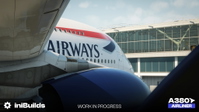
    The time is almost here… the iniBuilds A380 Airliner will be landing next week on the Microsoft Flight Simulator Marketplace! Get ready to experience the worlds largest airliner like never before in MSFS2024!

    Devlog from
    GCHI - El Hierro Airport
    iniBuilds
    iniBuildsReleased
    Welcome to El Hierro Airport (GCHI)! ✈️

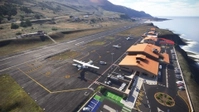
    Today, we’re delighted to officially release iniBuilds El Hierro Airport (GCHI) for Microsoft Flight Simulator 2024!

    Located on the rugged northeastern coast of El Hierro, GCHI serves as the principal air gateway to the smallest and westernmost of the Canary Islands. Surrounded by the Atlantic Ocean, dramatic volcanic terrain and steep coastal cliffs, the airport offers a truly distinctive island setting. Its exposed location, changing winds and scenic approaches make El Hierro a memorable destination for every virtual pilot.

    Available now for £9.99 (excl. VAT): https://inibuilds.com/products/inibuilds-el-hierro-gchi-msfs-2024

    Devlog from
    A2A Accu-Sim Legacy RG550
    A2A Simulations
    A2A Simulations: Legacy RG550 Development Update

    Another week means another mini preview of the upcoming Accu-Sim Legacy RG550!

    This week we are taking a look at the artwork behind the aircraft, with a little insight from our 3D lead for the project, Michal Puto, better known to us here at A2A as Mike P. Mike is a genuine artist both at the computer and away from it.

    "All of the artwork for our Lancair Legacy has been created entirely in house. We have used a mixture of photogrammetry, 3D scanning, good old fashioned 3D modelling and digital sculpting, with Scott’s own Lancair Legacy providing the inspiration and real aircraft reference throughout the project.

    The leatherwork inside the cockpit is a great example of the detail involved. Every leather part was hand sculpted in ZBrush before being baked onto the optimised low poly mesh used in the simulator. The textures were then created using Substance Painter and the Affinity Suite."

    There is an enormous amount of work behind even the smallest details you see inside the cockpit, but it all helps us recreate the character of the real aircraft as faithfully as possible.

    Beta testing continues behind the scenes, and we hope you enjoy this week’s little look at the art behind the Accu-Sim Legacy RG550!

    Showing 1 - 18 of 81 results