

Description
This is a repaint for the payware FlyingIron Simulations Messerschmitt Bf 109G-6 'Gustav'. This repaint depicts the restored original Bf 109G-2/Trop WkNr. 10639 'Black 6' as it looks today, displayed at Royal Air Force Museum Cosford (aka RAF Museum Midlands). This aircraft was restored to flight by active and retired members of the RAF from 1972 to 1991, and was flown from 1991 until 1997, then based at Imperial War Museum Duxford, registered as G-USTV - one of the absolute stars of the 1990s airshow circuit. (Note, this repaint contains historical tail markings as well as an optional "censored" tail marking replacement texture.)
History:
Bf 109G-2/Trop WkNr. 10639 was manufactured in September 1942 by Erla Maschinenwerk GmbH in Leipzig, Germany. It began construction as a Bf 109F-3 variant but was converted to Bf 109G-2/Trop standard during production. The 109 was delivered to the Luftwaffe on October 13, 1942 with factory fuselage code letters PG+QJ. It was soon collected by fighter unit III./JG77 at München-Riem airfield and flown to Bari, Italy, via Vicenza, Jesi and Foggia. At Bari, the factory code letters were removed and the identy 'Black 6' applied. After a multi-day journey with stops in Athens, Tobruk and El Harun, Lybia, on November 2nd the aircraft arrived at Bir El Abd landing ground, Lybia. From this date it's believed that the aircraft was flown by 21-year-old Russian front veteran Heinz Lüdemann of 8/JG77. Lüdemann's normal aircraft, 'Black 4', had been damaged the previous day and was unserviceable. The aircraft's only combat action took place on November 4th when Lüdemann flew 'Black 6' from Bir el Abd to Quotifaiya and took off for an operational sortie to attack an Allied bomber force consisting of South African Air Force Douglas Bostons escorted by USAAF Curtiss P-40s. During the attack, Lüdemann was hit by machine gun fire from the escorting P-40s but, despite injuries to his head and body, managed to return safely back to base. The 109 was immediately ferried by an unknown pilot to Gambut Main airfield near Tobruk for repairs (Lüdemann was later killed when he was shot down in aerial combat with the RAF Desert Air Force on March 10, 1943). Due to the Allied advance in North Africa, the Germans were forced to abandon Gambut on November 11th, leaving all unserviceable equipment behind, including 'Black 6'. Flight Lt. Ken McRae, Engineer Officer of No 3 Sqdn. Royal Australian Air Force, discovered the abandoned 109 on November 13th, and reported that it had been "shot up", with damage to the tailwheel, tail plane, canopy and one propeller blade. The radio and oxygen equipment were found to be unserviceable, and the gun sight, armament and some instruments were also missing (likely intentionally done by the retreating Germans). Sqdn. Leader R.H. "Bobby" Gibbes, RAAF No 3 Sqdn. Commander, estimated that the aircraft had no more than 10 hours total flight time when found. Using parts from nearby wrecks, including Bf 109F WkNr. 9678, a new tailplane, tailwheel and canopy were soon fitted and the hole in the propeller was plugged. In addition to the German crosses being painted over with roundels, Sqdn. Leader Gibbes' personal code letters CV-V were also applied to the fuselage. On November 15th, Gibbes flew the 109 to Gazala Satellite II airfield, escorted by two P-40 Kittyhawks (ET899 and AK626), and a few days later took the aircraft to Martuba No.4 airfield, escorted by four P-40 Kittyhawks (ET899, AK626, ET951 and FL323). Gibbes wrote in his diary, "the 109 is a hell of a nice kite with terrific performance. On lowest permissible boost and revs it was clocking 220-230 mph." At this time, Gibbes planned on sending the 109 back to Australia as a war trophy, and allegedly even slept beneath the aircraft when first 'acquired' in order to prevent pilfering by other units. However, being the first G-model 109 captured by the Allies, the Royal Air Force soon ordered that it was to be officially flight tested for full evaluation. Following AOC instructions, Gibbes flew the 109 to Heliopolis in Cairo, Egypt on December 2nd, via Martuba, El Adam, Mersa Matruh, and Amiyra, Cairo. On the last leg, taking off from Amiyra, the canopy flew off, hitting the starboard wing. At Heliopolis, RAAF No 451 Sqdn. worked on repairs to the 109, and on December 15th, Group Capt. Mungo Buxton flew the 109 to Lydda, Palestine. At Lydda, Buxton flew the 109 through a series of flight tests from late December until the end of January 1943, checking airspeeds, rate of climb and maneuverability. During these tests, Buxton stated that it was a very good performer and was better than anything they had in the RAF at the time. In February '43, the 109 was ferried to No 107 Maintenance Unit at Kasfereet, near Shandur, Egypt, by Wing Cdr. Budd for tactical trials. It was flown only a few more times at Kasfereet before it was crated up and transported from North Africa to the UK.
Assigned RAF serial number RN228, the 109 arrived with RAF No 1426 Enemy Aircraft Flight at RAF Collyweston, Lincolnshire, on December 26, 1943. The badly-crated fighter was discovered to have been damaged during its long transport, and parts from another captured Bf 109G-2/Trop, WkNr. 10533, were used to replace all damaged or missing parts, including the entire port wing. By February 1944, the aircraft was operational again, now painted in RAF camouflage and with serial number RN228 applied on the rear fuselage. Over the next month the 109 was flown in numerous trial flights against British fighters, including Hawker Tempest V (JN737), Mustang Mk.III (FZ107), Spitfire Mk.IXs (BS552 clipped wing and JL359 standard wing), Spitfire Mk.XIV (RB141), and a Royal Navy Seafire III, Corsair and Hellcat. Then in late March, with the trial flights completed, the 109 began a 6-month flying demonstration tour around RAF and USAAF bases, sometimes accompanied by a captured Fw 190, Bf 110 and Ju 88. During the tour, a wing tip had to be replaced following a minor takeoff accident and, later, following an engine failure-induced forced landing, its DB 605A engine was replaced with another unit sourced from the Middle East. The demonstration flights lasted until late September 1944, and in October the 109 was flown back to Collyweston. The 109 made what would be its last flight for the next 46 years on March 27, 1945, when Flying Officer Doug Gough (one of the pilots that flew the 109 on tour) flew the aircraft from Collyweston to RAF Tangmere, where it was tansfered to the Enemy Aircraft Flight of the Central Fighter Establishment. After a year being parked at Tangmere, the 109 was inspected by the Ministry of Defence Air Historical Branch in March 1946, which noted the 109's condition and had it transferred to No 47 Maintenance Unit at Sealand where it was packed up for museum storage.
The Bf 109 was one of several wartime aircraft saved by the Air Historical Branch that were then displayed for the public on special occasions, such as the Horse Guards Parade in 1949 and 1954, and at RAF Hendon for Battle of Britain Day in 1956. During this time it was painted in an inaccurate brown/green/grey scheme with duck-egg green undersurfaces. In 1960, the 109 was moved to RAF Wattisham in Suffolk, and placed on display. In 1962, an ill-planned attempt was made by a team led by Flight Lt. J.R. Hawke to restore the 109 to fly, who figured they could have the 109 flying in six-months time. Among other things, the plan was to fly the 109 with both undercarriage legs bolted down with a bar between them, and the original German instruments and panel were discarded in favor of a basic panel fitted with British instruments. Ultimately, after a few months the RAF put a halt to the restoration and the aircraft was reassembled and painted in Northern European theatre markings as 'White 14'. From there it was once again displayed at a few public events through the 1960s, later repainted as 'Yellow 14'."
In September 1972, two Hercules aircraft transported the 109 from Wattisham to RAF Lynham. There, a small team led by RAF Flight Lt. Russ Snadden, experienced in preserving World War II aircraft, set out to properly restore the Bf 109. The top priority was to restore the German fighter as accurately as possible and, if it were to be found in good-enough condition, restore it to fly. By this point, the 109 was quite gutted internally from years of parts being removed and lost, the engine was in a bad state with missing bolts, pipes were bent and broken, fairings made of cardboard, and one undercarriage leg no longer held pressure. In 1975, the project moved to RAF Northolt, where Russ Snadden continued to lead the restoration. During this time, Rolls-Royce at Bristol offered to overhaul the aircraft's DB 605A engine, and the RAF Museum assisted by providing the missing German instruments and recovering the control surfaces. Other components needing replacement were sourced from the Finnish Air Force Museum, Swiss Air Force, and various collectors around Europe. In 1983, the on-going restoration moved once again, to RAF Benson, in Oxfordshire. There, in 1987, Rolls-Royce delivered the freshly-overhauled engine, which was soon refitted to the airframe. With the aircraft essentially complete, finished in over-all German RLM 02 primer, the 109 had its first engine run at Benson in July 1990 and it was soon placed on the British civil register as G-USTV. Following several months of fine tuning, the 109 made its first post-restoration test flight at Benson on March 17, 1991, piloted by RAF Group Capt. Reg Hallman. At the time, it was the only genuine German World War Two combat aircraft flying.
The UK's Ministry of Defence, owner of the Bf 109, created an agreement whereby the Imperial War Museum at Duxford would fly the aircraft for three years before it was to be placed on permanent static display with the RAF Museum. At Benson, the 109 was painted in its original JG77 colors, returning it to its wartime identity as 'Black 6', and it was flown to Duxford in July 1991. From Duxford, the 109 flew in various flying displays, including at Old Warden in 1992 (staging from Duxford), and at La Ferté-Alais in France in June 1993. It would also take part in a few film roles, wearing "movie paint". In August 1993, its flying was temporarily cut short when the starter dog split, due to the starter applying too much torque. This required the engine to be stripped down to fix. However, with the engine back together, a leak was found in the fuselage fuel tank which prevented the 109 from flying again until September 1994. Due to having missed an entire airshow season, its three year flying agreement was extended by a year. Then, in 1995, the flying agreement was extended a further two years to 1997. Throughout its few years of operation, the aircraft was typically flown by Dave Southwood and Charlie Brown. At the Duxford Autumn Airshow on October 12, 1997, during what was to be the aircraft's very last flight before being retired to museum display, it was significantly damaged in an attempted emergency landing resulting in the pilot overshooting the runway and ending up upside down when the extended landing gear sank into the freshly-plowed field. Fortunately the pilot, Sir John Allison, was unhurt. Following recovery, the aircraft was repaired at Duxford by the same team, led by Russ Snadden, that had restored and maintained the Bf 109. This restoration left the aircraft roughly 70% original. With the restoration completed in 2002, it was placed on display at RAF Museum Hendon for the next several years, and in 2016 the Bf 109 was moved to RAF Museum Cosford (aka RAF Museum Midlands) where it remains displayed today. This repaint depicts all of the details of the paintwork and stenciling as the aircraft looks following this most recent restoration.
Details of Repaint:
- Every effort was made to accurately recreate the paint scheme, in exacting detail, as applied on the real world restored Bf 109G-2 WkNr.10639 as it looks today.
- Colors matched to the accurate colors applied on the restored aircraft, featuring an overall Mediterranean/desert camouflage scheme of RLM 79 sand yellow on top of RLM 78 sky blue, with the lower engine cowling painted RLM 04 yellow.
- All new stencils applied across the airframe, matching the authentic stencils applied on the restored aircraft.
- Access panel for machine gun pressurization tank added on rear starboard fuselage.
- A couple details added to cockpit textures to match restoration.
Messerschmitt Bf 109G-2/Trop 'Black 6' (WkNr. 10639/ex-G-USTV)
Repaint of the historic Messerschmitt Bf 109G-2/Trop Black 6 as it appears today at RAF Museum Cosford. This add-on faithfully depicts the original aircrafts restored paint scheme and historical tail markings.Updates in version 1.1 include adjusted brightness and small corrections for accuracy.

Supporters
User Reviews
5 reviews
Version History
Added MSFS 2024 compatibility by updating the Layout.JSON file.
Related
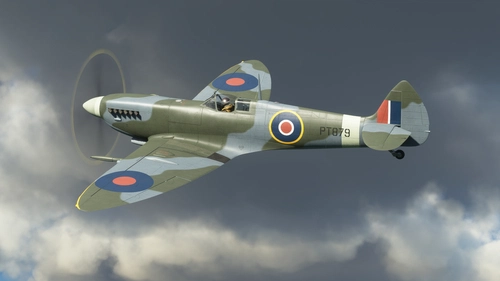
Spitfire Mk.IX PT879 Factory-Delivered (Restored)
Experience the meticulously restored Spitfire Mk.IX PT879 in its original factory-delivery paint scheme with this detailed FlyingIron Simulations repaint. This iconic aircraft served with Russia during World War Two before being recovered and painstakingly rebuilt, now flying again in all its historic glory. Enjoy enhanced PBR materials, accurate colors, and intricate details reflecting the authentic appearance of this legendary Spitfire. Created by John Terrell, this repaint captures the essence of PT879s remarkable journey and restoration process, making it a must-have for aviation enthusiasts in Microsoft Flight Simulator.
by Bomber12th
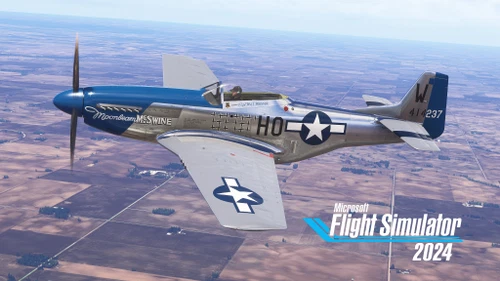
P-51D Mustang "Moonbeam McSwine" N51VL
This add-on features a high-detail repaint of the P-51D Mustang for both Microsoft Flight Simulator 2020 and 2024. It represents the restored "Moonbeam McSwine" as operated by the Warbird Heritage Foundation and later by Biggin Hill Heritage Hangar. The livery includes extensively reworked textures for accurate cockpit, landing gear, and exterior detailing. The aircraft's historical significance is captured through authentic markings from its World War II heritage and subsequent civilian history.
by Bomber12th
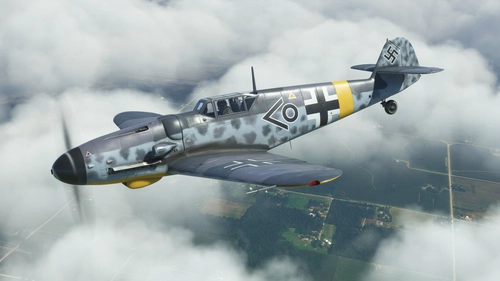
Messerschmitt Bf 109G-6 WkNr. 410077 (N42109)
Repaint of the award-winning restored Messerschmitt Bf 109G-6 Gustav WkNr. 410077, reflecting historical accuracy and detailing. This add-on features a meticulous recreation of the original paint scheme and markings of the real-world aircraft, N42109. Version 1.4 update includes enhancements such as improved textures and added manufacturer data plates, offering a realistic flight experience. Experience the worlds most original and accurately-restored Bf 109, honored with the World War Two Grand Champion Award at EAA AirVenture Oshkosh 2022.
by Bomber12th
Spitfire Mk.XVI TB252 (N752TB)
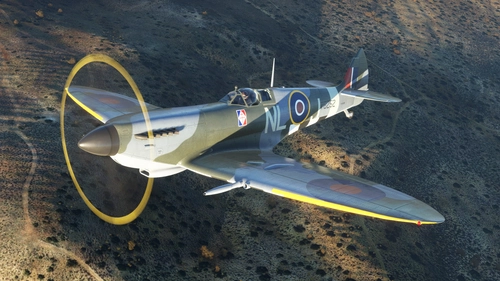
Experience the iconic Spitfire Mk.XVI TB252 (N752TB) with this realistic repaint for the FlyingIron Simulations Spitfire Mk.IXc. Choose to fly with either full-length or clipped wings, and enjoy the detailed history behind this restored beauty based in California. Explore the intricate repaint details and fly this legendary aircraft with authenticity and precision.
by Bomber12th
Log in to join the discussion
Log InComments(20)
about 3 years ago
about 3 years ago
about 3 years ago
about 3 years ago
about 3 years ago
about 3 years ago
about 3 years ago
about 3 years ago
about 3 years ago
about 3 years ago
about 3 years ago
about 3 years ago
about 3 years ago
about 3 years ago
I can't wait to see what your next releases are going to be =) Hopefully a few more 109s, even though the choice of airworthy or even surviving G-models is slim. Especially since TiAir and you already covered four of them =) Is there any chance you'll also do a couple of Lightning and Hellcat repaints somewhere down the line?
about 3 years ago
My next repaint, which I'll likely start on tomorrow, will be the Jerry Yagen/Military Aviation Museum Bf 109G-4 N109GY. It will take me at least a couple weeks to complete it (WkNr.410077/N42109 required about 130 hours to do). After that, I don't have any plans, though it would be nice to do some simpler schemes. I however would like to do D-FMGV, and my own version of D-FMGS. Speaking of Hellcats and P-38s, those would be nice to work on. I'd like to do/release my own version of Fagen Fighters' P-38 , as well as a few of the other restored/flying P-38s - Erickson's (Tangerine), Collings (Pudgy), Charles Somers (Thoughts of Midnite), the old TFC example (Happy Jack's Go Buggy), etc. I'm not as much a fan of the Hellcat as I would be if the flight model was more accurate, though I could see myself doing some repaints for it depicting the Fagen and FHCAM-owned examples. Rod Lewis' Hellcat (ex-TFC) should hopefully be breaking cover sometime soon, having been under restoration at Ezell Aviation for quite a long time now (Lewis stated last year that he expected to have the Hellcat at Oshkosh this year, but nothing has been shown/stated about it since).
about 3 years ago
Oh, that’s another great choice. I still remember checking out MeierMotors homepage almost on a daily basis for updates on the restoration. I had always hoped to get to see it in the flesh, before it was shipped to MAM, as Jerry Yagen was kind enough to let his first Flugwerk 190 be displayed at a local airshow before shipping. That sadly never came to be, but it’s still great to see that she get’s flown quite regularly and that there are a lot of pictures and videos to enjoy from over here =)
I would love to see your versions of the Hangar 10 birds. Maybe even D-FMBD, as its current paint scheme looks quite different to the old scheme.
You just listed all the P-38s I was hoping to see =) Especially Pudgy and Thoughts of Midnite. Another one I really like is Honey Bunny, that would be another great one.
It will be interesting to see if the update for the Hellcat, Flying Iron is working on, will address the flight model too. I always thought it was quite accurate, but I have to be honest I was only going by what I remembered from the Roaring Glory Warbirds series Steve Hinton did and I haven’t watched the Hellcat episode in a few years. But Fagen’s and FHCAM’s birds would be the two I would love to see. And even though they are -3 models, Friedkin’s and Collings’ Hellcats would probably look great too.
The Lewis’ Hellcat will be interesting to see, it can’t be too far off. But my guess would be, that it’ll be at next year’s Oshkosh and that they will concentrate their attention on their Constellation. There will for sure be a lot of awesome restorations at Oshkosh this year, with the Connie and Dakota Territory Air Museums P-47 and Thunderbird.
about 3 years ago
about 3 years ago
about 3 years ago
about 3 years ago