
Description
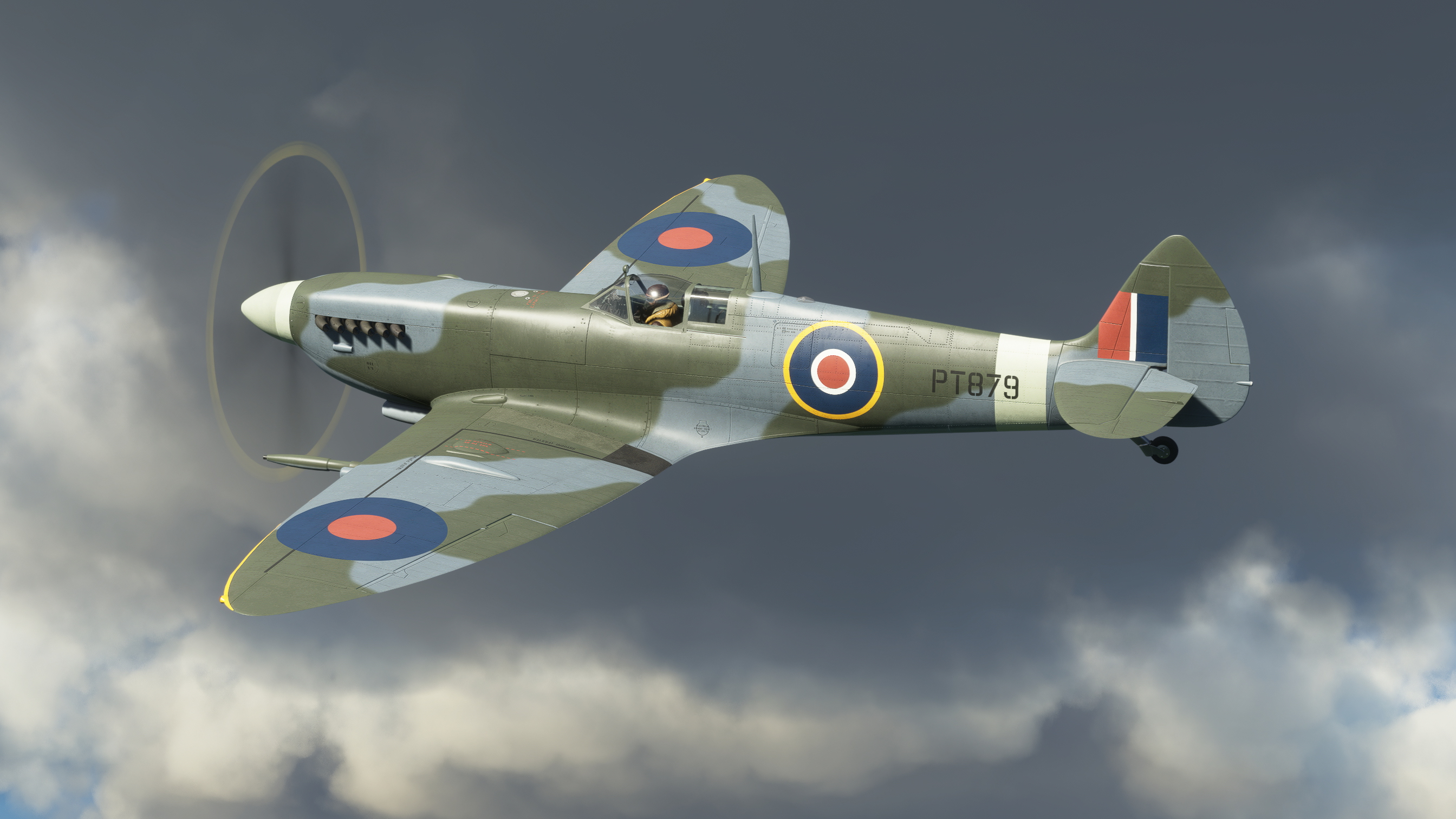
This repaint, made for the FlyingIron Simulations Spitfire Mk.IXc, depicts the restored Spitfire Mk.IX PT879 as it would look without the Russian markings, and simply left in its original Castle Bromwich factory-delivery paint scheme.
This Spitfire Mk.IX, given the RAF serial number PT879, was originally completed at the Vickers-Supermarine Castle Bromwich Aeroplane Factory, located near Birmingham, UK, on August 4, 1944. Following flight testing, it became one of the 1,185 Mk.IX Spitfires provided to Russia under the lend-lease program. In October 1944 it was sent by sea from Cardiff, Wales, to the Russian port at Murmansk. There it joined 2nd Squadron, 767th Regiment, 122nd Division of the Soviet Air Force, operating in the Murmansk region. On May 18th, 1945, the aircraft was involved in a mid-air collision with another Spitfire, over the Kola Penisula. The pilot of PT879, Lt. Semyonov, was able to successfully bale out. At the time of the incident, the aircraft only had little more than 18 flying hours.
In 1997, the battered but well preserved wreckage of PT879 was recovered from Russia for Spitfire restorer, Peter Monk, and brought to the UK. In 2001, Peter Teichman, owner of Hangar 11 Collection at North Weald, UK, acquired the airframe. After remaining in storage for several years, Teichman contracted with Airframe Assemblies on the Isle of Wight to rebuild the fuselage. With the fuselage completed in 2014, and some years spent collecting parts, the project was eventually put in the hands of the Biggin Hill Heritage Hangar for completion. Using as many parts as possible from the original airframe, the rebuilt/restored PT879 was finally completed in October 2020. Highly experienced warbird pilot, Pete Kynsey, flew the aircraft for the first time on October 28th, flying out of Biggin Hill where the final restoration work had been completed. The highly-detailed and accurate restoration is finished as it is believed to have appeared in May 1945, complete with Russian markings hastily painted over the factory RAF markings. Owner, Peter Teichman, finally got to fly his pride and joy in mid November, and following a bit more work - fitting bomb racks and replica 250 lb. bombs - Teichman was able to fly the Spitfire home to North Weald in January.
PT879 is one of only two Spitfires known to survive that served with Russia during World War Two, and it is the only one that has now been restored and flies again.
~ Repaint Details ~
- Although based on the product paintkit, the textures have been considerably modified and improved. Customized complete maps (PBR) and normal maps (3D detail) have been made.
- The positioning of the rivets and panel lines on the left elevator has been fixed (they're not positioned correctly in the product paint schemes).
- The inaccurate access panels on the cowlings have been removed and the actual access panels, as found on the Mk.IX Spitfre, have been added, as well as a couple of panel lines missing in the product paint schemes. The battery access panel has been added to the starboard rear fuselage, as well as the circular inspection panels on both sides of the rear fuselage. The electrical/radio socket access panel has been added to the port-side wing/fuselage fillets.
- The cannon shell and link ejector chutes, as well as the bomb rack connection points and jack holes, have been added into the textures on the base of the wings.
- The colors were all extensively researched and experimented with to achieve accurate in-game results, matching the same authentic colors as seen on the restored PT879.
- The imperfect demarcation between the top and bottom colors of the camouflage is done to match the restoration, and this was the way that Castle Bromwich Spitfire Mk.IX's, such as PT879, came from the Castle Bromwich factory. They didn't have the paint masked with a sharp edge to the demarcation between the topside and bottom-side colors like Supermarine did at their factory.
- All of the stencils are done to match the restoration, which in-turn are also specifically accurate to Castle Bromwich production. For instance, the wing walkway and wing trestle stencils are unique to Castle Bromwich production - I reproduced each letter of these stencils in high resolution to match.
- You will find both DTD 517 S and DTD 314 S stencils, correct to their placements on the real aircraft. Other items, like the W/T stencils, were also recreated first in high resolution, matching the exact design as they are on the restoration.
- The red-doped fabric patches on the starboard rear fuselage and under the ailerons have a pinked-edge to the fabric, which has also been added to the normal maps.
- Prop stencils have been added, front and back, just as they are on the restored PT879. You can also spot the little factory-applied Locked/Unlocked stencils on the spinner.
- Non-slip tape has been added to the port-side wing, just as it is on the restored aircraft. The black portion is accurate to original/wartime, while the dark green-painted portion is modern.
- The wing walkway lines on Castle Bromwich Spitfires were 1" thick, as depicted on the restoration, vs. 3/4" thick on Supermarine-produced Spitfires. These thicker lines are accurately depicted in the repaint. (One of the few departures from the real aircraft are that, since the panel lines of the product paint schemes aren't positioned quite accurately, in order to have the wing walkway lines in the correct locations on the wings they are outboard of the panel lines, while on the real aircraft they are inboard of the panel lines - however, the wing walkway lines themselves are in the right locations in relation to the wing as a whole, matching the same locations as on the restored aircraft. This way too the non-slip tape on the inboard port-wing is sized accurately as well.)
- The textures for the main landing gear and tail gear, landing gear inner doors, wheels, tires, wheel wells, pitot tube and cockpit side door lever, have all been modified. There is now a uniform silver-painted finish to the landing gear, inner landing gear doors and wheel wells, and inner flaps and flap wells, which are all authentically painted silver on the real PT879.
Thank you to Steve Atkin (Warbird Colour) for his invaluable assistance with the research for this repaint.
Repaint by John Terrell.
Spitfire Mk.IX PT879 Factory-Delivered (Restored)
Experience the meticulously restored Spitfire Mk.IX PT879 in its original factory-delivery paint scheme with this detailed FlyingIron Simulations repaint. This iconic aircraft served with Russia during World War Two before being recovered and painstakingly rebuilt, now flying again in all its historic glory. Enjoy enhanced PBR materials, accurate colors, and intricate details reflecting the authentic appearance of this legendary Spitfire. Created by John Terrell, this repaint captures the essence of PT879s remarkable journey and restoration process, making it a must-have for aviation enthusiasts in Microsoft Flight Simulator.

Supporters
User Reviews
8 reviews
Version History
Added compatibility for MSFS 2024 by regenerating new Layout.JSON file. Update not required for MSFS 2020. Changed version number to 3.0 for consistency across all of my FI Spitfire repaints.
Related
Spitfire Mk.XVI TB252 (N752TB)
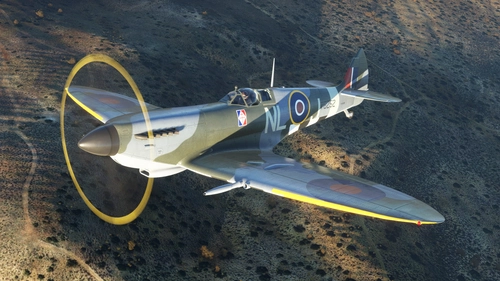
Experience the iconic Spitfire Mk.XVI TB252 (N752TB) with this realistic repaint for the FlyingIron Simulations Spitfire Mk.IXc. Choose to fly with either full-length or clipped wings, and enjoy the detailed history behind this restored beauty based in California. Explore the intricate repaint details and fly this legendary aircraft with authenticity and precision.
by Bomber12th
Spitfire Mk.IX MJ271 "The Silver Spitfire" G-IRTY
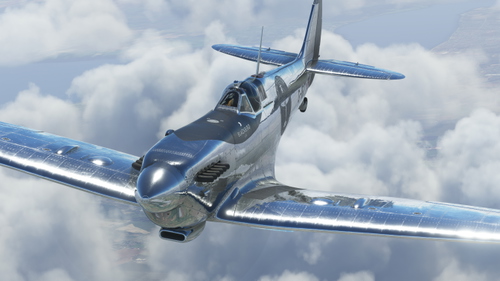
Experience the iconic restored Spitfire Mk.IX MJ271 - "The Silver Spitfire" in Microsoft Flight Simulator with this detailed repaint, featuring two versions of the aircraft as it appeared during its record-setting global flight in 2019. This add-on includes meticulous recreations of the real aircrafts markings, logos, and polished bare-metal finish, providing an authentic representation for aviation enthusiasts. Enhance your simulation with accurate details such as the rudder, landing gear, PBR maps, and various access panels, making it a must-have for history buffs and Spitfire fans alike.
by Bomber12th
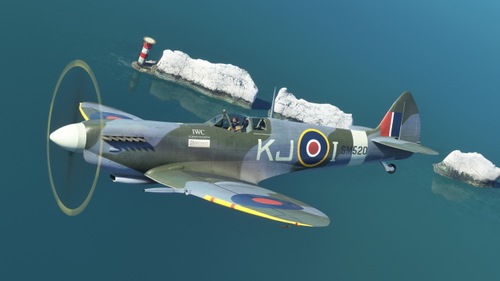
Spitfire Mk.IX SM520 (2021)
Repaint of the iconic Spitfire Mk.IX SM520, showcasing enhanced PBR materials and updated color values for better realism in Microsoft Flight Simulator. This two-seat trainer Spitfire, registered as G-ILDA, has a rich history from its manufacturing in 1944 to its restoration process, making it a unique and historically significant aircraft to fly in-game. Operating under Spitfires.com, experience the legacy of this Spitfire as you take to the skies in its meticulously recreated paint scheme from its SAAF service days during World War Two. Welcome aboard this piece of aviation history.
by Bomber12th
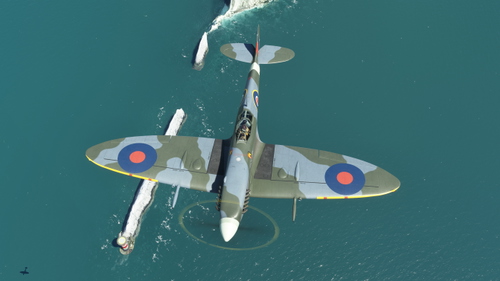
Spitfire Mk.IX RR232 "City of Exeter" G-BRSF (Four Versions)
Repaint of the historic Spitfire Mk.IX RR232, featuring four different versions depicting its evolution since restoration: Factory, City of Exeter, 611 Squadron, and Invasion Stripes. Originally built in 1944, RR232 has a rich history, from serving in World War Two to being meticulously restored to airworthy condition in Exeter. Operated as part of the Spitfires.com fleet, this add-on offers a glimpse into the iconic aircrafts storied past.
by Bomber12th
Log in to join the discussion
Log InComments(14)
over 1 year ago
almost 3 years ago
Excellent aircraft simulation!!
about 3 years ago
do mods still work in microsoft flight sim? its not working for me but this plane looks awesome
about 3 years ago
Have you purchased/installed the FlyingIron Spitfire addon? That is required in order for this repaint to work. I can confirm that all of my repaints are working/displaying fine with the current version of the product and sim, and will be found within the liveries.
about 3 years ago
is this mod on the official microsoft flight sim market place or on the flightsim.to website?
about 3 years ago
It can be purchased at the FlyingIron Simulations shop here: https://flyingironsimulations.com/collections/microsoft-flight-simulator
Once purchased, they send you a download link (and updates over time, just as soon as they'e released).
You can also purchase the product through the Marketplace, but it won't have the guns/cannons.
about 4 years ago
Really appreciate all the work on this, thank you!
about 5 years ago
Hey man, your livery doesn't seem up to date for Sim 5, please can you report? Thank you
about 5 years ago
Really nice work on this, so much detail in the paint itself...my favorite livery by far!
over 5 years ago
This is stunning ,thank you.
over 5 years ago
over 5 years ago
over 5 years ago
over 5 years ago