
Thank you to everyone who joined us at FSExpo 2026, both in person and online.
After our first public presentation at FSWeekend earlier this year, FSExpo gave us the opportunity to go deeper than ever into how the VECTOR 787-9 continues to evolve.
While our first presentation focused on introducing the project and the philosophy behind it, this time we wanted to showcase how the VECTOR 787-9 is coming together as a complete aircraft. Every system, workflow, visual element, and aircraft behavior is designed to work together, creating an experience that feels authentic, connected, and true to the real aircraft.
Our Presenter
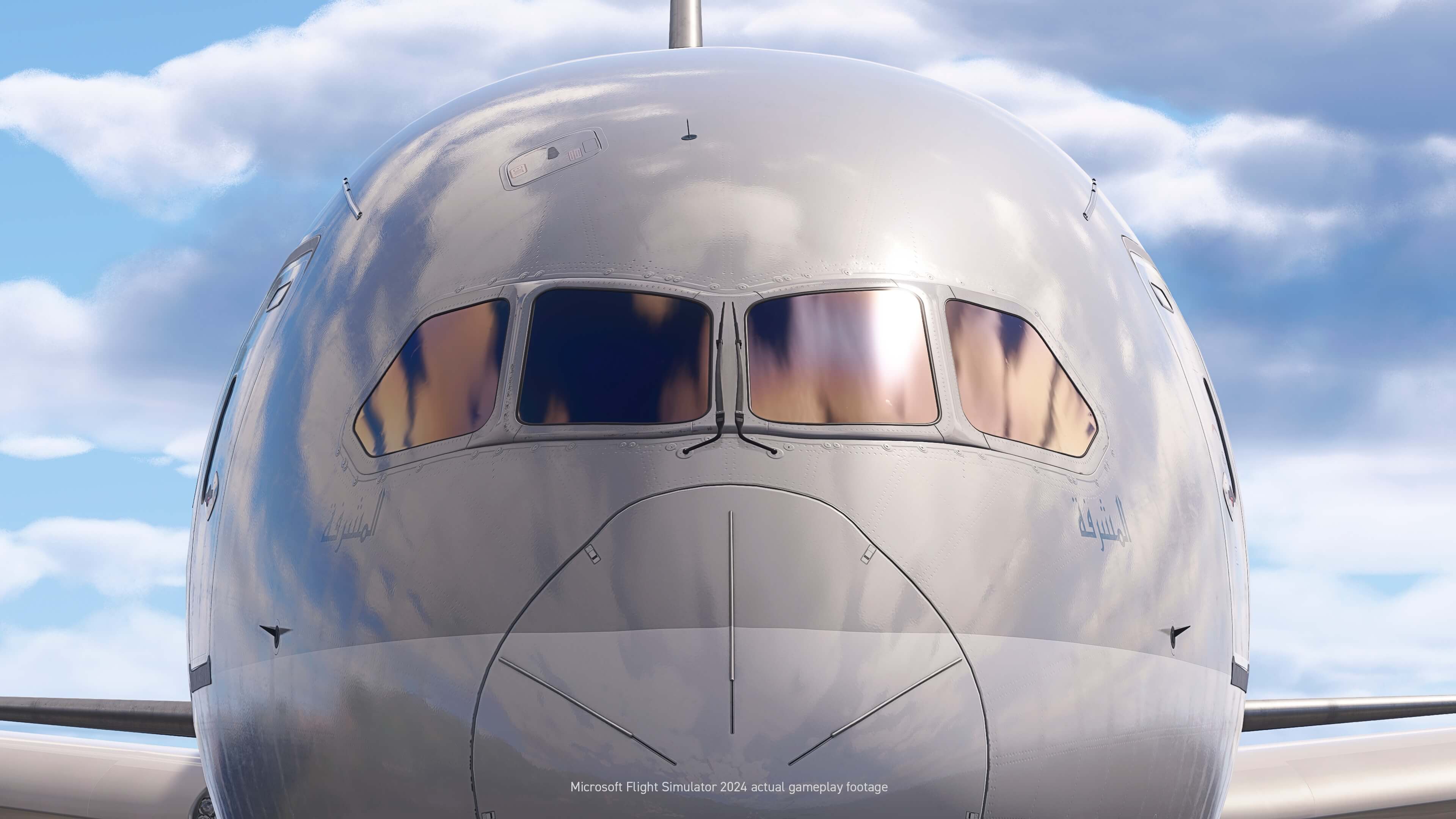
Introducing our US carrier presenter for FSExpo, the United Airlines 787-9 N27958.
The Flight Deck is Alive
A major focus of the presentation was the flight deck itself and the systems working behind it.
Using a realistic operational scenario, we demonstrated the cockpit environment, EFB workflow, CDU interaction, and aircraft systems, all driven by live aircraft data flowing across a common aircraft network.
One aircraft. One network. One connected experience.
Systems at a Glance
Similar to how we showed the Electrical System before, this showcase we are looking at the Hydraulic System, specifically the Synoptic and Maintenance Pages. We talked about how realistic operations of the system can be seen at schematic level when engines start and flow begin throughout the system. Lines are drawn, numbers information is flowing, pumps switching on and off, feeding the system, with real timings, in realistic measurements.
The VECTOR 787’s MFD system allows either display to be presented on a single display unit, delivering the flexibility and functionality found in the real aircraft. We’ll dive deeper into it in a future Spotlight.
EFB’s
Electronic Flight Bags have become an essential part of modern airline operations, and the Boeing 787 is no exception.
During our FSExpo presentation, we showcased the three EFB environments available within the VECTOR 787, including the integrated Boeing EFB, the vPad (our own tablet ecosystem), and the Microsoft tablet.
From charts and operational data to aircraft-specific tools and workflows, each environment serves a distinct role while remaining seamlessly connected to the wider aircraft. Information is available where and when it is needed, supporting realistic procedures from flight preparation through arrival.
Our goal goes beyond simply presenting information. We are building workflows that feel intuitive, purposeful, and true to real-world 787 operations.
Achieving that level of authenticity starts long before a feature reaches the simulator. A cornerstone of our development process is the suite of in-house tools we have built specifically for the VECTOR 787. Using these tools, we mapped and documented the entire Boeing built-in EFB ecosystem; every page, every menu, and every available function.
While some operators today rely on external tablet solutions, the integrated Boeing EFB remains a core part of the aircraft’s design and operational heritage. The VECTOR 787 brings that environment to life, giving sim pilots access to an authentic and highly detailed flight deck experience.
Checklists
Another feature we discussed on stage was the Boeing integrated checklist system, this features over 700 pages and 3366 Checkpoints for Normal Procedures (NP), Supplementary Procedures (SP) and Non-Normal Procedures (NNP).
With that many pages and checkpoints, our internal tools helped us plan and produce the comprehensive aircraft checklist system.
Details Matter
For us at VECTOR, authenticity extends beyond systems and procedures. Typograph fonts were hand-crafted from the ground up to replicate the appearance of the real aircraft. It’s a small detail on its own, but together with hundreds of others, it contributes to creating a flight deck that feels familiar, believable, and true to the Boeing 787 experience.
Real Aircraft – Real Sounds
Behind every switch, alert, system, and engine lies a unique acoustic signature. To preserve that authenticity, we have been conducting dedicated recording sessions on real world 787’s, capturing real-world audio directly from the aircraft. The result is a sound environment built from genuine source material and designed to reflect the experience of operating the aircraft itself.
Audio deserves a closer look of its own. We’ll be exploring the aircraft’s sound environment in much greater detail in a future dedicated Spotlight.
To Close Out
Everything we are showing here already exists, is already developed or in active development, and is already working. On release, there will be NO planned features, no coming later, and no placeholders.
Come and join our community over on discord: https://discord.gg/Vb9vTyVYgP
Comments