
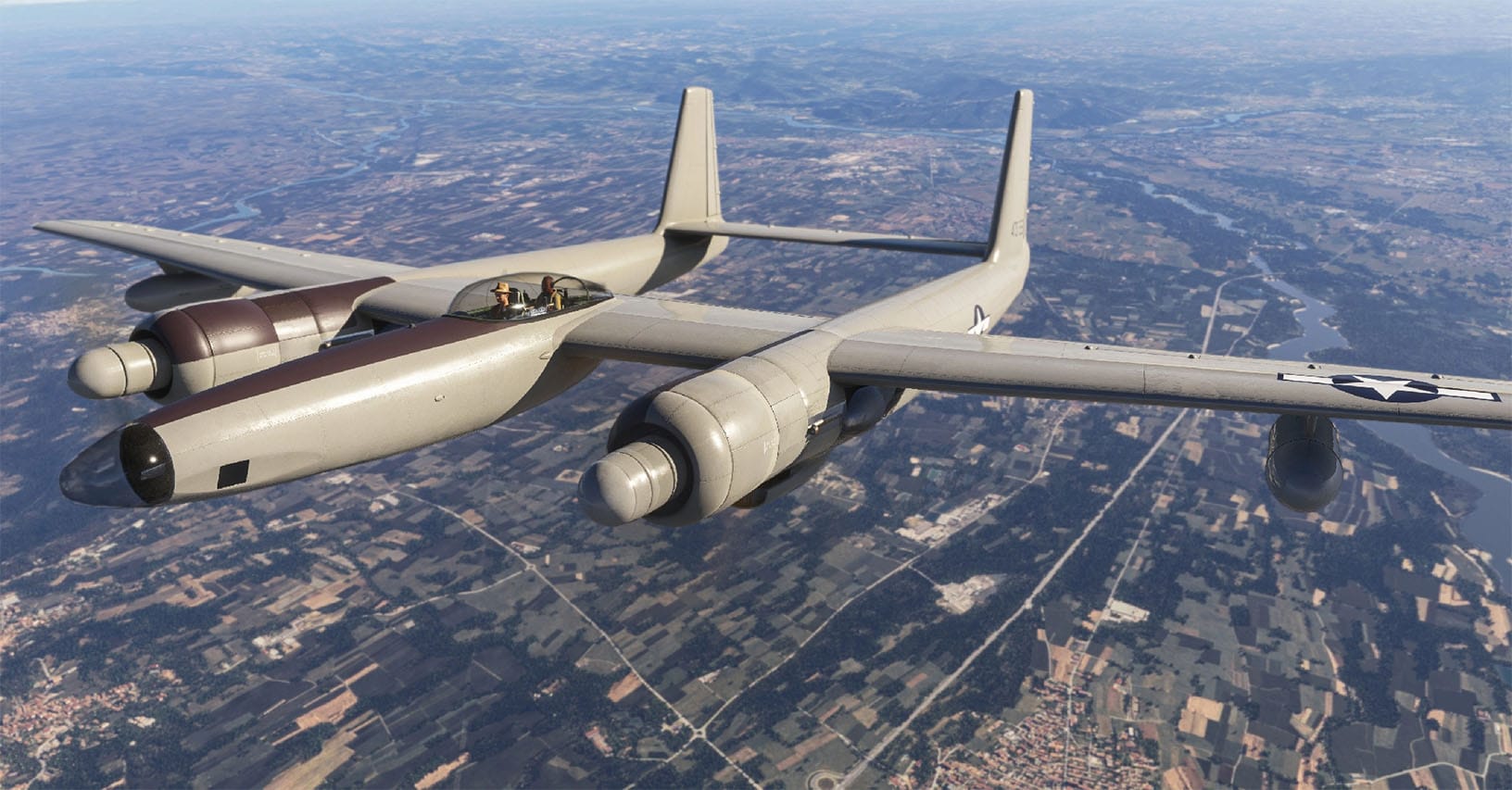
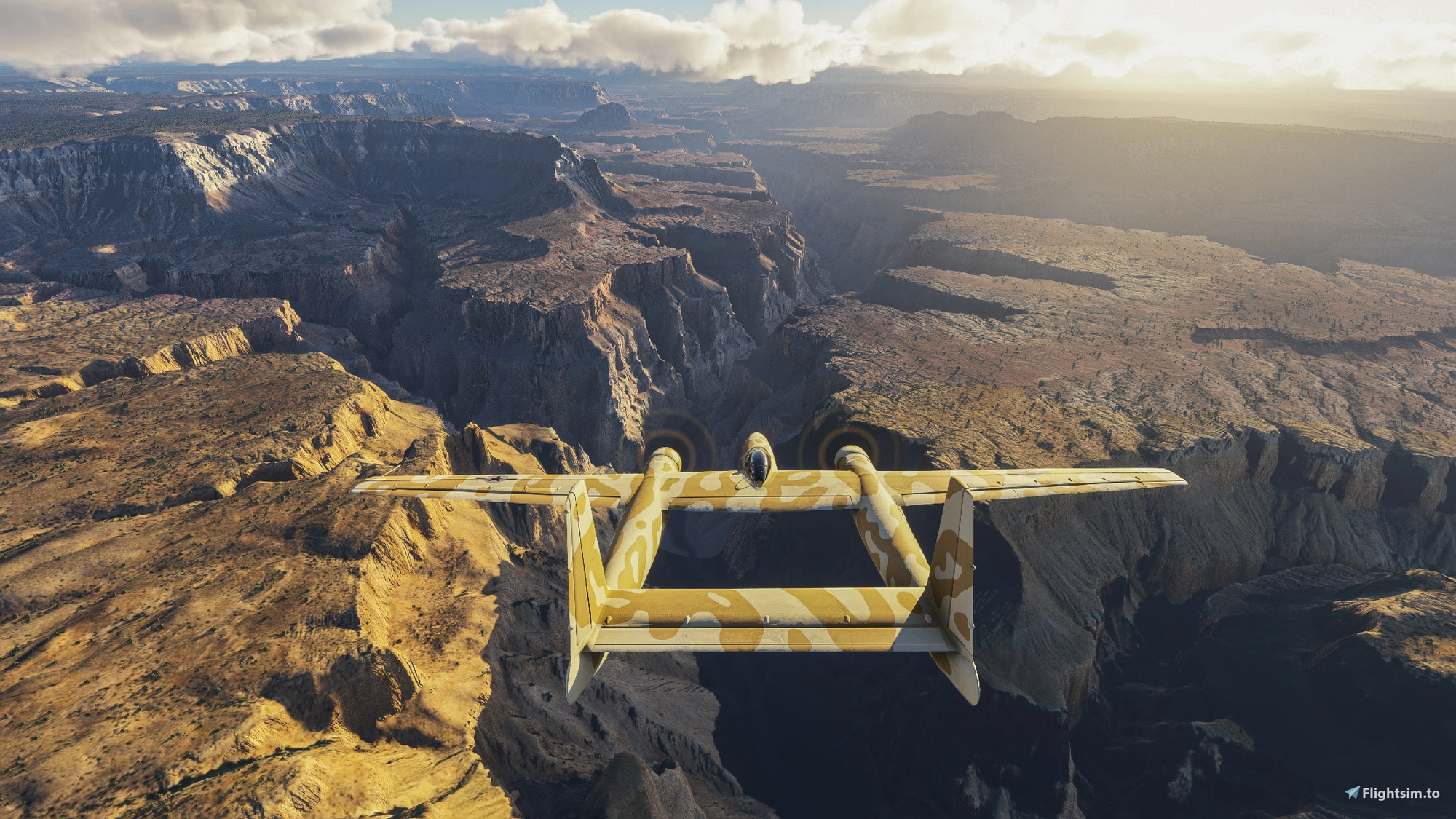
Few aircraft in aviation history have a story as dramatic as the Hughes XF-11. Ordered by the US Army Air Forces in 1943 as a long-range, high-altitude photo-reconnaissance platform, the first prototype was powered by two Pratt & Whitney R-4360 Wasp Major radials driving contra-rotating propellers. It took to the air only once, in 1946, with Howard Hughes at the controls, and was destroyed in a crash on that maiden flight. Flying Fries, the studio led by developer Lord Frites, brought this Mark I prototype to Microsoft Flight Simulator in February 2024, and it has been updated steadily ever since. 🔆 Version 3.1.0 is now out, and it focuses less on what you see and more on how the engines behave.
Engines that react to how you treat them
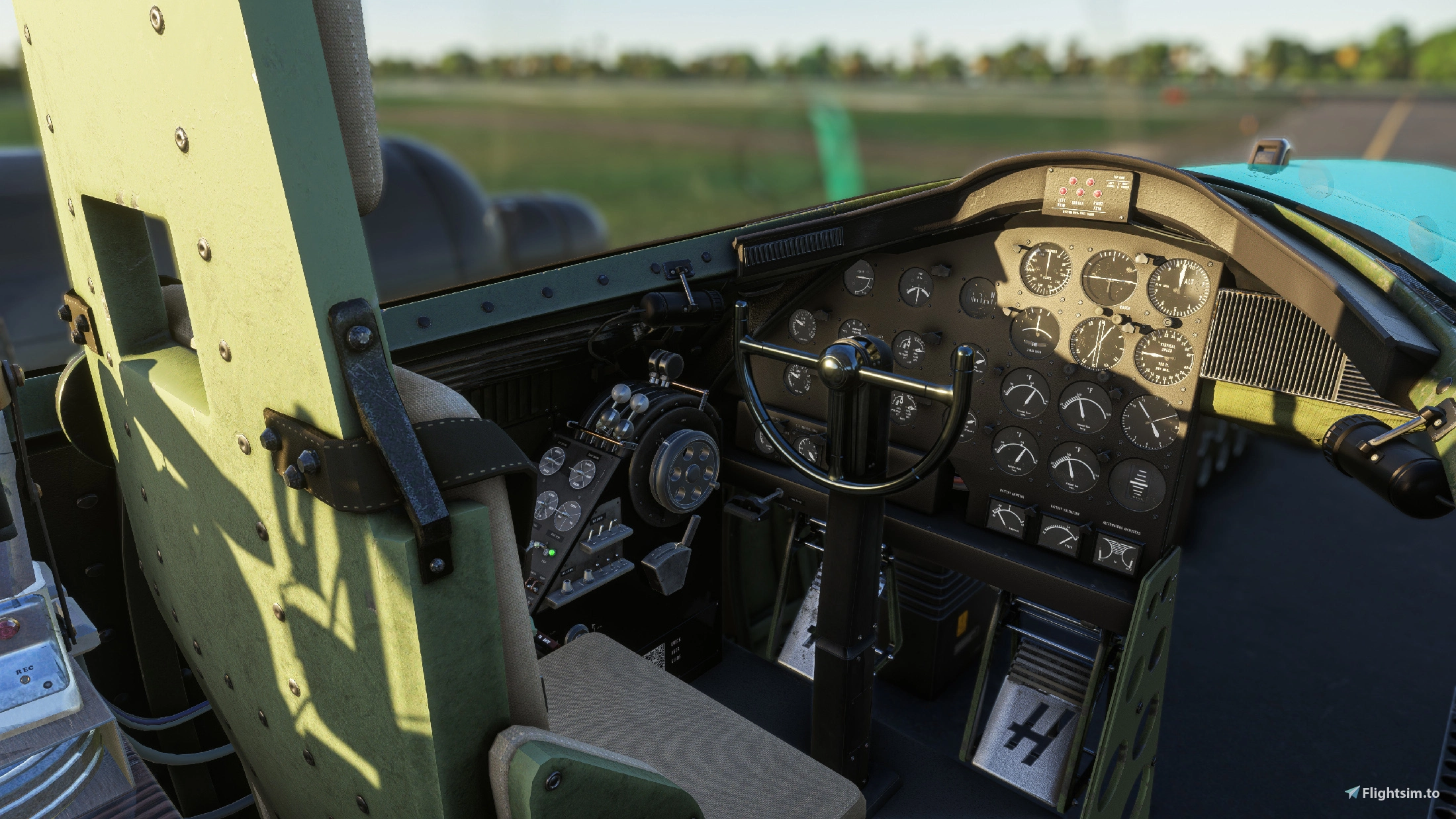
The headline change is a custom simulation of cylinder head temperature (CHT) and oil temperature, together with air intake icing. The developer explains that neither MSFS 2020 nor MSFS 2024 models these values properly: the simulator exposes them, but its calculations rarely make sense. As a result, engine anti-ice did nothing useful until now, and the cowl flaps barely affected engine temperatures.
Version 3.1 replaces this with Flying Fries' own model. It takes RPM, throttle setting, cowl flap position, altitude, airspeed, rain and snow into account. If you turn on the usage-based failures option, mistakes have consequences, ranging from lost performance to a full engine failure. This should make the XF-11 more demanding to manage. You will need to watch the temperature gauges, use the cowl flaps sensibly, and treat carburetor and intake icing as a real threat. Previously, these were mostly cosmetic.
There is also a reason beyond the XF-11 itself. According to the studio, the same systems will feed into its upcoming Hind helicopter. Building them in-house is also intended to protect the behavior from changes Asobo might make in future sim updates.
Easier mixture management, a rebuilt clipboard and long-awaited fixes
Mixture handling has always been one of the XF-11's steeper learning curves, especially in the climb toward its service ceiling. Version 3.1 adds a new mixture management mode that handles leaning for you, at the cost of some range. You can switch between automatic and manual mixture mid-flight from the clipboard. If you have been chasing maximum range, manual leaning remains the way to get the most out of the aircraft.
The clipboard itself has also been rebuilt. It now follows Flying Fries' new studio-wide standard and includes checklists, a pushback function and a Remove Before Flight page. This matches the EFB redesign the studio rolled out across its catalog earlier this autumn. That redesign started with the Quasar and the Gabriel and brought the same menu layout, colors, gestures and a steerable custom pushback to every Flying Fries aircraft. If you fly more than one of the studio's aircraft, the interface should now feel familiar across all of them.
Several handling issues have also been fixed. Catapult-style takeoffs no longer happen, the parking brake now holds the aircraft in place, and altitude hold now keeps altitude. Both of the last two required custom code, since the default sim behavior could not provide them.
Building on the 3.0 overhaul
Version 3.1 follows the substantial 3.0 release from April. That update brought a new sound pack made from scratch by Grégoire Monesma and based on real warbird recordings. It also included a smoother exterior fuselage, reworked Howard Hughes and Gus figures, fixed interior lighting in MSFS 2024, working propeller animations in multiplayer, and a new livery called Lady Copper. With the sound and visual work largely done, this update shifts attention to systems depth and flight handling.
Availability
The Hughes XF-11 is compatible with both MSFS 2020 and MSFS 2024, and version 3.1 is a free update for existing owners. If you do not own it yet, you can get the 🔆 Hughes XF-11 on the Flightsim.to Store.