
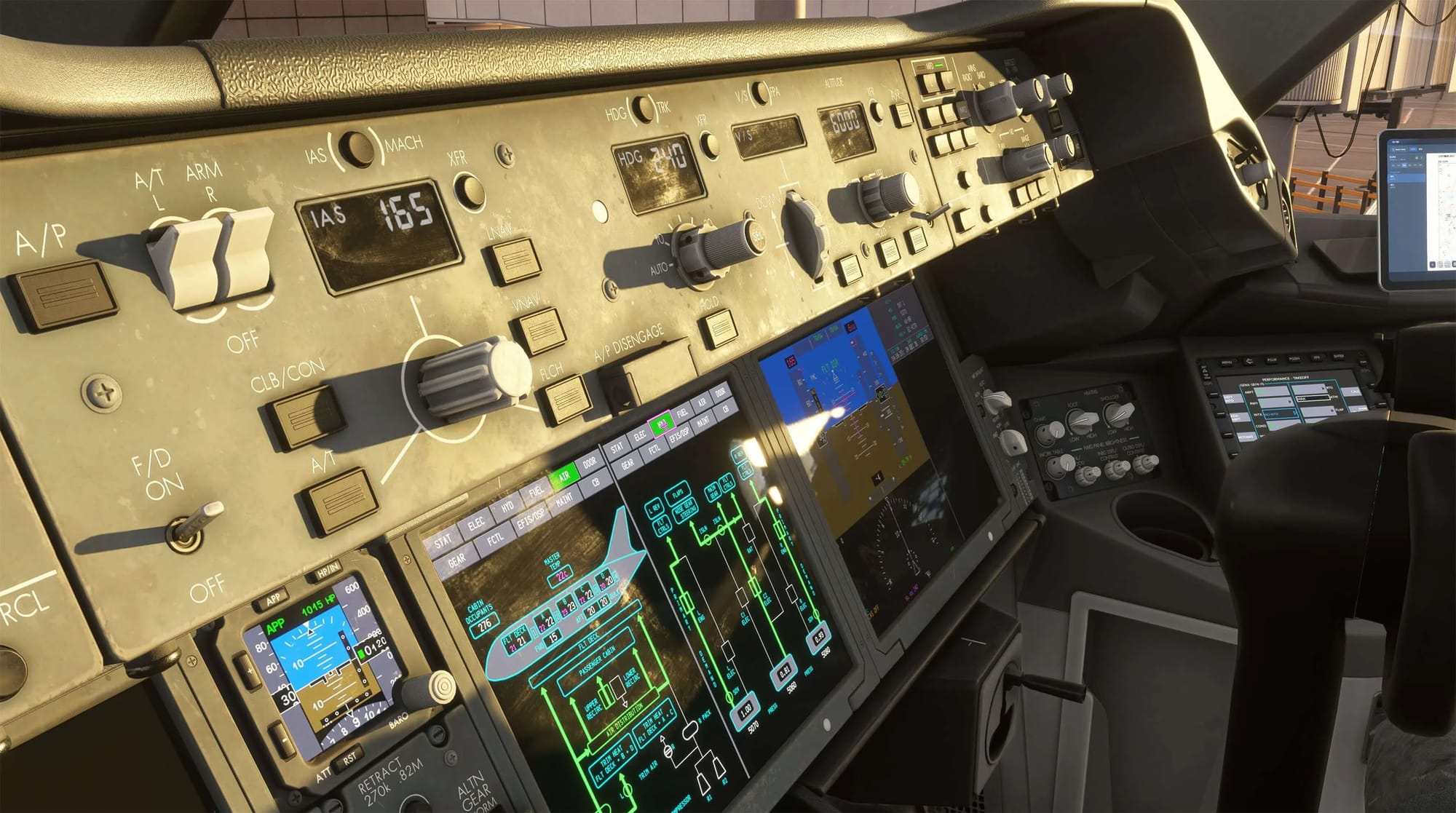
The Boeing 787 Dreamliner has long been one of the more demanding airliners to recreate for Microsoft Flight Simulator, thanks to its tightly connected systems, glass-heavy flight deck and distinctive wing behavior. Vector, the studio that unveiled its 787-9 for MSFS 2024 on February 26, has now published its third development update. By the studio's own account, the project is "on final approach", with internal Beta well underway and less than three months remaining before release.
The update is a long one, and it opens with the philosophy that has shaped the project so far. Vector describes its approach as systems depth at "schematic level" meaning the aim is to reproduce how a system communicates and behaves, not just what it does. That extends to page and synoptic loading times, the way information is drawn on the displays, fonts, symbology and response delays. The studio also stresses that the same thinking applies to handling, so that the 787 should feel like a wide-body in terms of mass, inertia, control response and energy management, and not just match performance figures on paper. Vector also confirmed that the full 787 family is planned, with the 787-9 first, followed by the 787-10 and the 787-8.
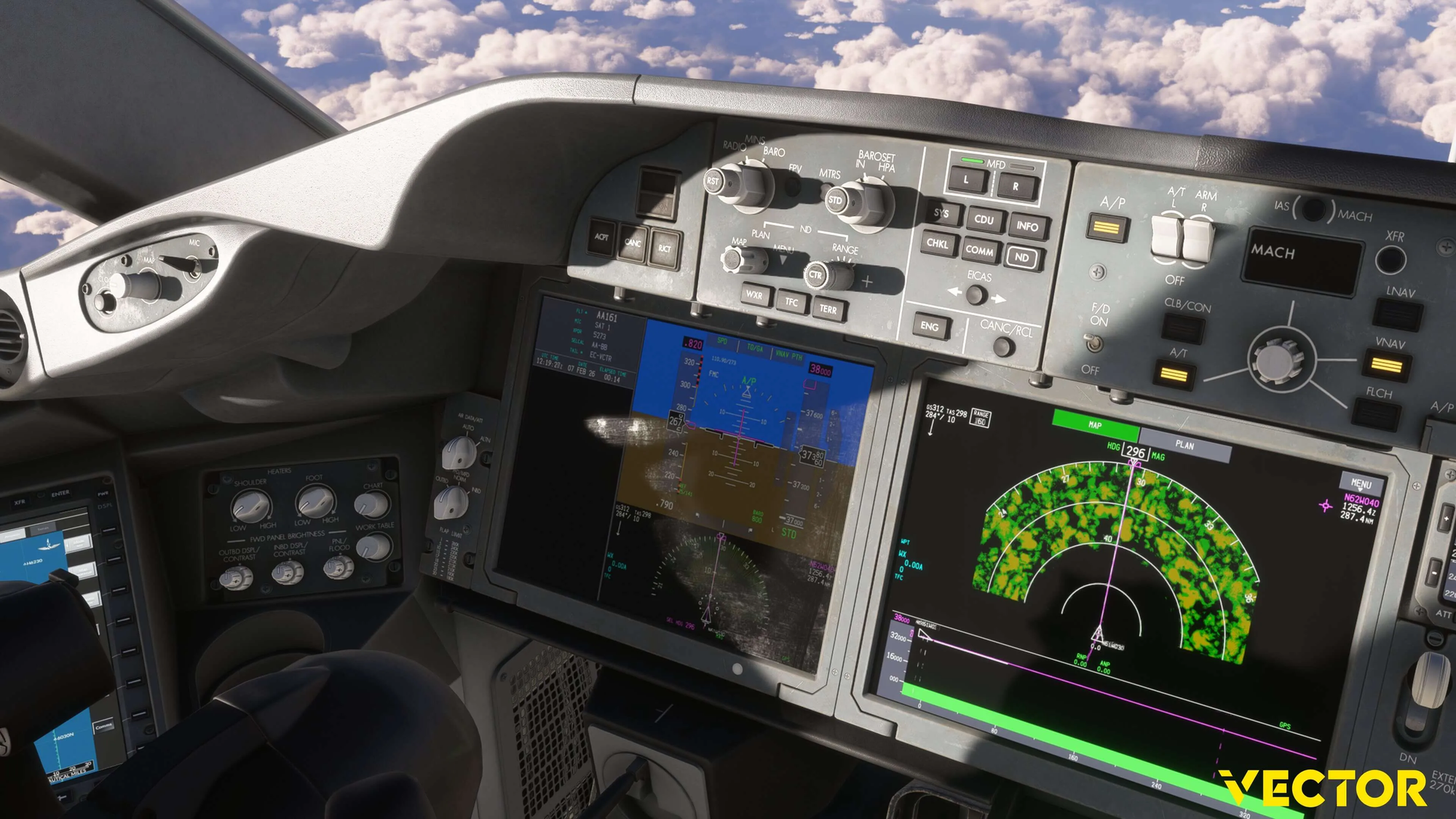
On development status, the Alpha phase is complete, and Vector expects to reach Content Complete within the week, which is when all planned functionality should be in place. After that, work shifts to polish, optimization, validation and testing. Systems already in place include the electrical, hydraulic and fuel systems, the Airport Moving Map, Weather Radar, Terrain Radar, TCAS, checklists and the maintenance environment. The current focus is on how these systems interact, such as how electrical availability and load shedding affect downstream equipment, or how hydraulic states influence configuration. Vector says the Airport Moving Map is designed to work at airports worldwide, whether you are parked at a detailed third-party airport or a default one. The Weather Radar is meant to work with both the default weather system and third-party weather add-ons.
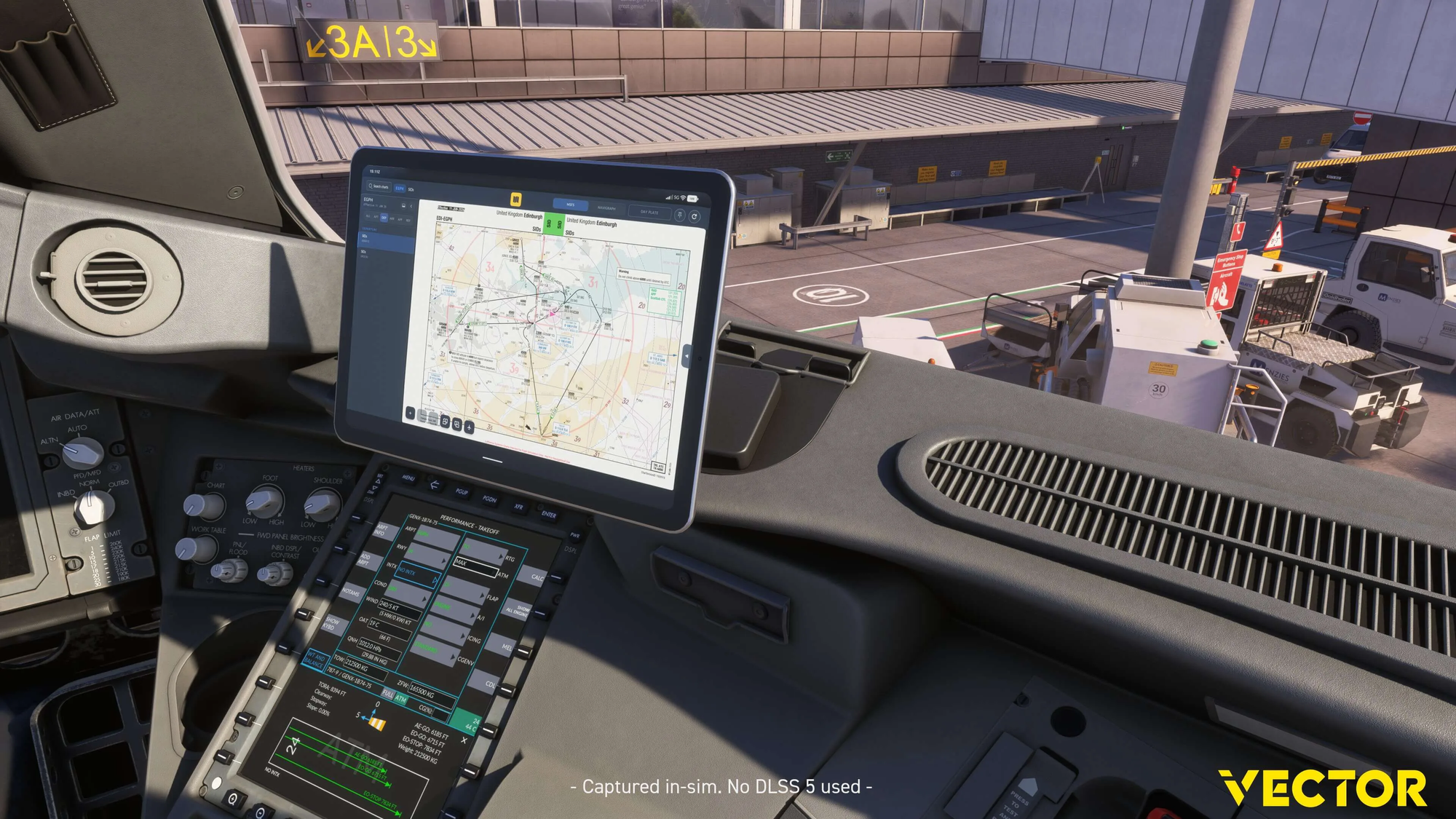
The built-in Boeing EFB gets particular attention. Rather than modernizing it, Vector reproduced the real unit, based on original technical documentation and validation against the actual hardware. It currently spans 53 pages, covering takeoff and performance calculations, charts, navigation tools and more. Its quirks, including a low-resolution enroute map and pages that take time to load, are intentionally retained. Alongside it sits the VPAD, shown here fully integrated into the aircraft for the first time. Vector uses it for simulator-specific conveniences, such as SimBrief and Navigraph integration, MSFS flight planning, door controls, ground services, automatic step-climb assistance and a pause at top of descent. MSFS and LIDO charts are available through it too, so Navigraph is optional. The studio sums up the division simply: if it exists on the real 787, it lives in the aircraft, and if it exists to improve the sim experience, it lives in the VPAD.
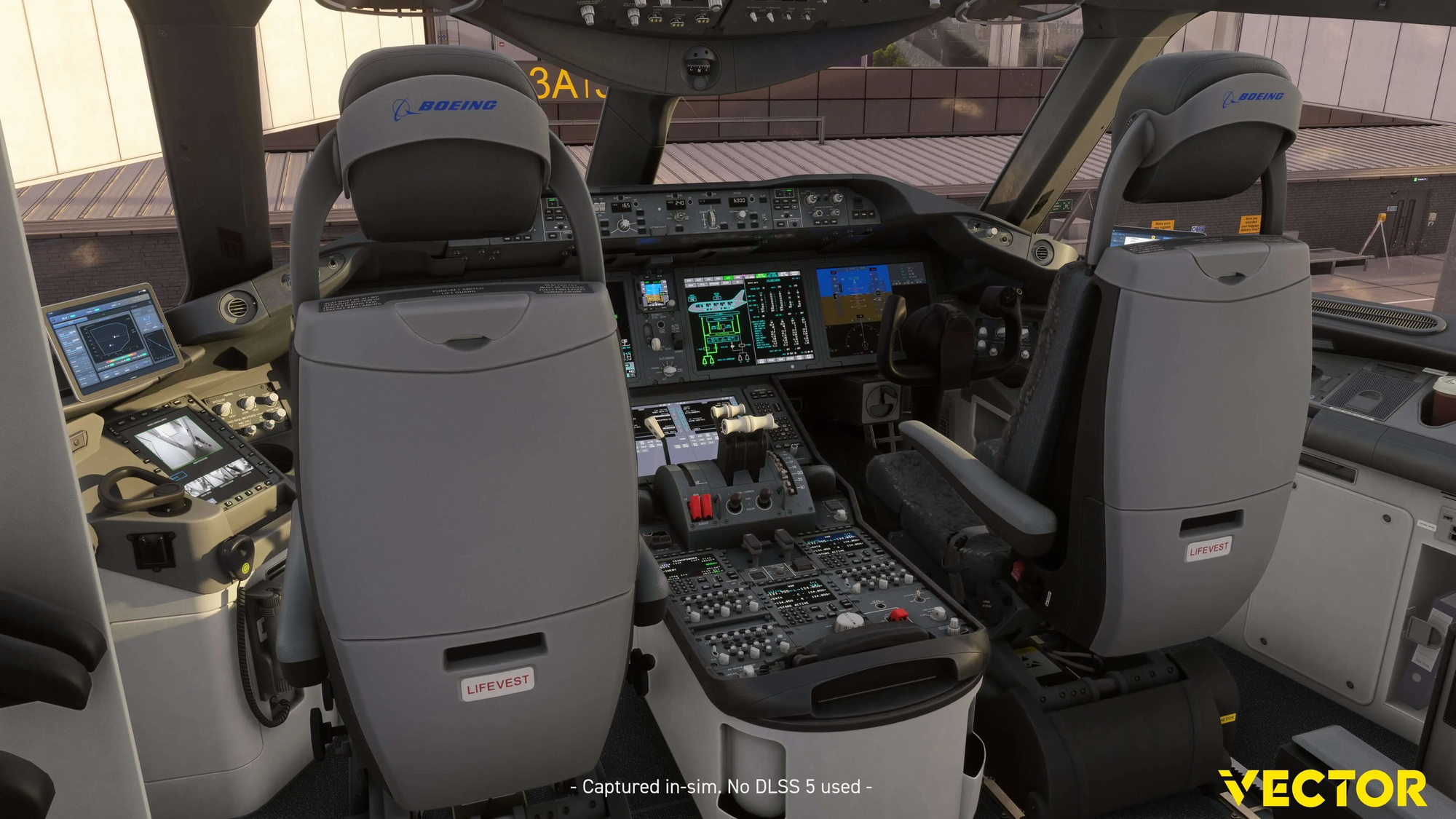
The flight dynamics are described as one of the most important parts of the project and are now in a fine-tuning phase. Vector says repeated takeoffs, landings and circuits are being used to calibrate behavior across weights, configurations, runway conditions and weather, with LNAV and VNAV performance in realistic operational scenarios also under scrutiny. The goal is a landing that feels weighty and a heavier aircraft that feels slower to respond.
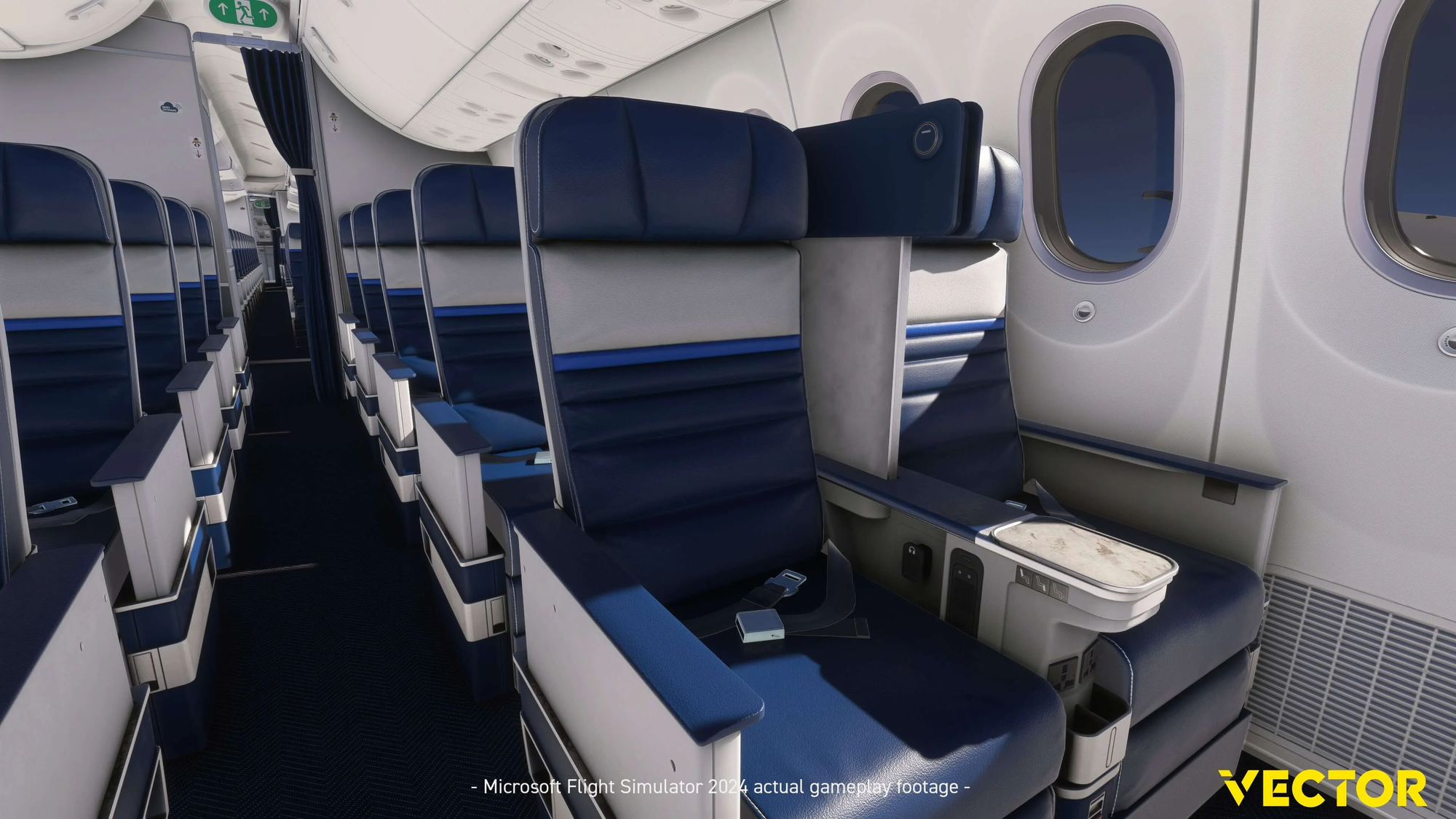
Visually, the cockpit is in its final refinement stage, with the work now concentrated on close-range details such as switches, materials, reflections and lighting. The engines have also had a deep accuracy pass. Both the GE GEnx-1B and the Rolls-Royce Trent 1000 will be included, each with its own fan configuration, flight modeling and sound set. The cabin is modeled across Business, Premium Economy and Economy, using the United Airlines 787-9 and its Polaris cabin as the main reference. It includes working galleys, lavatories, doors and the dimmable windows, plus a wear-and-tear pass. The paint kit will allow interior textures and colors to be customized, and a version without the passenger cabin will be available if you prefer to prioritize performance.
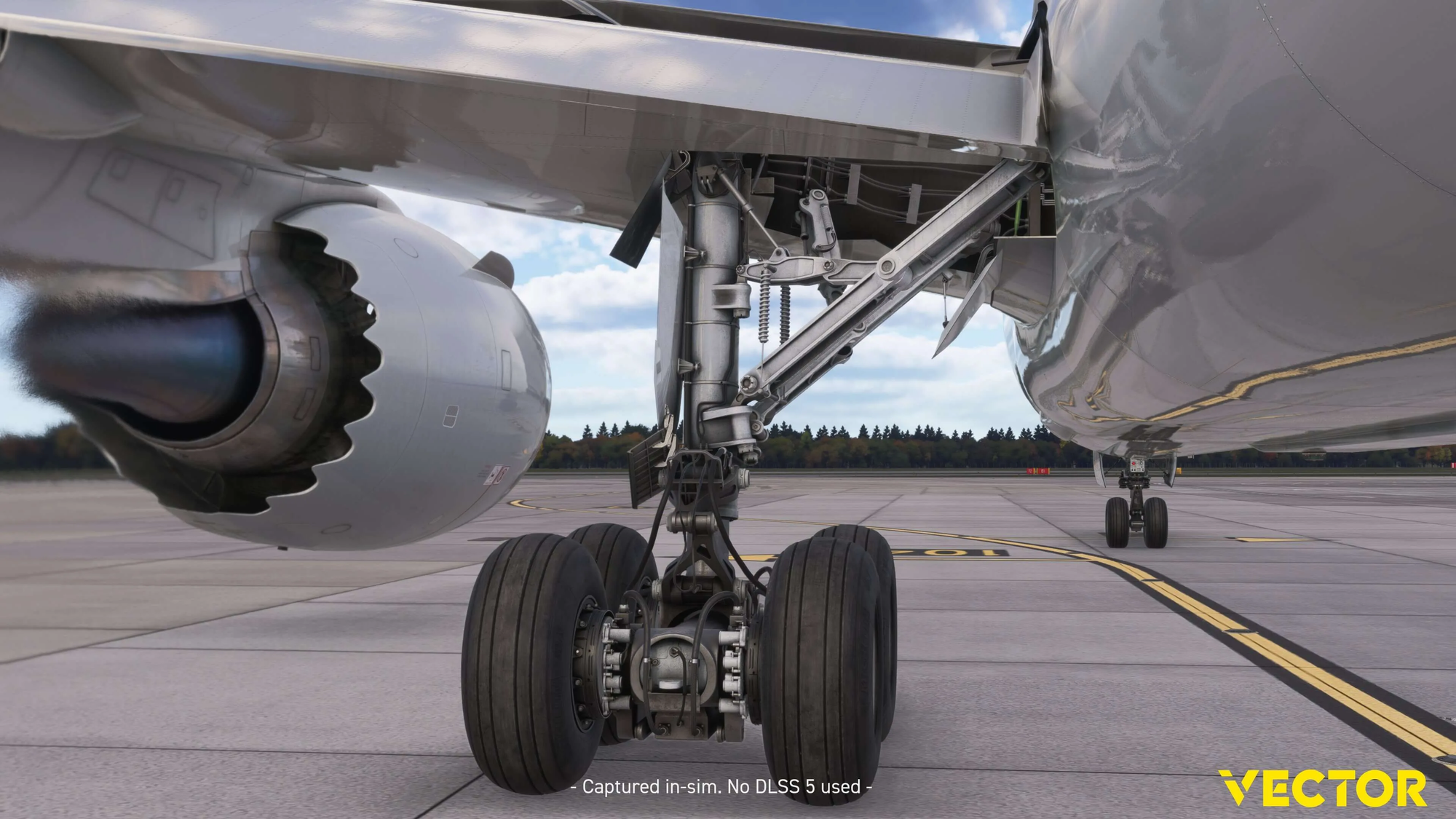
The nose gear bay and the wings, including the slats, Krueger flaps, spoilers and flap mechanisms, have also been revisited using an expanded set of reference material.
Wing flex remains a work in progress. Vector says it is deliberately not rushing the effect, given how much it varies with speed, weight, load, turbulence and phase of flight. On the audio side, the studio reports roughly 80 hours of source material and more than 400 individual recordings captured on operational aircraft, aimed at reproducing the different acoustic character of the cockpit and cabin.
Testing now takes up most of the team's time. Vector says it is flying a large number of real-world routes, and it provides a few figures to illustrate the scale: 323 MFD checklists across about 575 pages, 82 tablet checklists with 1,079 line items, 97 walk-around checkpoints and 170 SIDs and STARs tested across 40 full routes so far. Some test flights are broadcast through Volanta and announced on the studio's Discord. The screenshots in the update were captured in a standard simulator environment, with no ReShade, custom shaders or DLSS 5 involved, according to the studio.
Looking ahead, a video teaser is promised "very soon" and an external Beta is set to begin shortly, with more details to follow on Discord. Vector also says its official updates will become much more frequent as release approaches. The release date and pricing were not detailed in this update.
The Vector Boeing 787-9 is a payware add-on for MSFS 2024. Once it becomes available, you will be able to get it through its Flightsim.to Project Page, which is also the place to follow the project in the meantime. You can find the full update on the Vector Blog and join the discussion on Vector's forum and Discord.