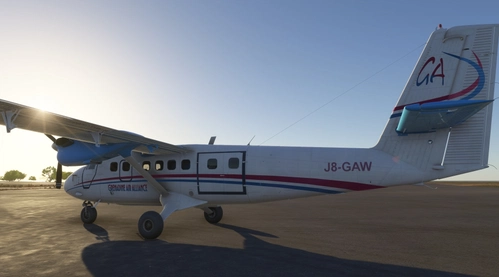
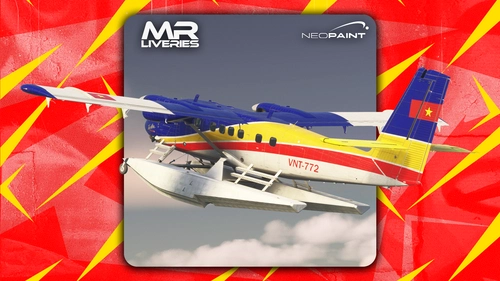
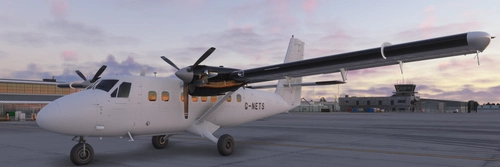
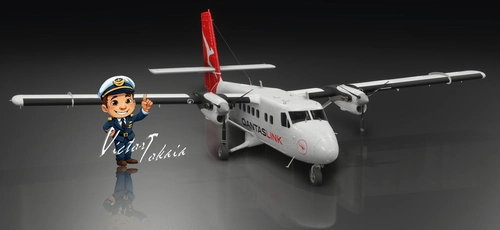
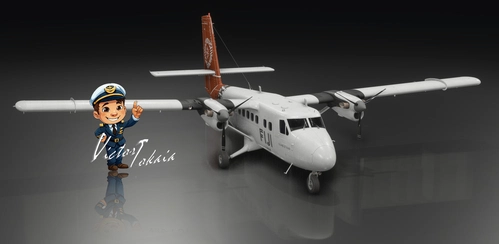
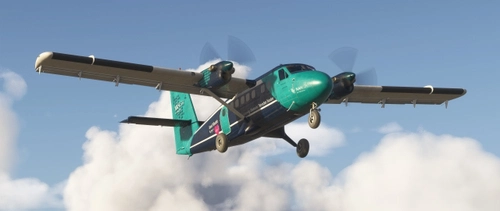
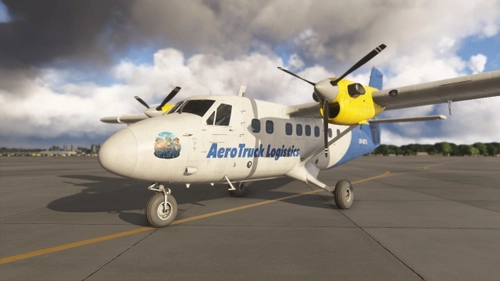
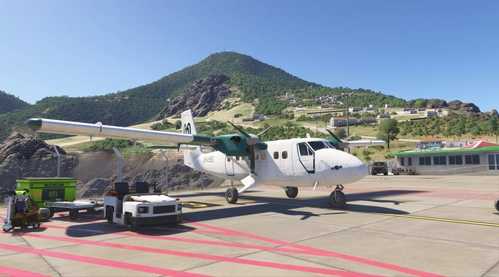
The DHC-6 Twin Otter, manufactured by de Havilland Canada, is a versatile, twin-engine, short takeoff and landing (STOL) utility aircraft renowned for its adaptability and rugged design. First introduced in 1966, the Twin Otter quickly became a favorite for operators in remote and challenging environments due to its ability to operate from unpaved airstrips, water, or snow. Powered by Pratt & Whitney PT6A turboprop engines, it offers exceptional performance in high-altitude and extreme weather conditions, making it ideal for regions such as the Arctic, the Andes, or remote tropical islands.
The aircraft’s robust construction and straightforward design allow it to accommodate various missions, from passenger transport to cargo hauling, medical evacuation, and even skydiving operations. Its high-wing configuration and large windows provide excellent visibility, while its spacious cabin can be easily reconfigured for different roles. The Twin Otter’s ability to carry up to 19 passengers or a substantial cargo load, coupled with its ability to land on short, unprepared runways or water when equipped with floats, underscores its status as a workhorse in the aviation world.
Over the decades, the Twin Otter has seen multiple variants and modernizations, including the Series 400, introduced by Viking Air after acquiring the aircraft's production rights. This latest version features updated avionics and systems while retaining the reliability and flexibility of the original design. The DHC-6 Twin Otter continues to serve a diverse range of operators, from commercial airlines to military and humanitarian organizations, cementing its legacy as one of the most dependable and versatile aircraft ever built.

 Wahidung






![[AEROSOFT] SimFly DE HAVILLAND CANADA DHC-6 TWIN OTTER livery](https://cdn.flightsim.to/images/27/aerosoft-simfly-de-havilland-canada-dhc-6-twin-otter-livery-487105-1764518637-bFnov.jpg?width=500)