

The Boeing 787-9 has become one of the most closely watched widebody projects currently in development for Microsoft Flight Simulator, and the team behind it, Vector Sim, used its stage time at FSExpo 2026 to show just how far the aircraft has come since its first public appearance earlier this year. Where the studio's February 2026 reveal and its FSWeekend presentation focused largely on introducing the project and its underlying philosophy, the FSExpo session shifted the emphasis toward something more concrete: demonstrating systems, workflows, and behaviors that are already functioning inside the simulator rather than describing what might come later.
Vector Sim is a relatively new name in the addon space, though not necessarily a new group of people. The studio is built around a mixed team of active 787 and 737 pilots, aircraft technicians, engineers, programmers, and 3D artists, several of whom have prior experience working on other commercial flight sim products. Internally codenamed "Project Griffin," the Dreamliner has reportedly been in development for well over a year before its public unveiling, with the team describing months of dedicated research and documentation work that preceded any actual coding or modeling. That groundwork forms the backbone of what was shown on stage in June.
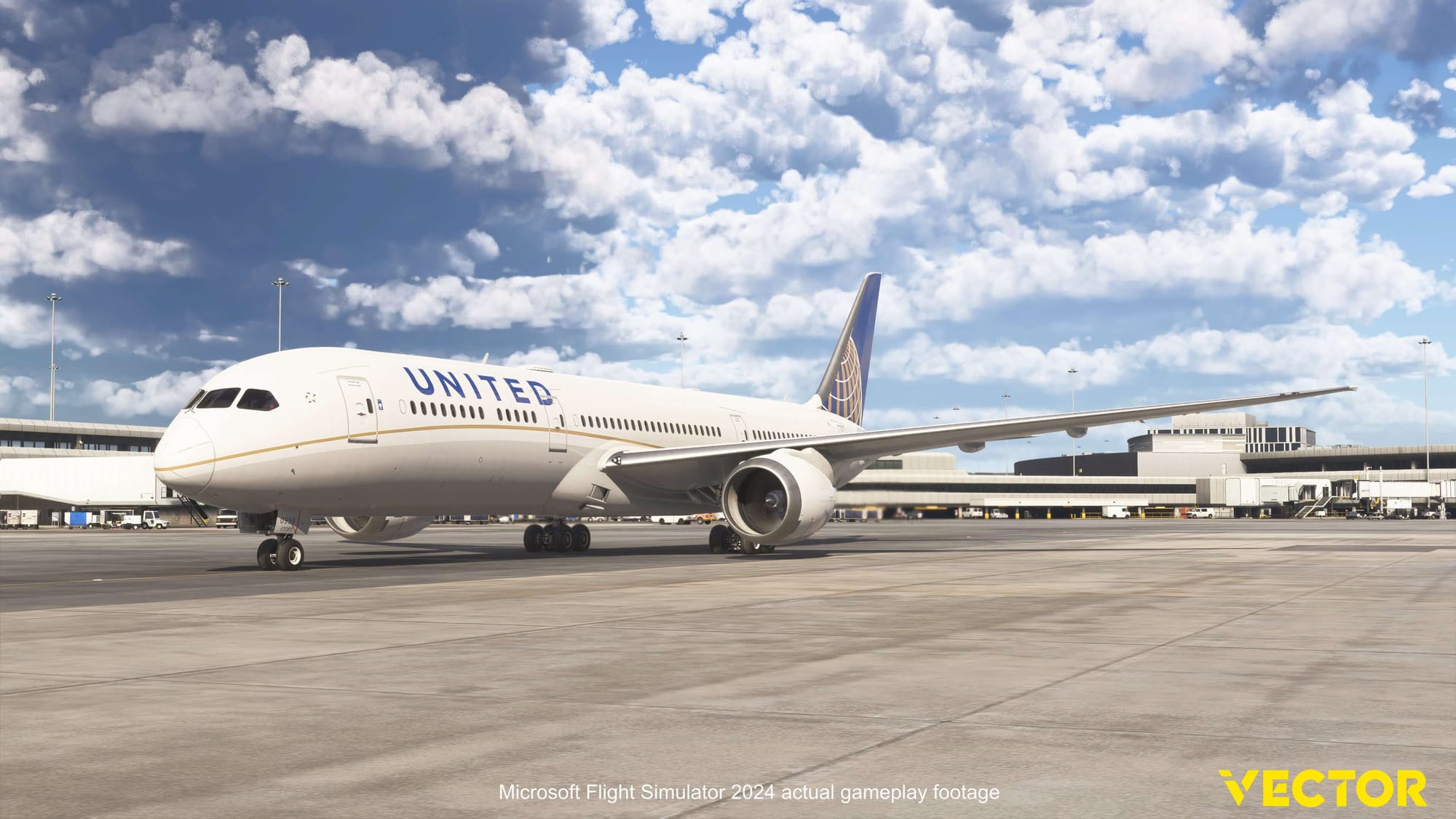
A United Livery Takes the Spotlight
For this presentation, Vector chose a United Airlines 787-9, registration N27958, as its showcase aircraft. Liveries aside, the choice of a US carrier for an event held in North America is a fairly deliberate one, and it gave attendees a slightly different visual reference point compared to the Lufthansa-painted Dreamliner shown during the studio's previous development update in May.
A Flight Deck Built Around One Network
The centerpiece of the FSExpo session was the flight deck itself, demonstrated through a realistic operational scenario rather than a simple walk-around. Vector used the demo to show the cockpit environment, the EFB workflow, CDU interaction, and the aircraft's systems all responding to live data flowing across what the studio describes as a single, common aircraft network. The phrase used to sum it up, "one aircraft, one network, one connected experience" reflects a design approach that treats every system as part of an interconnected whole rather than a collection of isolated, scripted modules.
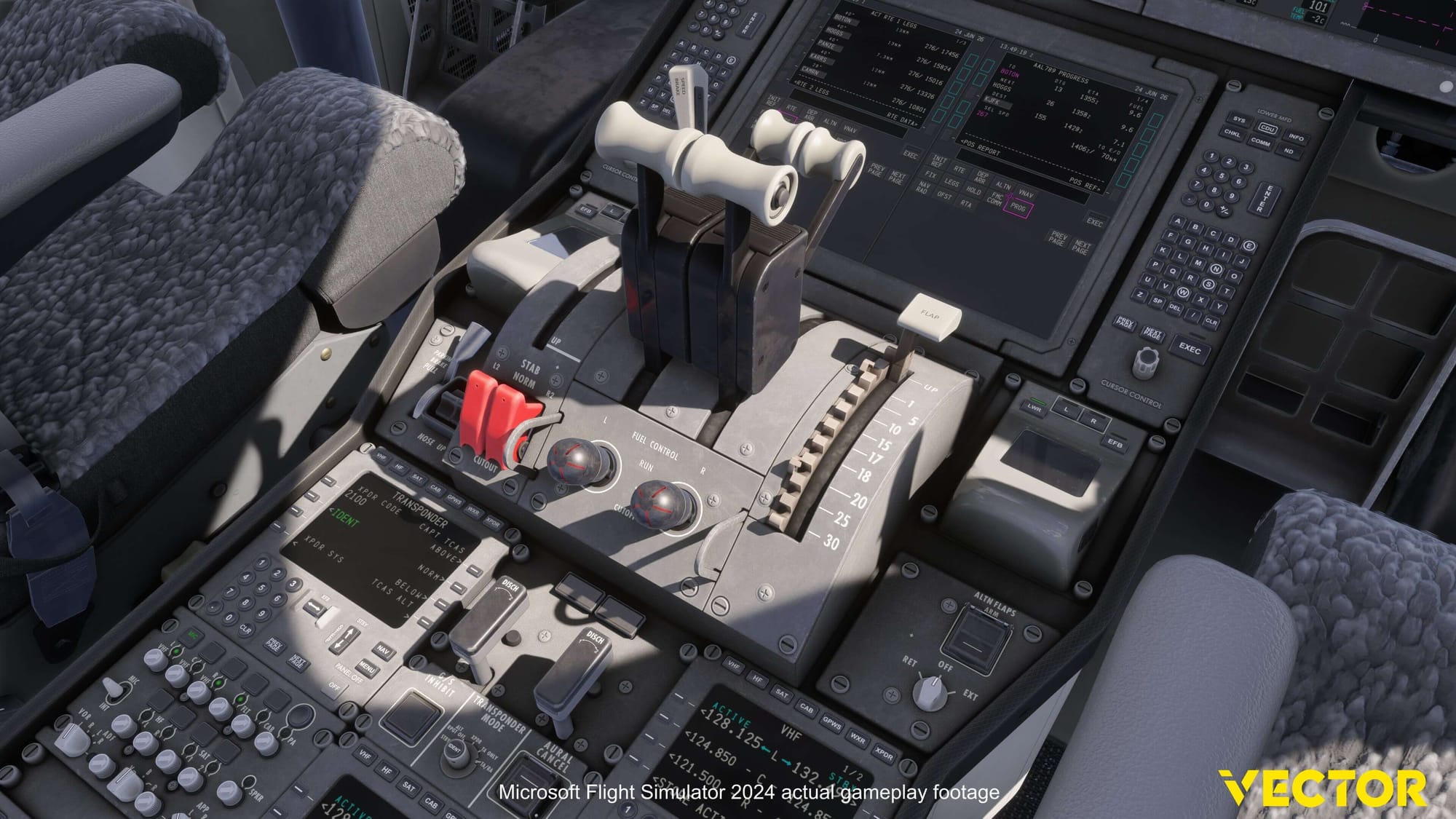
This systems-first approach was further illustrated through a look at the hydraulic system, shown via its synoptic and maintenance pages, in a similar fashion to how the electrical system had previously been showcased. According to Vector, the demonstration highlighted how the system behaves at a schematic level during engine start, with flow lines, real-time figures, and pump activity all updating dynamically and following realistic timings. The multifunction display setup also got a brief mention, with the studio noting that either display can be presented on a single display unit, mirroring the flexibility found in the real aircraft. A deeper look at that functionality has been promised for a future spotlight.
Three EFB Environments, One Connected Aircraft
Electronic Flight Bags have become a defining feature of modern airline operations, and the 787 is no exception. Vector used part of its presentation to detail three distinct EFB environments planned for the aircraft: the integrated Boeing EFB, the studio's own tablet system known as the vPad, and a Microsoft tablet implementation. Each is intended to serve a different operational purpose while staying connected to the same underlying aircraft systems, so that information relevant to a given phase of flight is available through whichever environment a pilot chooses to use.
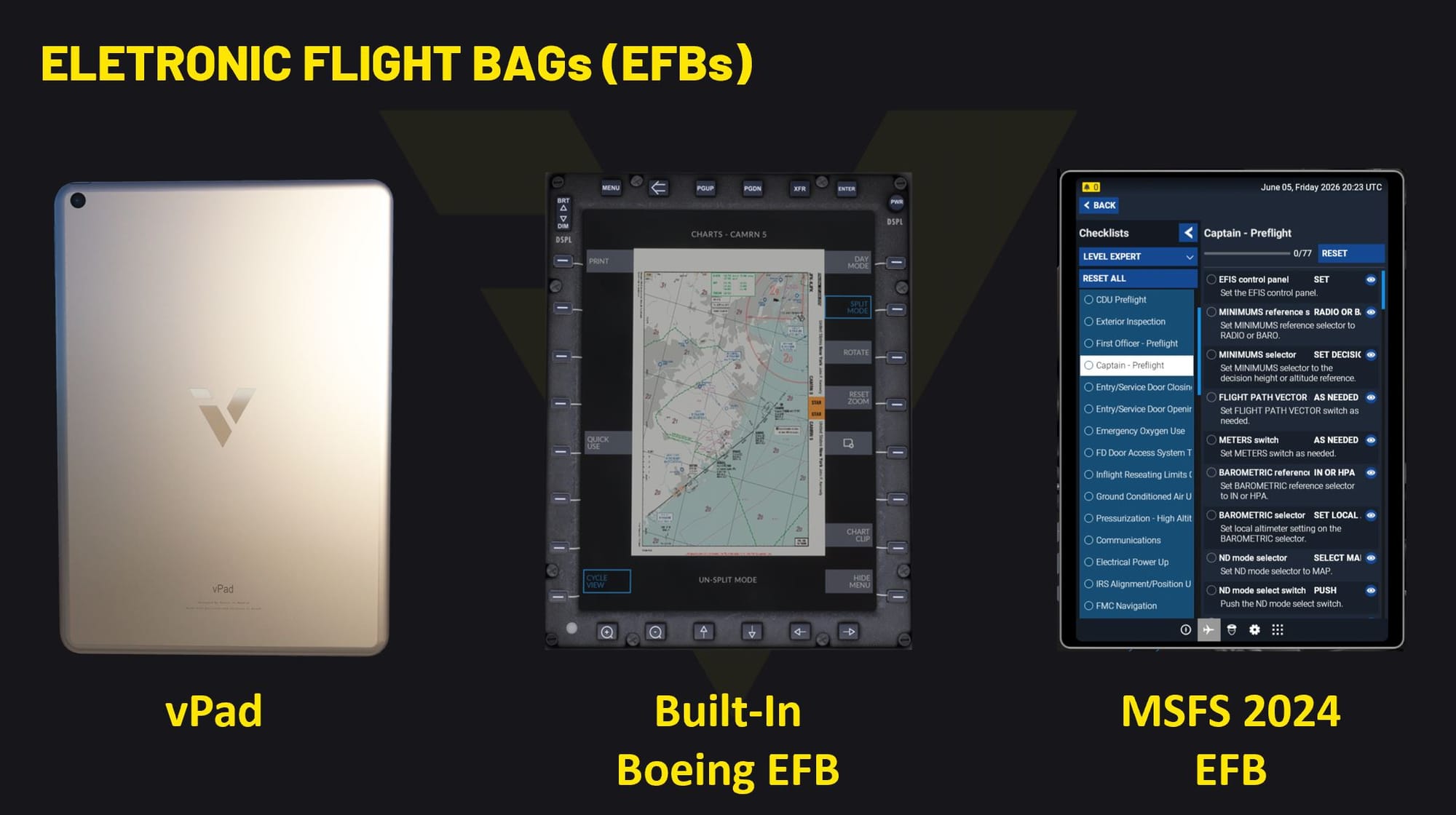
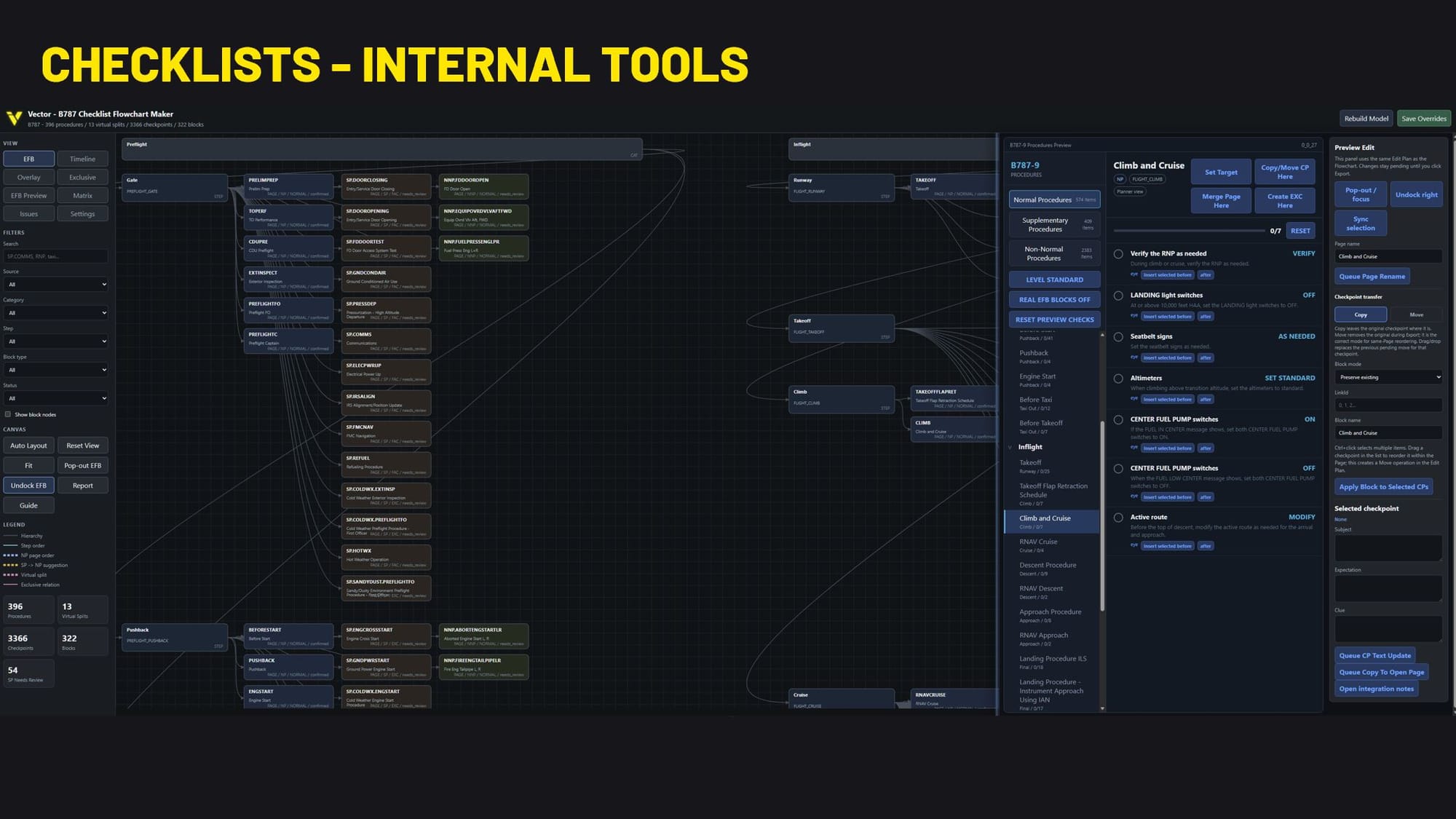
Recreating the Boeing EFB in particular required mapping and documenting the entire built-in ecosystem, down to every page, menu, and function, using in-house tools the studio developed specifically for this purpose. Vector frames this as part of a broader goal: not just presenting information on a screen, but building workflows that feel purposeful and consistent with how the aircraft is actually operated, from preflight planning through arrival.
Checklists by the Thousands
One of the more striking figures shared during the session concerned the aircraft's checklist system. Vector says the integrated Boeing checklist implementation spans more than 700 pages and includes 3,366 individual checkpoints across Normal Procedures, Supplementary Procedures, and Non-Normal Procedures. Producing a system of that scale required the same internal tooling used for the EFB work, underlining how much of Vector's development process is built around custom software rather than manual data entry.
Sound Recorded Straight from the Source
Audio has also received dedicated attention. According to the studio, dedicated recording sessions have been carried out aboard real-world 787s to capture authentic switch, alert, system, and engine sounds directly from the source aircraft. Vector has indicated that the sound design deserves its own detailed breakdown and plans to cover it more thoroughly in a future spotlight.
Smaller details were highlighted too, including custom-built typefaces designed from scratch to replicate the fonts used in the real aircraft's displays and panels. It is a minor element in isolation, but one of many the studio points to as contributing to a flight deck that feels familiar to those who have spent time around the actual Dreamliner.
Where the Project Stands
Vector closed its presentation with a notable claim: everything shown either already exists, is actively in development, or is already functioning, with no planned features, placeholders, or "coming later" promises attached to the release version. Whether that holds up in practice will only become clear once the aircraft ships, but it does signal a level of confidence in how far along the project currently is. A firm release date has still not been announced. Vector has previously pointed toward a release sometime in 2026, and in interviews around the FSExpo presentation the team reaffirmed that the aircraft remains on track for that window, though no specific date or pricing has been confirmed at this stage.
For anyone tracking the project, the next steps are to keep an eye on the Flightsim.to Radar and Vector's official channels. As the Boeing 787-9 is not yet available for purchase, there is nothing to buy just yet, but following along now is the best way to stay informed as Vector moves closer to bringing its Dreamliner to Microsoft Flight Simulator.