

FSExpo has become one of the fixed points on the flight simulation calendar, and 2026 was no exception. Held in the Minneapolis–St. Paul area, the show once again drew developer studios from across the community to share new projects and progress updates. Among them was 🔗 FlightSim Studio AG (FSS), the Swiss developer that has built its reputation around the Embraer E-Jets series, the Tecnam P2012 Traveller, and the Boeing 727. During a roughly 20-minute presentation on the FSElite stage, the team gave an overview of four ongoing projects — and had a surprise in store that few in the community had anticipated.
Shortly after the event, FSS published a summary of the presentation on its own website, in which the studio sorted the four projects into rough categories: some are close to release, others are longer-term efforts, and one is described as something the team considers genuinely special. Here is what was shown, project by project.
Tecnam P2012 Traveller v2 – a native build for MSFS 2024
The first project is the Tecnam P2012 Traveller, which will return as a fully revised v2 exclusively for Microsoft Flight Simulator 2024. According to FSS, this is not meant to be a simple compatibility pass. The new version makes use of several native MSFS 2024 features, including walkaround support, career mode compatibility, the native EFB, the new MSFS 2024 passengers, and multiple cargo configurations. Parts of the 3D model have been reworked, a completely new sound set has been created, and the system simulation has been refined.
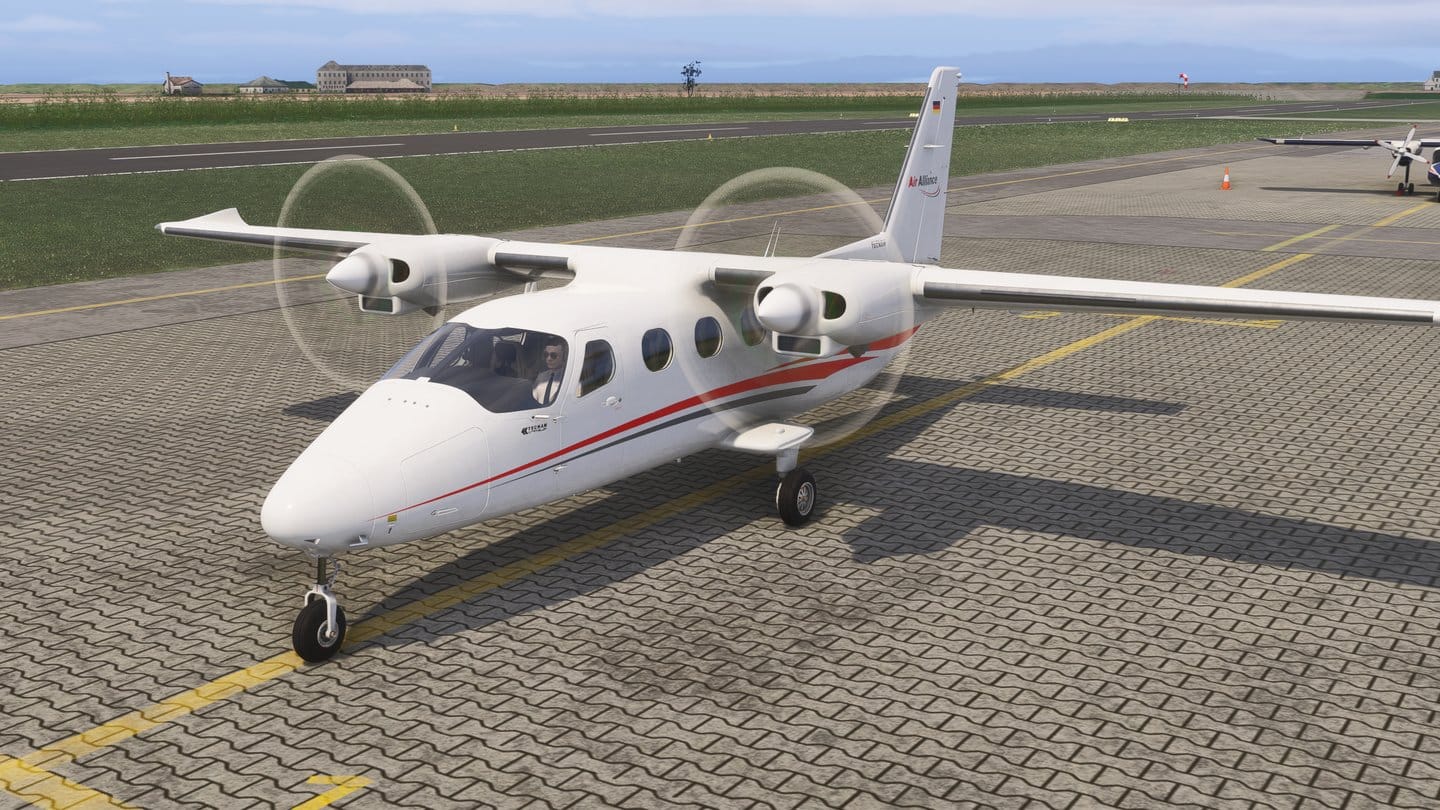
One notable addition is a VIP cabin configuration, mirroring a variant recently introduced by Tecnam Aircraft itself, which will appear in the simulator for the first time. Overall, the P2012 v2 is planned to ship with passenger, cargo, VIP, special mission, and skydiver versions, all built natively for MSFS 2024. The aircraft is already in beta, which suggests a release should not be too far off.
E-Jets version 1.0.0 – a rewritten autopilot as the last major hurdle
The E-Jets line has a considerably longer history. It has been one of FSS's best-known products, but also one of its most debated, ever since the E175 launched in early 2023. That release went out as an early access product exclusively through the Aerosoft store, with some systems already deeply modeled and others slated to follow after launch. Since then the lineup has grown to include the larger E190/E195 variants, which FSS released roughly a year after the smaller E170/175.
At FSExpo, the team confirmed that most of the functionality planned for version 1.0.0 is either already implemented or in its final stage. The one major piece still in progress is a completely new autopilot, written from scratch and independent of the simulator's default system, intended to deliver more stable lateral and vertical tracking than the previous implementation rather than continuing to patch around it. FSS says the new autopilot should give it significantly more control over aircraft behavior once testing is complete. Reaching 1.0.0 is the milestone the studio is treating as feature-complete for the E-Jets.
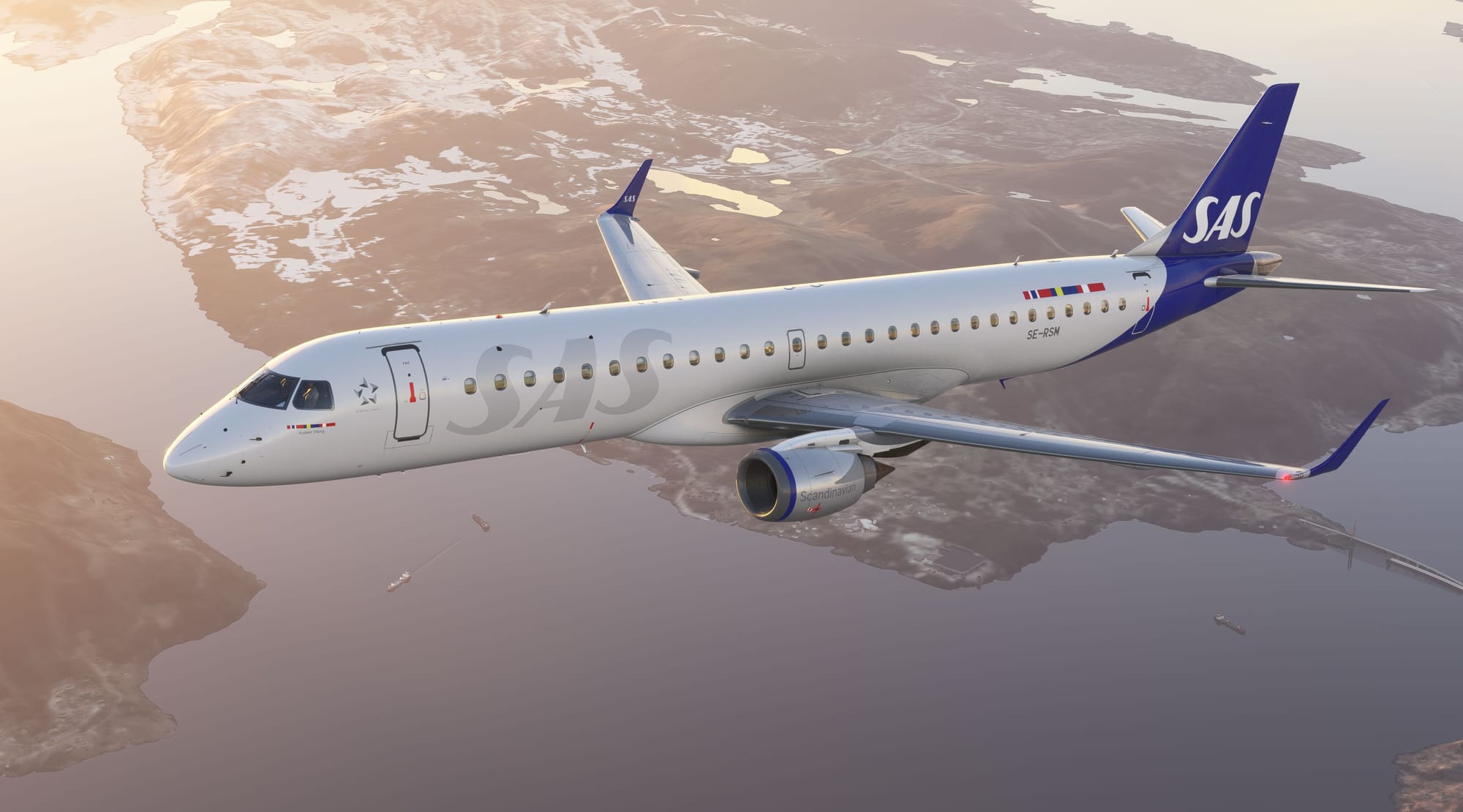
Once that version ships, development attention moves to a native migration to Microsoft Flight Simulator 2024, which FSS has explicitly stated will be a free update for existing customers. The studio has been open about the fact that the project has taken longer than originally planned, framing the current work as being about stability and reliability rather than new features. Not everyone in the community is taking the delay in stride, however. In comments under coverage of the announcement on several flight sim blogs, some buyers pointed out that the early access version was originally marketed more than two years ago with an expected completion date of late 2024. That tension between technical thoroughness and customer patience is likely to follow FSS for a while yet.
Boeing 727 Series v2 – a native MSFS 2024 build with the ADV variant
The Boeing 727 Series, one of the studio's flagship products, is also getting a native version for Microsoft Flight Simulator 2024. FSS says this update goes beyond a straightforward compatibility conversion, with plans for walkaround support, external fueling, new textures, sound improvements, and a range of technical updates. The popular ADV variant is also set to be included, which the studio frames as a stronger foundation for further development of the 727 family.
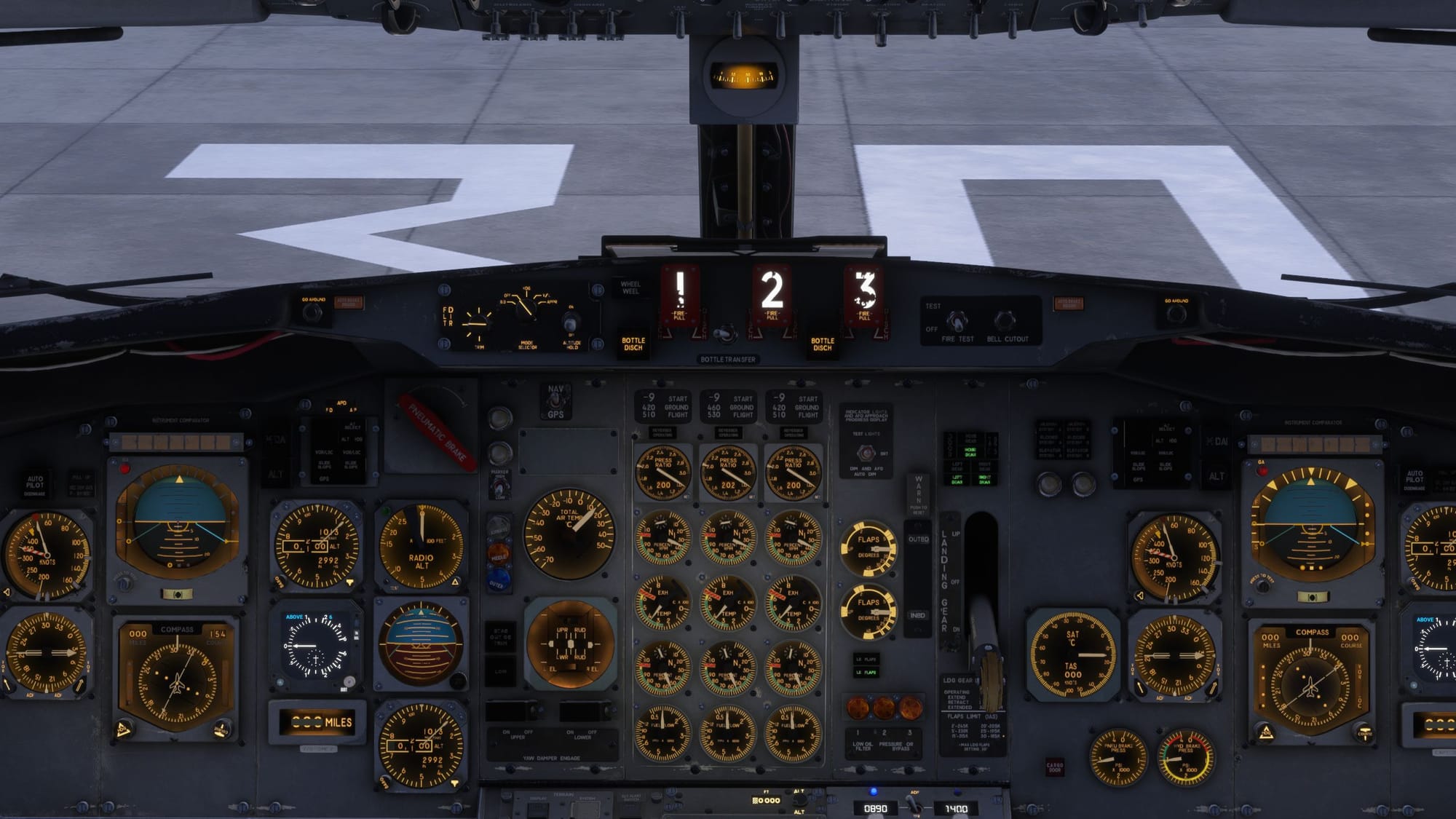
FSS describes the 727 as a particularly important aircraft for the studio and wants the MSFS 2024 version to be treated as a genuine step forward rather than a quick port, taking advantage of what the newer platform allows. No release window has been given yet, though the studio confirms that development is already underway.
The surprise: a Tupolev Tu-154M for MSFS 2024
By far the most talked-about moment of the presentation was the reveal of an entirely new project: a Tupolev Tu-154M for Microsoft Flight Simulator 2024. The Tu-154 is a classic Soviet tri-jet built in numerous variants, with its first flight dating back to 1968, while the more modern and heavily upgraded Tu-154M being recreated here first flew in 1982. In airline service it was operated by carriers including LOT Polish Airlines, Czech Airlines (ČSA), Interflug, Malév, Cubana, Aeroflot, and Belavia. For a community dominated by Western airliner types, the aircraft remains a relatively rare sight, which makes the announcement all the more notable.

Behind the project is a collaboration with Anatolii Iakmets, an enthusiast and systems developer whose lifelong personal connection to the Tu-154M brings an unusual level of authenticity to the effort. Iakmets's father flew the Tu-154 as an airline pilot, and the 3D model is reportedly based on extensive on-site research and measurements carried out on a real aircraft in Hungary. Iakmets had already put more than four years of personal work into the project before FSS got involved. By the studio's own account, it spent around a year and a half looking for a suitable successor to the 727 — something unusual, distinctive, and rarely represented in the simulator world — and found it in Iakmets and his Tupolev project.
For anyone who might be intimidated by the unfamiliar cockpit layout, FSS is promising accessibility without stripping away what makes the aircraft distinctive. Multilingual cockpit decals, including English and Russian, are planned to ease the learning curve, alongside the return of the studio's "Virtual Flight Engineer," the assistance feature first introduced on the 727 that helps make a complex three-crew cockpit workable for solo pilots. Deep system simulation, a custom-built sound set, and what the studio calls authentic flight behavior round out the early feature list. Deliberately absent is any release window — FSS describes the Tu-154M as a long-term project it does not want to rush.
Context
Taken together, the FSExpo presentation paints the picture of a studio working on two fronts at once: closing out existing projects while also pushing into new territory. A native migration to Microsoft Flight Simulator 2024 runs through all four announcements as a common thread and will likely consume a significant share of development capacity over the coming months. The Tu-154M stands out as the clearest sign of portfolio diversification. While the E-Jets, the 727, and the Tecnam line are already established product families, FSS is deliberately stepping into new ground with a Soviet-era airliner — a move that carries real weight given how thin the market for a detailed, developer-backed Tu-154 has been until now.
None of the four projects discussed here yet have pricing or a confirmed release date, so anyone wanting to stay current should keep an eye on FlightSim Studio on the Flightism.to Radar and the studio's usual channels.