
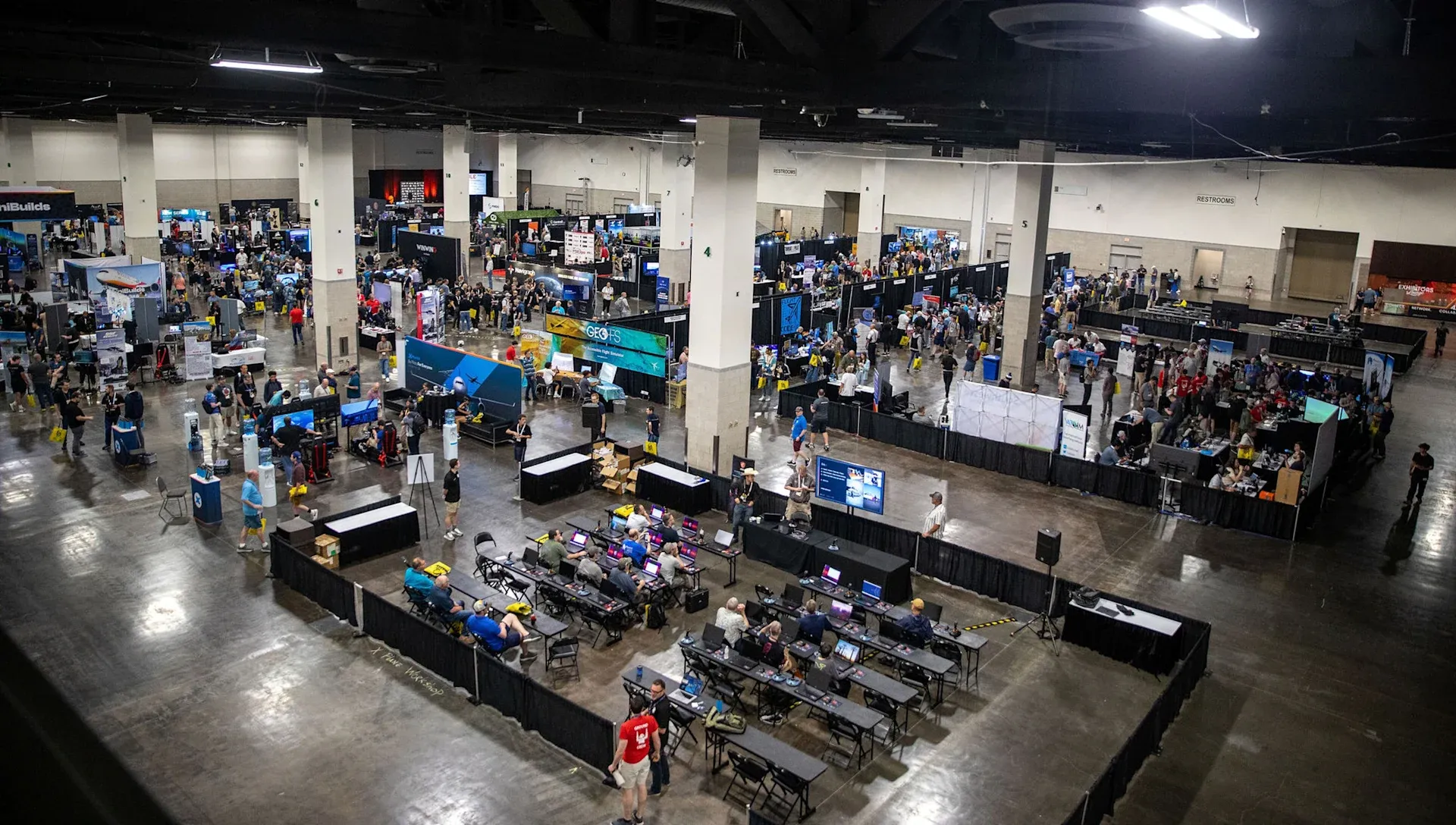
FlightSimExpo is one of the world's largest enthusiast flight simulation conventions, and this year it returned to the Saint Paul RiverCentre in downtown Saint Paul, Minnesota. FSExpoFriday is the largest stage in flight simulation for new product reveals and announcements, and on Friday, June 12, developers of all kinds took to the stage bringing the latest news to the community. With a packed lineup spanning Microsoft Flight Simulator's own roadmap, hardware reveals, AI tools, scenery, aircraft, and utilities, FSExpoFriday 2026 delivered one of its most content-dense editions to date. Here's a complete breakdown of everything that was announced.
Microsoft Flight Simulator: World Update 22, City Update 15, New Aircraft, and More
Jorg Neumann, Head of Microsoft Flight Simulator, opened the main stage with an overview that carried more substance than many past keynotes. The most important subtext: the platform is maturing. According to Jorg, SU5.1 is the most stable version of the simulator since the original Microsoft Flight Simulator 2020 launch — a statement that speaks for itself given how turbulent the early days of Microsoft Flight Simulator 2024 were.
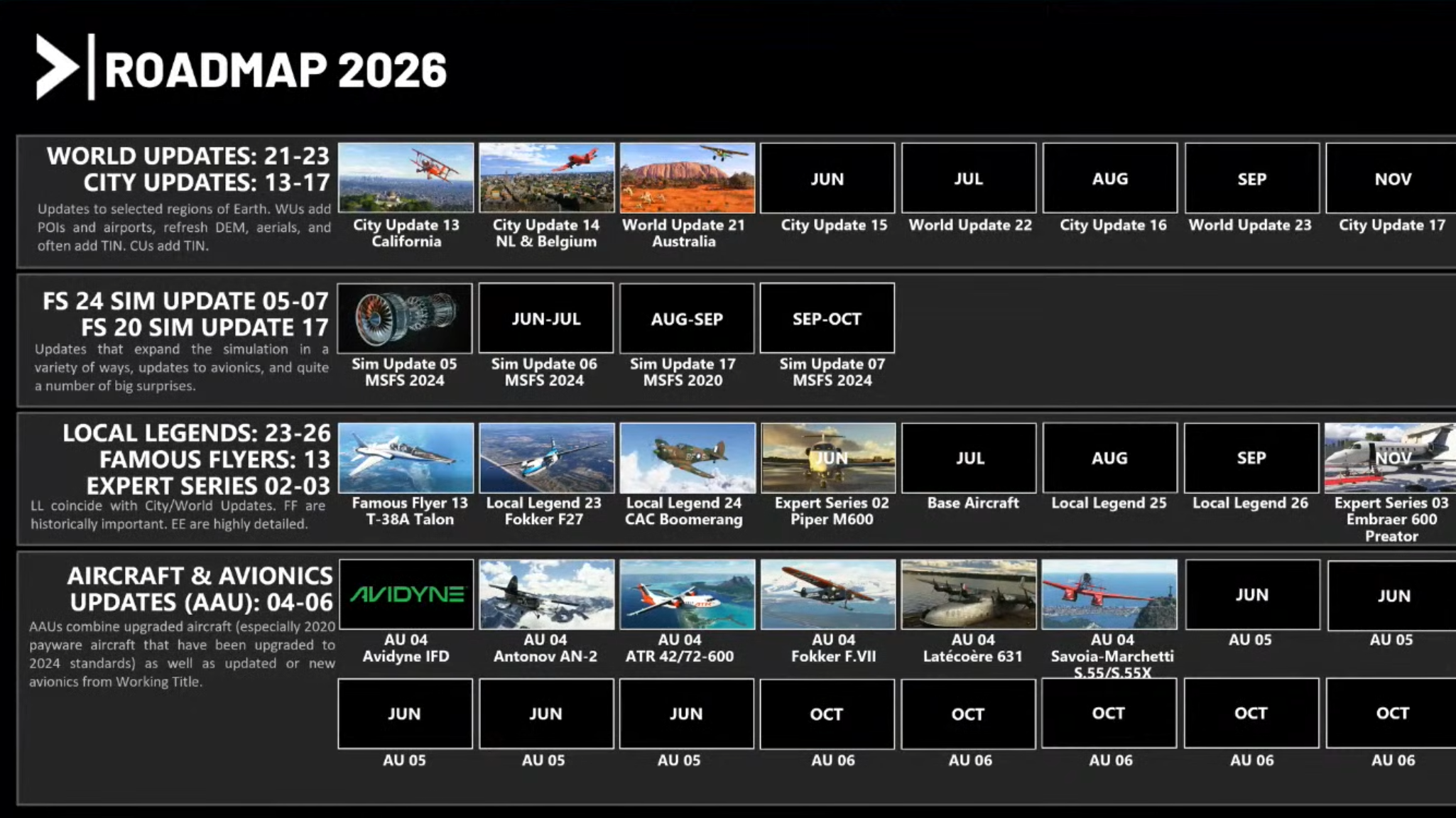
On the content side, World Update 22: US National Parks takes centre stage, built in partnership with photogrammetry provider Vexcel and covering more than thirty national parks and monuments, bringing them up to the visual benchmark set by the Grand Canyon. One particularly thoughtful detail: Jackson Hole Airport (KJAC) receives bespoke scenery from Gaya Simulations, making sense given it's the only commercial airport in the United States that sits physically inside a national park. The release is scheduled for July 4th — timing that is clearly no coincidence. City Update 15 focuses on Illinois, Minnesota, and Wisconsin, a regional selection that feels almost symbolic given the event's location in Saint Paul, but which covers genuinely compelling urban environments: Chicago, Milwaukee, Minneapolis, and the host city itself. The timing is tied to the country's 250th anniversary celebrations.

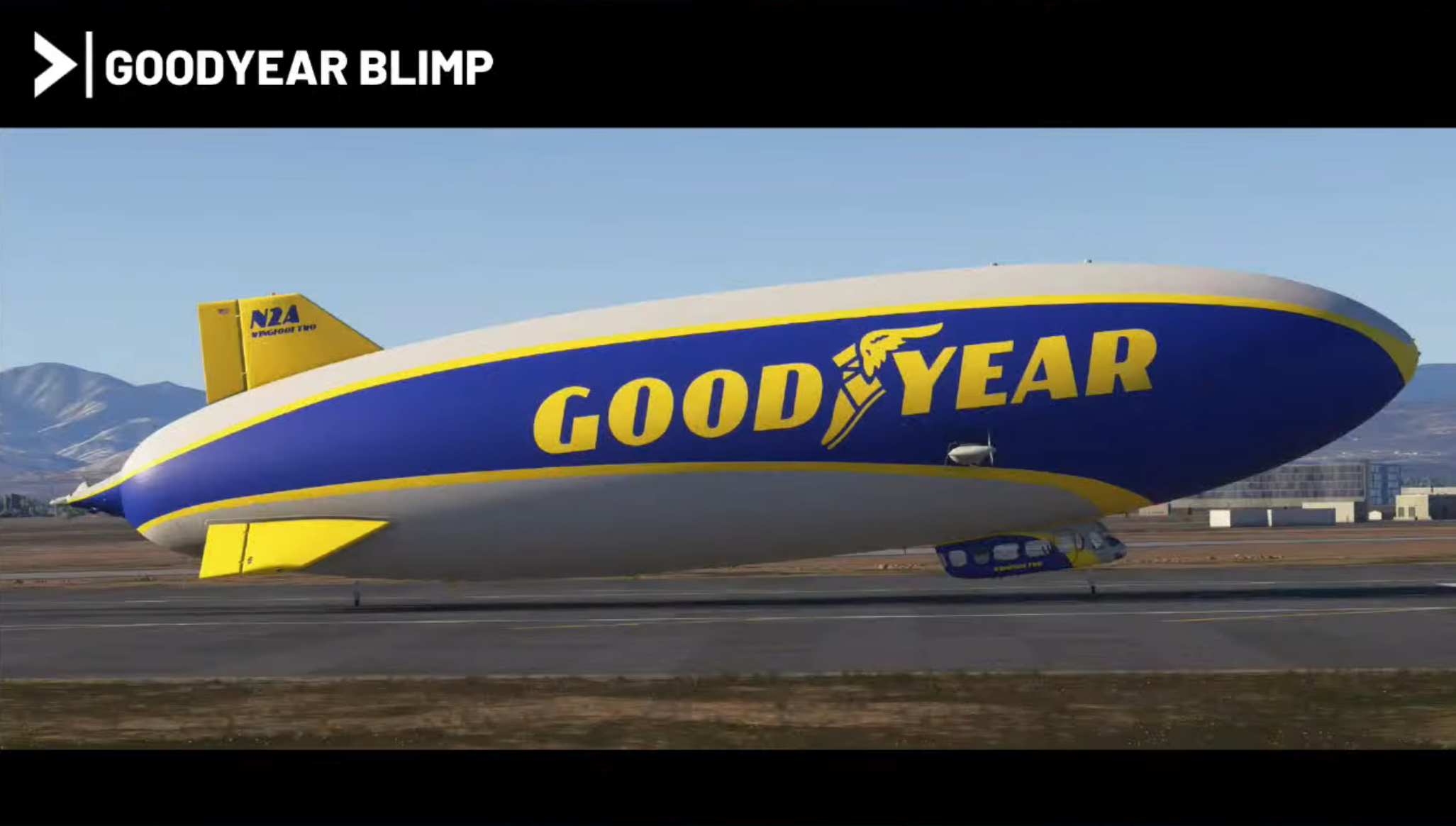
Two new aircraft were also unveiled. The Piper M600, presented by FSReborn as the latest Expert Series addition, fills a gap that's been noticeable for a while — a modern single-engine turbopr2op that sits between simple GA props and full-blown airliners, aimed at pilots who want systems depth without the complexity of a narrowbody. Then there's the Goodyear Blimp, developed by iniBuilds and arriving on July 4th as a free base aircraft for MSFS 2024.
Looking toward fall 2026, the National Championship Air Races are returning as a free update, this time with rebuilt course scenery and a heavier emphasis on engine management and flight dynamics. Anyone who flew the original Air Races in MSFS 2020 will know that the concept had potential that was never fully realised — this revision sounds like an attempt to fix that.
iniBuilds: A380 Development Update
The heaviest reveal was the A380 development update. The Airbus A380 has been an open promise from iniBuilds for years — an aircraft that was in the works before MSFS 2024 even existed, with a development path shaped by platform changes and technical restarts. Now, with a full trailer and a detailed written update, the community finally has a clear picture of what's being built. Follow the Airbus A380 Project on the Flightsim.to Release Radar to stay alert.
Thrustmaster: Back in the Cockpit
Thrustmaster has built a strong position in the MSFS market through the TCA product family — by their own count, that lineup has now sold over half a million units. The TCA Sky Yoke represents the company's first serious move into the yoke segment, and the timing makes sense as the simulator's user base continues to grow beyond the joystick-and-throttle setup that defined earlier generations of the hobby.
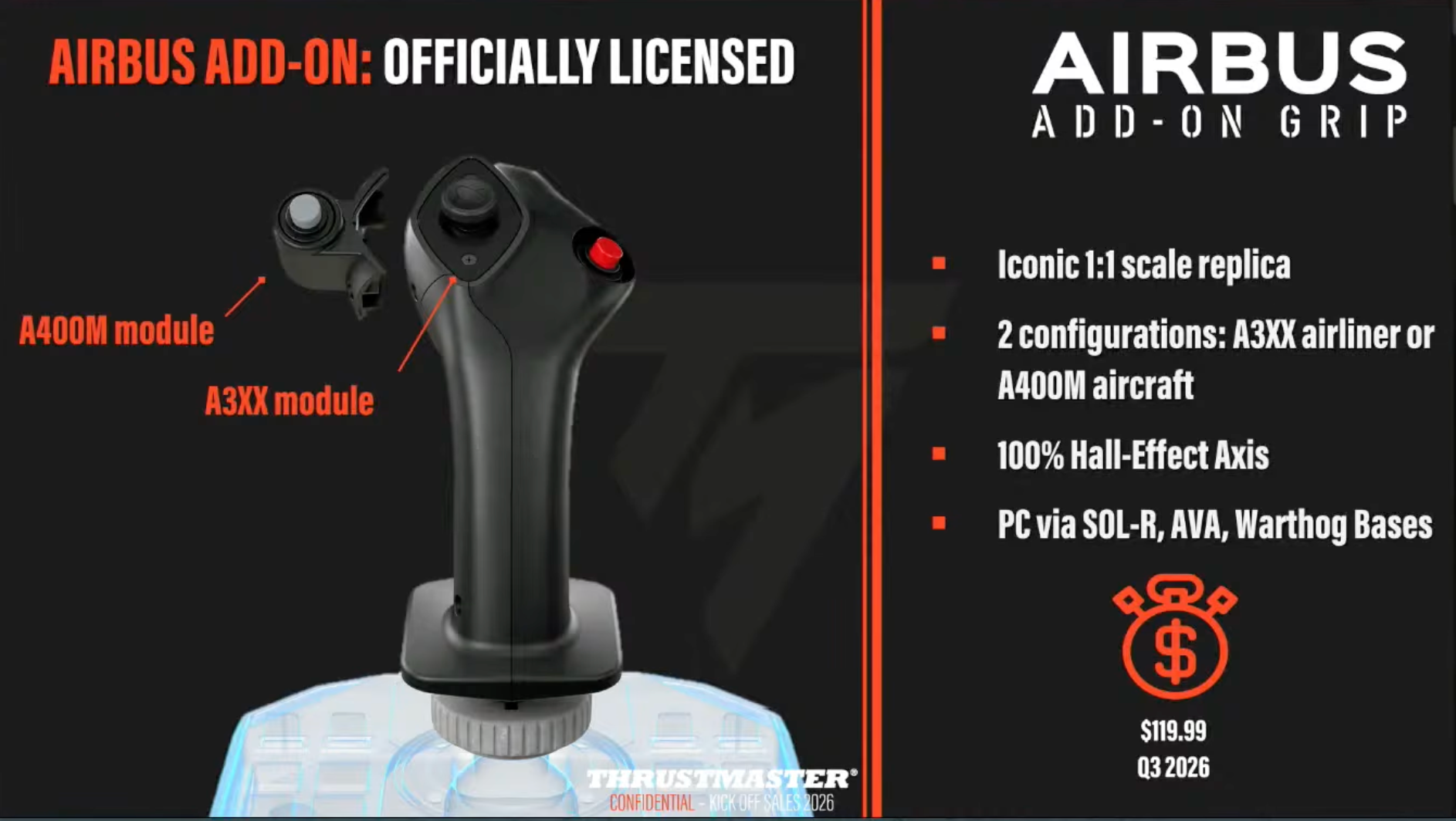
The Sky Yoke uses Hall-effect sensors throughout, which matters practically: potentiometer-based controls develop deadzone issues over time, while Hall-effect designs maintain precision indefinitely. The yoke offers 3.5 inches of pitch travel and 100 degrees of roll, and its most distinctive feature is dual-yoke support — two units can be connected simultaneously on PC, Xbox, and PS5, enabling a genuine shared-cockpit setup. Priced at $199.99 and targeting Q3 2026. A new officially licensed Airbus add-on grip was also announced at $119.99, compatible with existing Thrustmaster bases including the SOL-R, AVA, and Warthog. A throttle quadrant was teased without pricing or a release window.
Parallel 42 Releases Skytrails
Parallel 42 skipped the announcement-and-wait formula entirely: Skytrails was released on the day of the presentation and is available right now for MSFS 2024 at $10. The product adds persistent contrails from AI traffic, live traffic, and multiplayer aircraft, and intelligently populates the sky with generated trails when the world feels too empty. If you already own SimFX via the Parallel 42 store, the code GIMMETRAILS gets you Skytrails for free. It's not a landmark product, but it belongs to that category of atmospheric additions that quietly make the world feel inhabited rather than static.
SayIntentions.AI: Three Features That Change Real Workflows
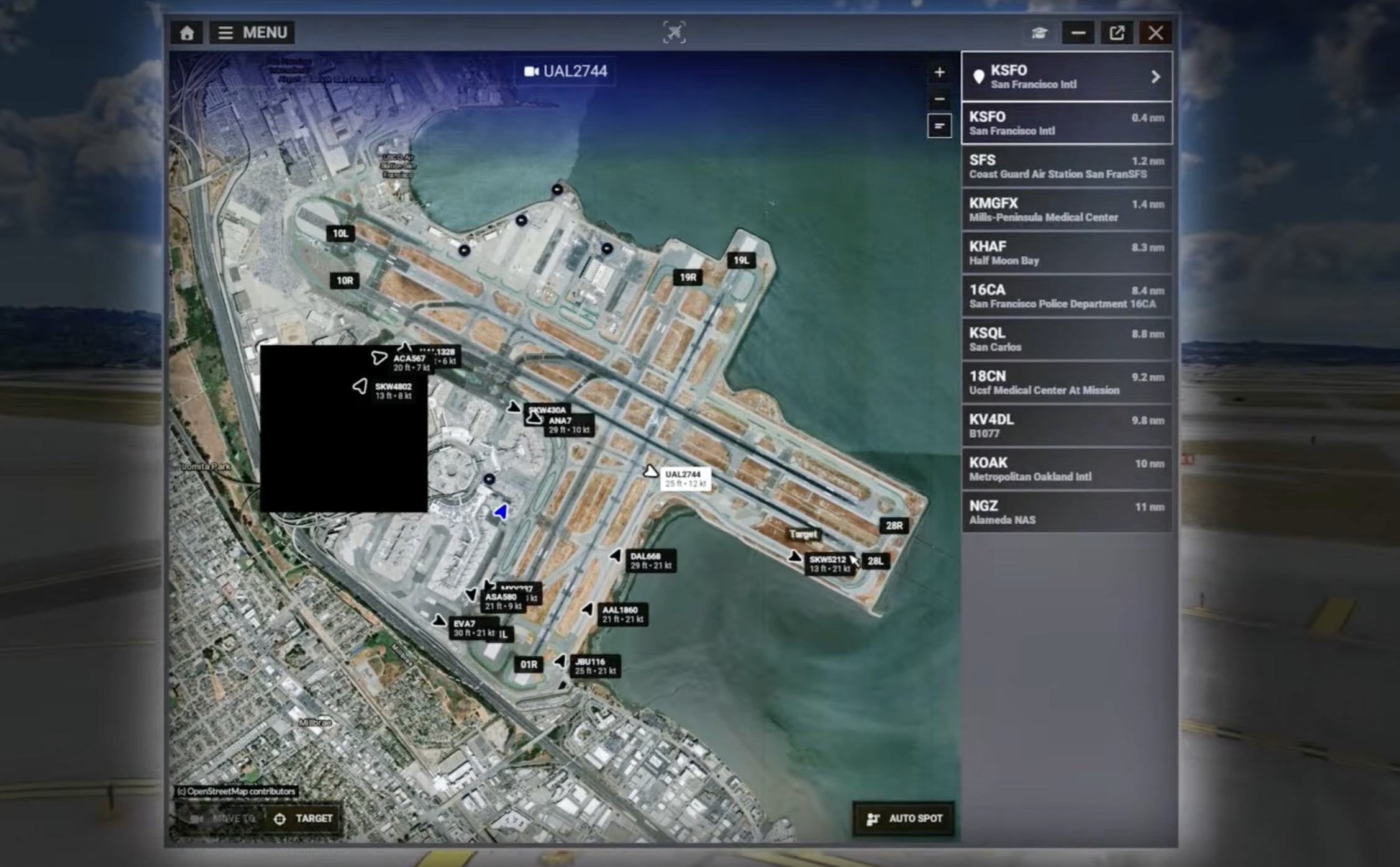
SayIntentions.AI announced three new features that sound modest in a headline but address concrete frustrations in day-to-day sim flying. Spotting was built in partnership with Parallel 42 and their ChasePlane camera tool. Via a customisable hotkey, you can instantly snap your view to the aircraft currently transmitting on your frequency — provided it's within line of sight. What sounds like a minor convenience feature is actually a meaningful shift in situational awareness: instead of a static audio feed from invisible AI aircraft, you can now watch the traffic around you as it interacts with ATC. Available to all subscribers by the end of June.
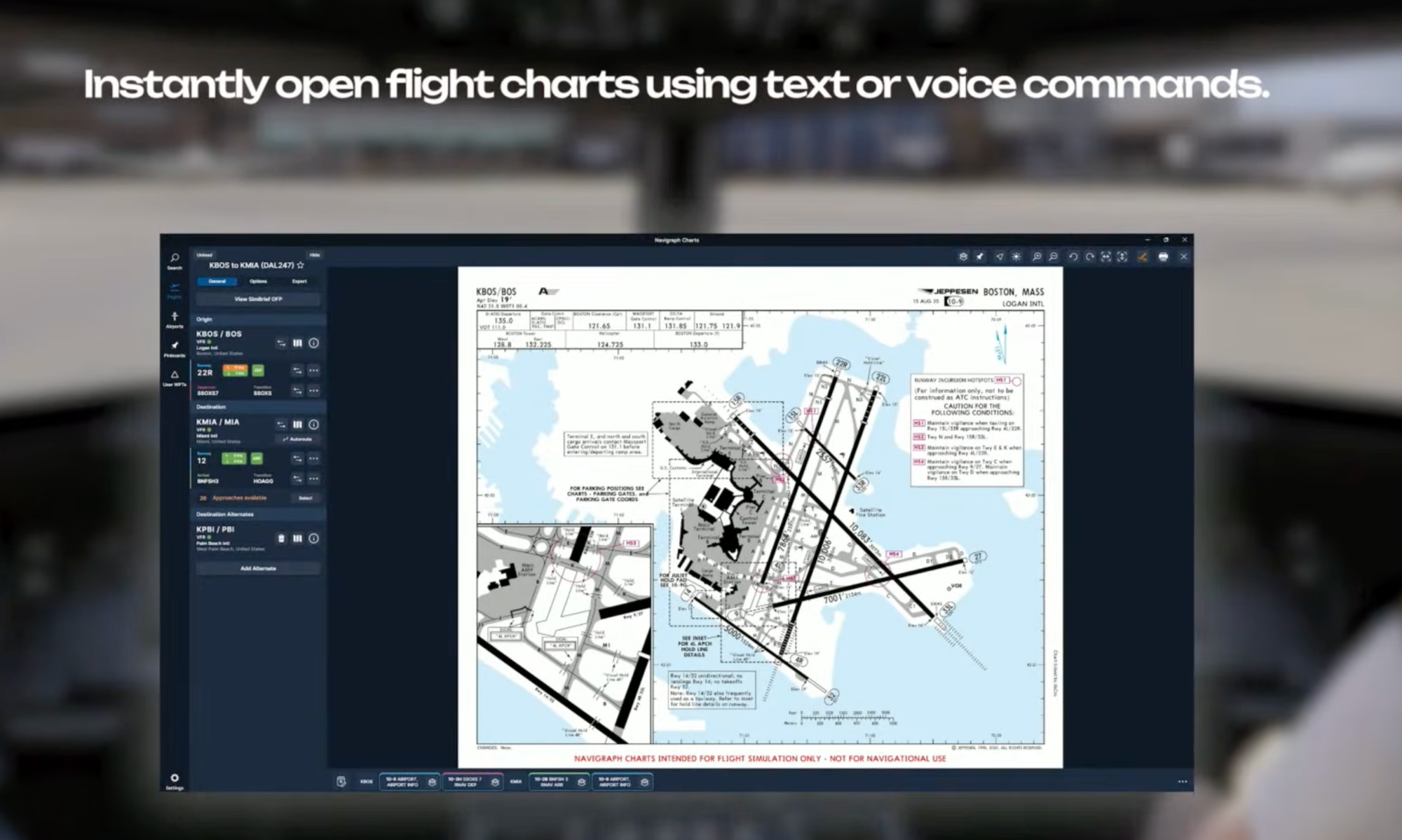
PlateBrief addresses a workflow problem that anyone flying procedure-heavy operations will recognise: the constant toggling between simulator, EFB app, and charts. Through a native integration with Navigraph Charts, the AI co-pilot can now load and display relevant charts on command — via voice or keyboard shortcut — and switch between them automatically as the flight progresses. The practical implication is that you stay heads-in during critical phases rather than fumbling for information across multiple windows.
Backtrack is conceptually the boldest of the three: the entire simulator state, including ATC, can be rewound to any point in the flight, as many times as you want. That's less of a novelty and more of a serious training tool. Flying a bad approach, botching a complex departure, struggling with a tricky taxi routing — all of these can now be repeated on the spot without restarting the entire flight. PlateBrief and Backtrack are currently live for Partner supporters and will roll out to all subscribers within a few weeks.
Navigraph: Oceanic Tracks and a Genuinely Global Expansion
Navigraph has spent the past few years methodically expanding from a charts and NavData provider into something closer to a full planning and data platform. The FSExpo announcements reflect that direction clearly.
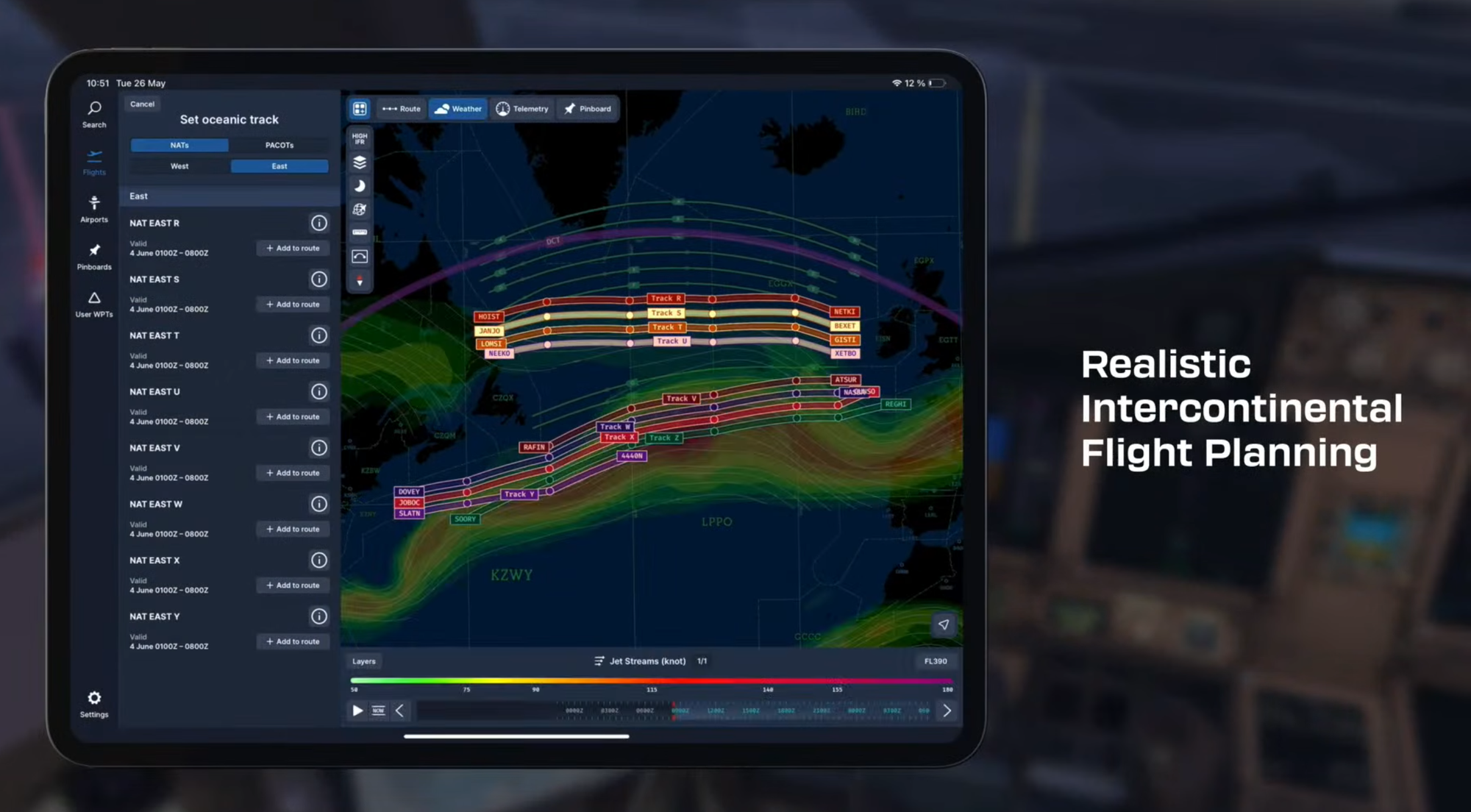
The centrepiece feature is Oceanic Tracks coming to the Charts application, covering both the North Atlantic Track system (NATs) and the Pacific Organised Track System (PACOTS), with real-world validity windows, entry and exit points, and current restrictions displayed directly in the app. Anyone who has tried to fly a realistic North Atlantic crossing will know how cumbersome it has been to manually research and manually input these tracks — this closes that gap in a meaningful way.
The VFR charts expansion brings Navigraph's coverage to new parts of the world: Brazil is now covered in its entirety, joined by several countries in Southeast Asia and parts of the Middle East. Finally, the Epic 2 avionics integration brings Charts, SimBrief connectivity, SID/STAR display, and a moving map directly into the cockpit of the PC-12 and PC-24 — closing a gap between avionics fidelity and navigation data that has been present since those aircraft launched.
Synaptic Simulations x iniBuilds: The A220 Gets Its Moment
Hot off the press from Saturday's seminar stage: Synaptic Simulations and iniBuilds have dropped what they're calling the definitive trailer for their long-awaited Airbus A220, and it's the clearest look yet at a project the community has been watching — sometimes anxiously — for well over a year.
The A220 has had a complicated road. Originally targeting a Q4 2025 release, the project went relatively quiet through early 2026, with only scattered Discord screenshots and a brief January update keeping the community informed. That silence is now broken in a meaningful way. The trailer, available on the iniBuilds YouTube channel, showcases recent progress across systems depth, flight deck functionality, cabin detailing, and exterior modelling — and it shows a product that has matured considerably since the last public glimpse. Full live development presentation from Synaptic and iniBuilds is scheduled for 11:30 AM CDT on the FSElite Stage today, which should answer some of the bigger open questions around systems depth and a revised release window.
MOZA: Covering the Full Ecosystem
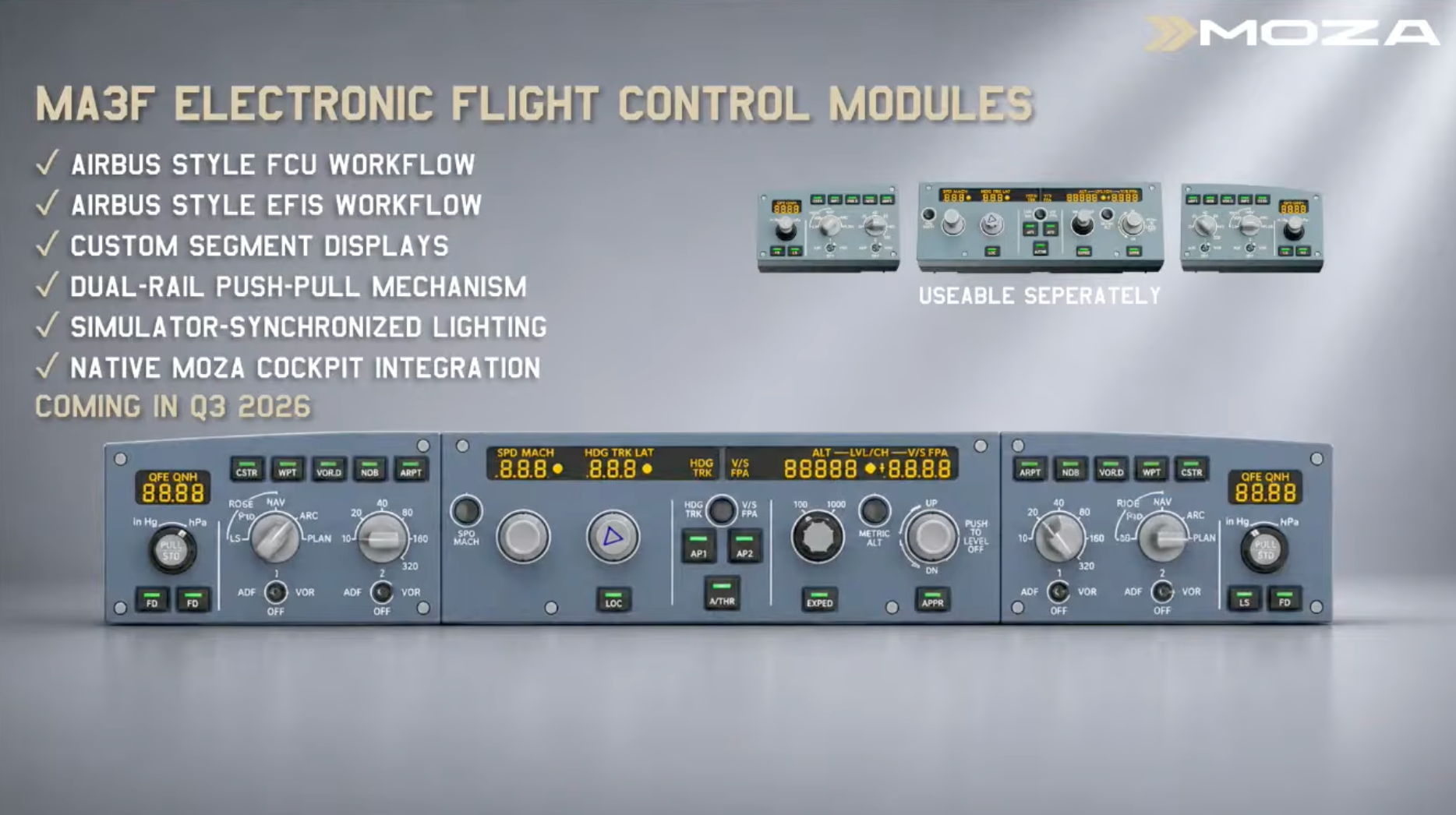
MOZA used FSExpoFriday to launch a broad hardware push that makes clear the company's ambition to cover the entire flight sim spectrum. The MA3F is an Airbus-style sidestick interface with a realistic push/pull workflow. The MA3F FCD and MB7F FCD are dedicated FMC/MCDU-style interfaces for Airbus and Boeing workflows respectively. The MGX1000 targets G1000-equipped GA aircraft, while the FMP18 brings an F/A-18 style multifunction display for military sim users. Most products are targeting a Q3 2026 release.
efbX: A Platform Finally Taking Shape
KatiePilot's efbX project officially confirmed a Q4 2026 release window from the stage, marking the first time a concrete timeline has been attached to what has been a long-running development effort. The concept behind efbX is distinct from aircraft-integrated EFBs: It's a standalone, device-agnostic interface that runs on a separate screen, tablet, or smartphone and brings dispatch, fuel management, door control, ground services, and flight planning together in a single environment. A built-in app store model will allow third-party developers to distribute compatible tools through the platform. The base tier will remain free of charge. Given how fragmented the typical high-fidelity cockpit setup has become — with separate windows for SimBrief, charts, ATC, and ground services all competing for screen space — efbX is targeting a real problem with a considered approach. To stay alert about further progress, follow efbX on the Flightsim.to Release Radar.
FSExpo Continues
FSExpoFriday ran for over five hours of back-to-back announcements. The highlights above are what we consider the most impactful takeaways from an exceptionally busy afternoon. The show continues through Sunday, June 14, with developer talks, workshops, and community panels still to come. All FSExpoFriday announcements are available to watch for free through FlightSimExpo Online. Stay tuned to Flightsim.to for continued coverage as the weekend wraps up.
4 months ago