
Flightsim.toFlightsim.to
    Huge Update flyPadOS 3 for FlyByWire A32NX is now available

    Huge Update flyPadOS 3 for FlyByWire A32NX is now available

    Flightsim.to

    Author

    May 29, 2022
    Updates and Patches

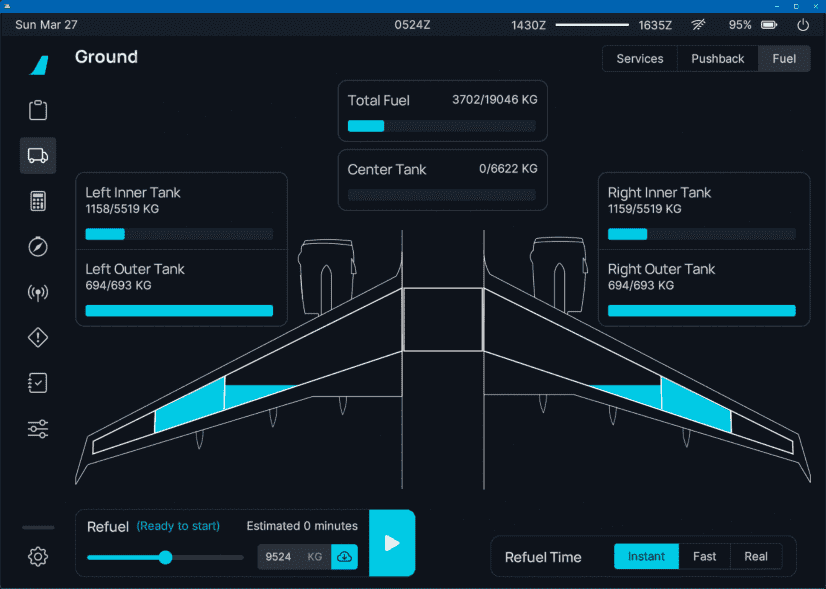
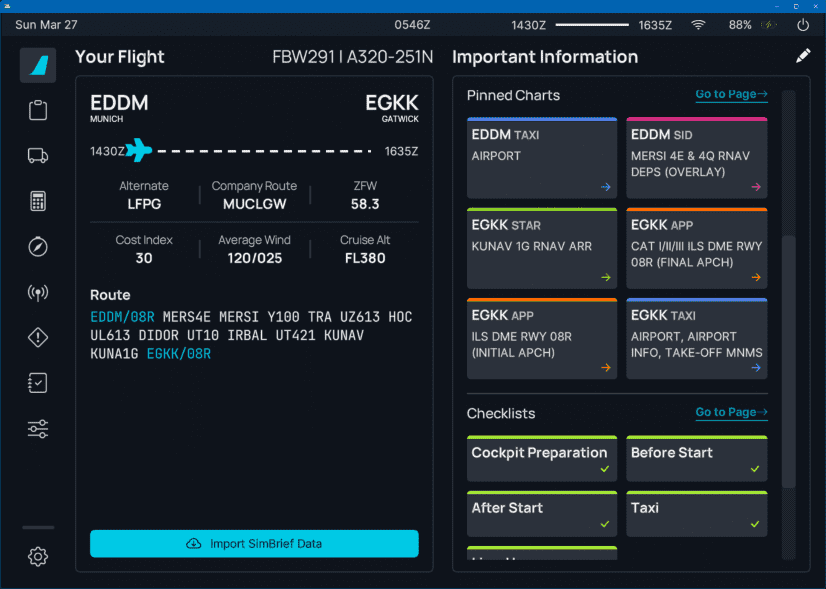
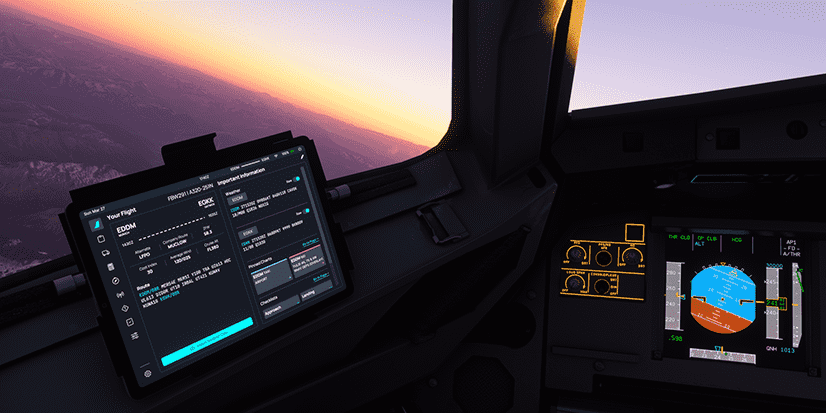
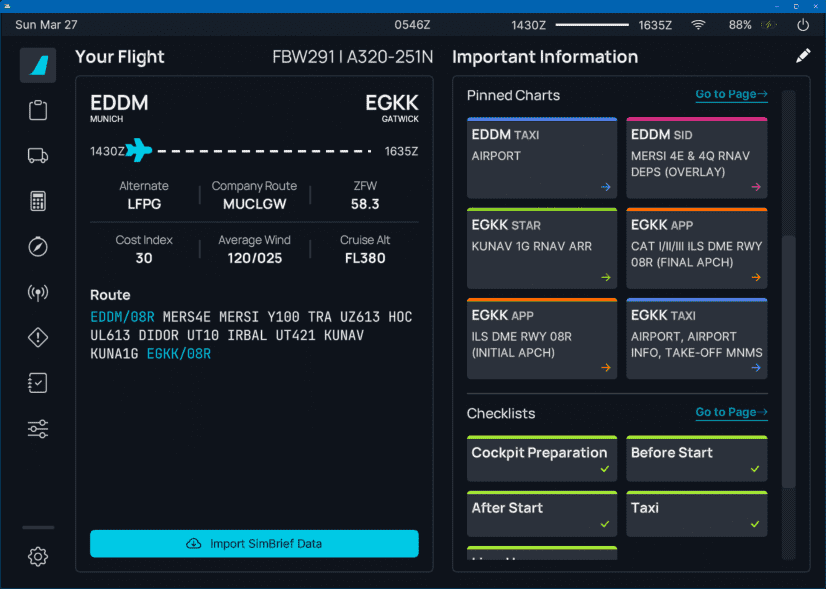
    FlyByWire has released flyPadOS 3 into the Development version of their famous A32NX mod for Microsoft Flight Simulator. The flyPadOS has been overhauled with new improvements thanks to feedback from the team and community and aims to provide a more user-friendly, efficient, and consistent experience when using the flyPad. The following information is now on the new dashboard:

    • Shortcuts to take you to where you want to go.
    • Flight status and general information including your planned route.
    • METAR information - customizable with your choice of ICAO (displayed raw or with simple symbology).
    • Active and upcoming checklists.
    • Pinned Navigraph charts.
    • Active failure management.

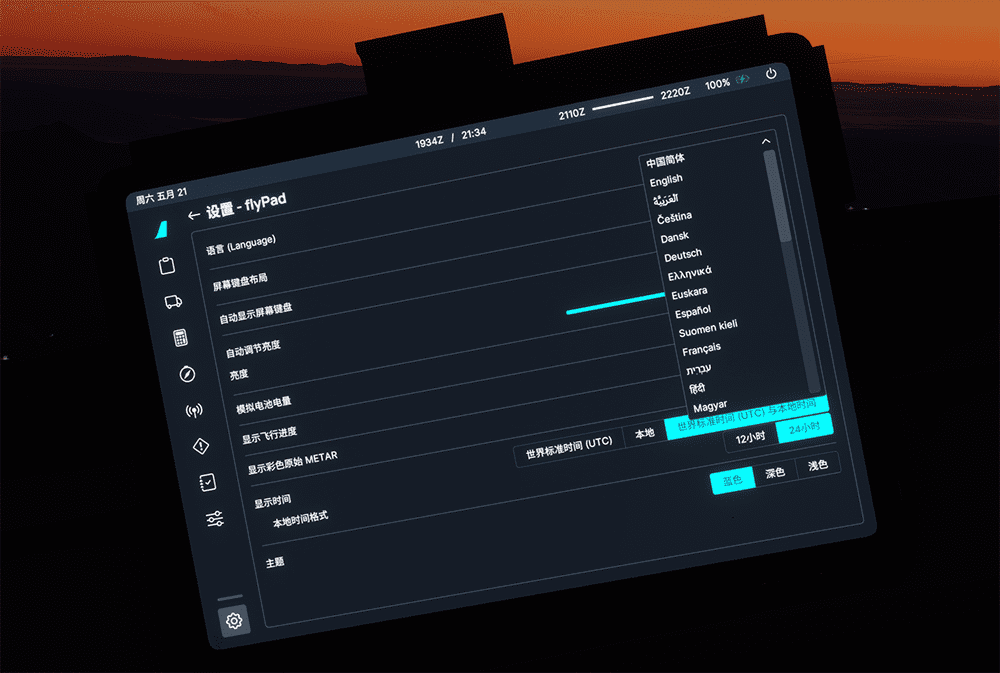
    This new focus on user experience is present throughout flyPadOS, enabling pilots to quickly peruse their OFP, access calculations/charts, seamlessly download simBrief OFP, and integrate easily with online networks such as VATSIM or IVAO. The new version does also offer support for over 30 languages. This would not have been possible without the help of over 200 contributors, and those who have offered to review every corner of the EFB for accuracy. "We cannot stress enough how thankful we are", the FlyByWire team states in their latest NOTAM.
    Integrated Pushback, Performance Calculation and Checklists

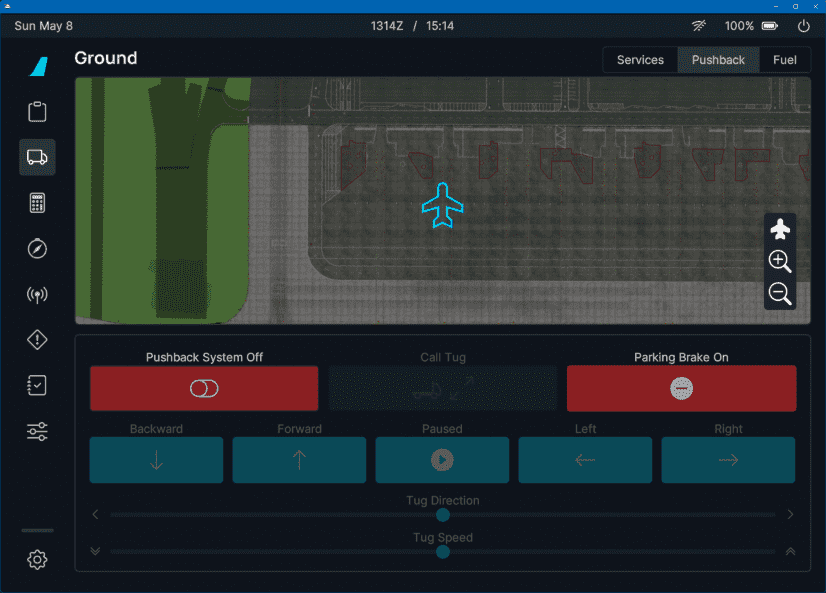
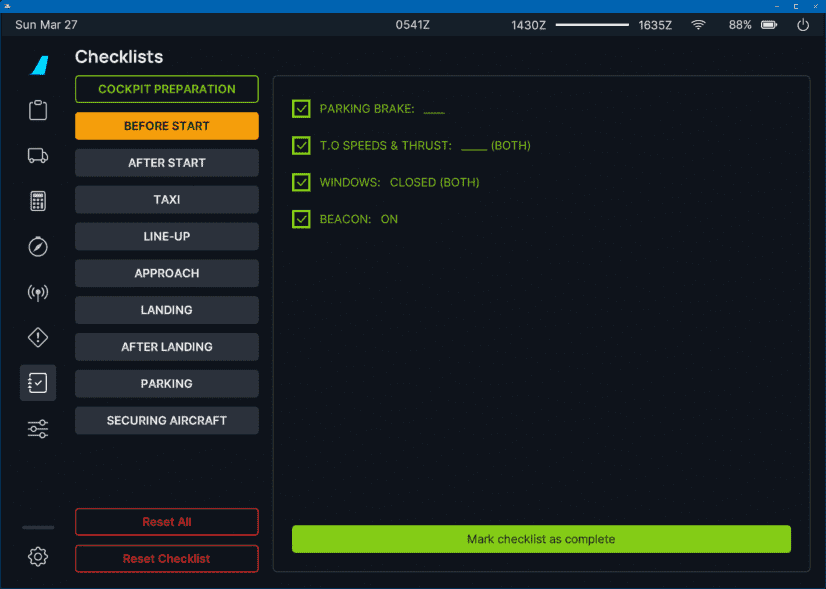
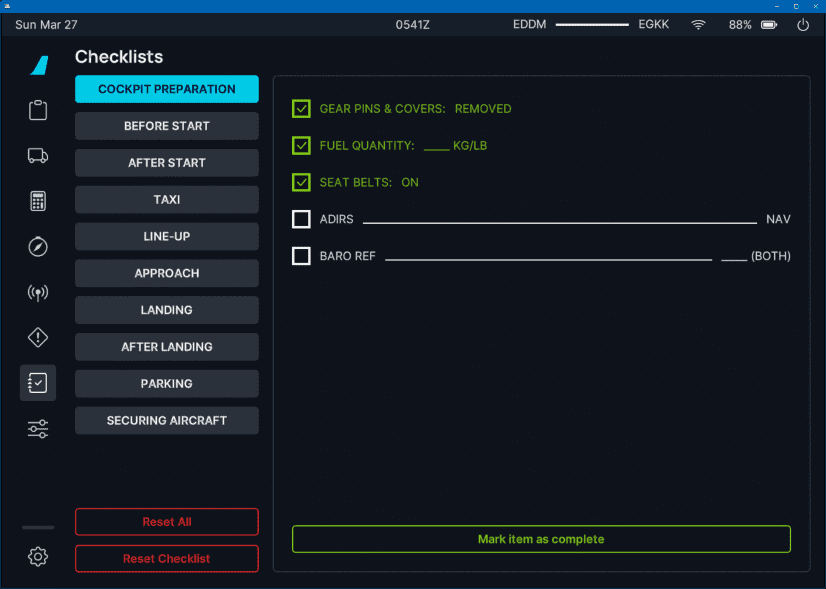
    The new integrated Pushback feature makes it easier to see your turn radius and projected path with the new onboard map. This gives pilots accurate and precise turns during pushback without having to switch to an external view. The new update does also include several features for performance calculation and even interactive "Smart" Checklists. The dashboard on the EFB also intelligently recommends the correct checklist based on the current phase of flight you are in. The checklists page will also display what checklist you currently have active, and what checklists you are yet to complete.
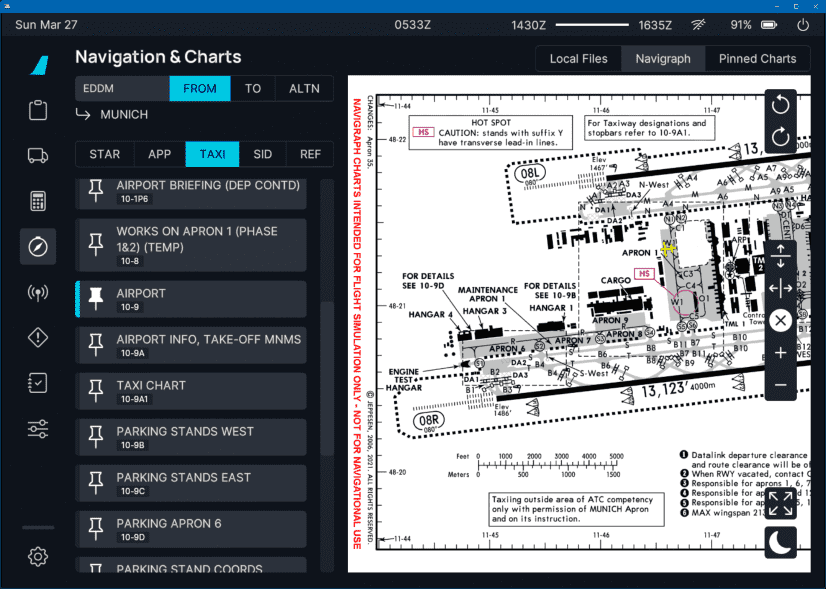
    Every flight requires meticulous planning. Charts and procedures are now easily accessible through the new Navigraph charts integration. This way there is no fumbling around with the MSFS toolbar and overlays, which may ruin your immersion. The new integration now supports the aircraft position symbol for better visualization of where your aircraft is on a particular chart.
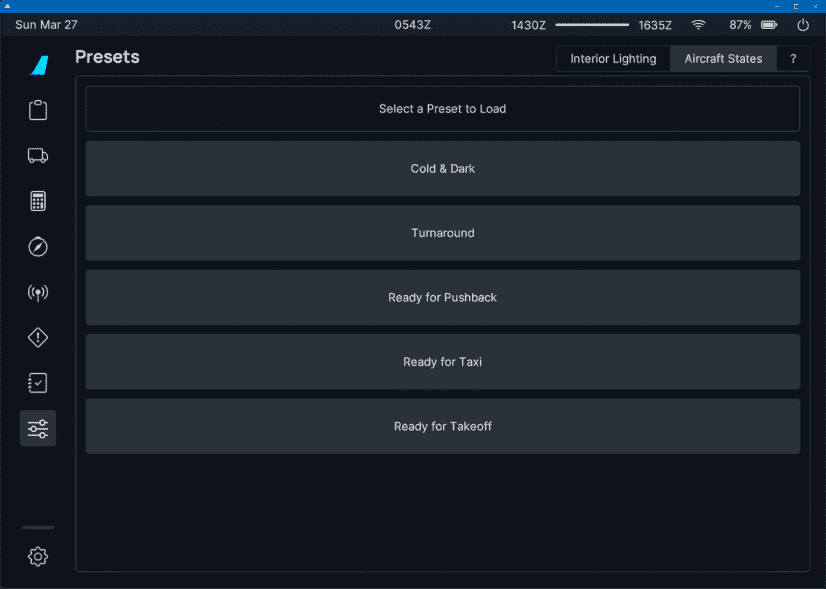
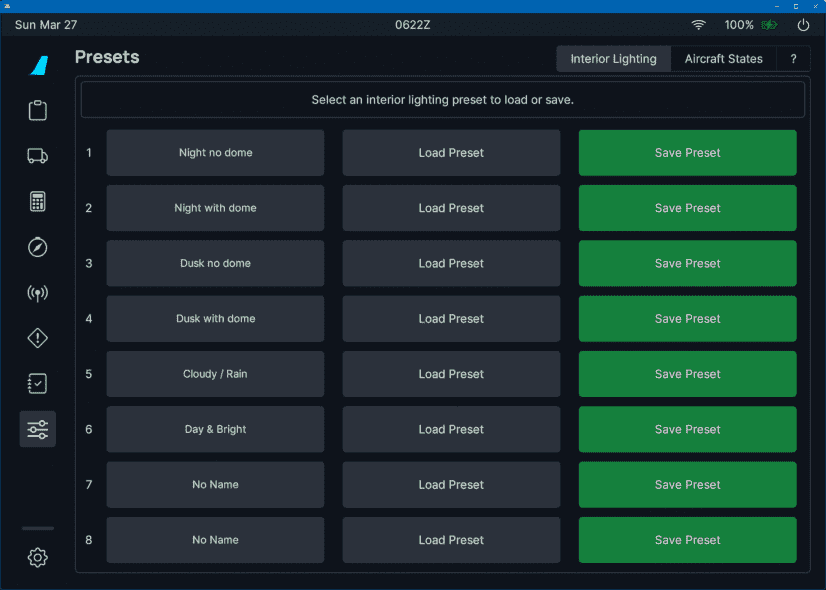
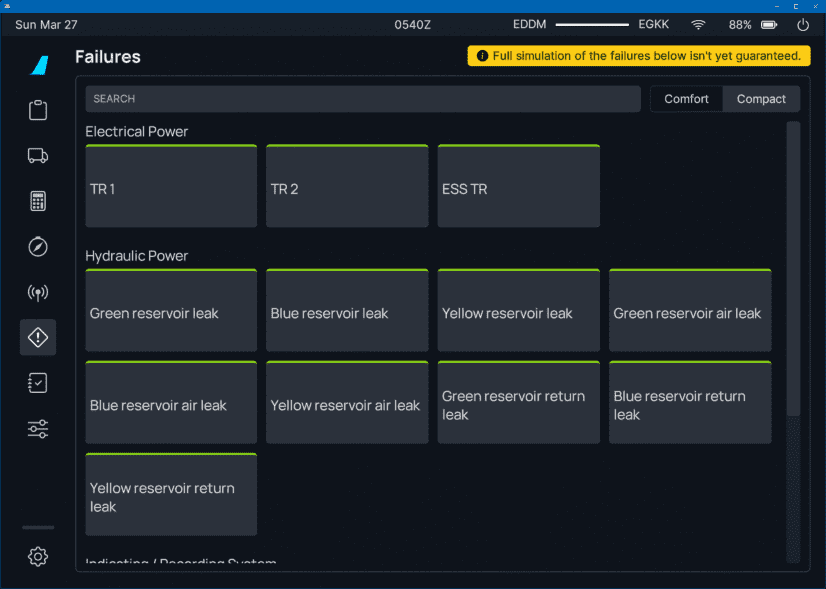
    Further improvements have been made to the Failure Simulation dashboard, while the new online ATC page gives you a simplified overview of what frequencies are online and in range during your flight. A new presets page for lightning allows you to save up to 8 custom presets, name them, and load them up instantaneously at any point during your flight. For those interested in having an AI co-pilot, a virtual co-pilot will sequentially perform necessary setup tasks as in real life - from ADIRs alignment to engine starts.
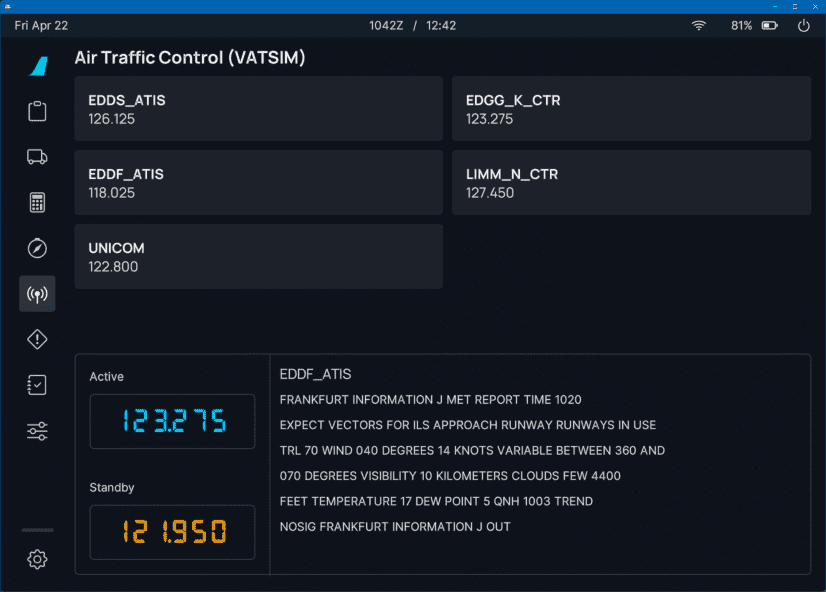
    This update is now available for free in the development version of the A32NX and more features will follow. Please note that when using the FlyByWire Stable version these features may not be available. The update can be downloaded and installed as usual using the A32NX installer. The FlyByWire team has also provided a fantastic explanation and guide to all the new features and how to use them properly in their documentation. To learn more about the new features, you should check it out, and read their NOTAM as well.

    Comments

    almost 4 years ago

    fenix better keep up

    almost 4 years ago

    cant keep up if you are already far ahead ;)

    almost 4 years ago

    I must agree that Fenix has to make some upgrades over the time because FBW is a very good addon and it will be better over time

    almost 4 years ago

    They are different planes. Stop comparing

    almost 4 years ago

    flyPadOS 3 very beautiful, But return the map of the area...Well, or I didn't find her

    almost 4 years ago

    I'm curious what's the difference beside the fact that this is free and Fenix is $60? I was enjoying FBW until Fenix came out bought first minute I saw it. I thought would be a huge difference but what a surprise, which a lot of other people are expecting the same thing because of how they promote it. I'm sticking with the PMDG 737 at the moment. I'm sure it will improve overtime but I just feel like the Fenix is a polish from FBW, Just more detail.

    almost 4 years ago

    Fenix is FAR more realistic. Only people who don't know anything about the A320 think the FBW and Fenix aircraft are similar.

    almost 4 years ago

    of course it have to be "far" more realistic if it cost money... Is just laggy at the moment even on a high end system and small bugs that not suppose to have at launch for a paid aircraft. FBW developer are work for free so they do the best they can and is amazing of what they have done so you right we can't compare with FENIX.

    almost 4 years ago

    One is an A320 whereas the other is an A320NEO? Quite a difference

    almost 4 years ago

    A takeoff performance calculator would have been nice though !!

    almost 4 years ago

    Thank you for your job ! amazing and freeware ..

    almost 4 years ago

    Its a shame u couldnt run this on an ipad stand alone wonder if Maui will help them with that

    almost 4 years ago

    Laggy?? in your dream bro, very soft and smooth ride with my old 9700K and my 1080ti @4KCheck your computer or what is inside your community.

    almost 4 years ago

    For a free plane I'm quite amazed by the level of the work they made!

    almost 4 years ago

    The FBW is the A320neo, which has a different software version, newer engines, and sharklets installed on all aircraft. It is a different plane from the A320ceo, which is what Fenix has simulated. The Fenix has older engines, models an older software version, and comes with only the CFM engines (for now) and the older wing fence on the wings instead of sharklets. The only thing that is the same on both aircraft is the fuselage, beyond that there are changes.

    almost 4 years ago

    For the moment, the big and main difference between the A320 FBW and that of Fenix, apart from the cosmetic aspects and the generation of Airbus, is the absence of VNAV modes and RNAV approaches for the FBW A320 neo.For the moment... They are working hard to implement them. I bought the Fenix ​​but donated $US 50 to FBW to thank and encourage them.Programming the FMCU on the A 320 from Fenix ​​is ​​amazing ( But it is sorely lacking the MFCU server of FBW) . I downloaded the new FM rev 1 Pilot's guide from Thales ( A319 to A321) and use it (700 pages anyway). it's almost the same thing and we can wonder if people of Fenix ​​didn't have access to the real source code.... I also recommend the A318/A319/A320/A321 flight Crew Training manual from Airbus industrie (500 pages) , and A319/A320/A321 Flightdeck and systems briefing for pilots, very very useful. Just do a google search.My greatest expectation: the A350! and also the ATR 42 or/and 72. Being from Toulouse, I don't fly on Boeing 737 "trimming machines" ( In manual flight duty trimming with one hand on the Airbus is considered as very degraded conditions, occurring on a severe system failure ....) . A kid with 10 mn training can start an Airbus, engines included from cold and dark state. In real life we ​​can also imagine that flying on an aircraft with as many automation and safety functions, such an intuitive and practical cockpit can prove crucial in the event of a tense situation. Sorry for my chauvinism. LOL and keep cool 😁 😁 . Bravo and thanks to FBW and Fenix, what a fabulous job ! And also to Asobo, meteoblue, and all those who offer us free liveries and fabulous Msfs utilities.

    almost 4 years ago

    This is totally badazz. We've been needing this for a long time.

    almost 4 years ago

    MCDU can auto calculate。设置好了起飞跑道后,MCDU可以自动计算起飞参数

    almost 4 years ago

    where is the interactive map?

    almost 4 years ago

    whats your setting? playing vr?

    almost 4 years ago

    I wasn't talking about that, I meant the performance on graphic when you play a simulation. Is not a piece of crab is just not what I expect from a paid plane. For example I get frame drops when I'm looking around in VR on the a32nx and I thought since Fenix is going to be almost similar to PMDG because when the 737(again not compare aircarft) is out and I try it. Performance was very impressive that I thought I would just stop flying the FBW wait for the Fenix and to my surprise performance was the same as FBW but I must say that is the Fenix is beautiful. I'm not a "fan boy" to any company or aircraft. I just speaking from my experience. My system is not the beast but is good enough is I9 10900k with 3080 Ti. But thanks for your explanation and time.

    almost 4 years ago

    We are currently working on a way to stream ANY instrument found in the cockpit onto a device. Hopefully we can get this into the hands of users soon 😉

    almost 4 years ago

    Any updates on the Airbus 380? I hope flybywire didn't abandon it.

    almost 4 years ago

    Note VNAV is present in the experimental version of the A32NX

    almost 4 years ago

    good job,and any news about A380?I have been looking forward to it for a long time 😘

    almost 4 years ago

    The job FBW does is amazing, thanks for that! However, in my opinion it seems that it will take some time until the flightpaths will be rendered correctly having demanding environments. I saw that still some of the Arinc 424 leg types are still under development, however I don't know how the course lines are calculated. I've tested the experimental version when flying recently to Lukla (VQPR) and what I saw on my MFD was quite a mess. It had been rather an assembly of different, not connected curves than something looking like Spline functions (or connected polygons). In case you want to reproduce it, try BOGO1A (STAR) and RNAVZ-15 approach. Needless to say that the plane tried correctly to meet the waypoints under LNAV regime, Kudos for that! ❤️ Well, fo my own orientation Little Navmap was really helpful. 😉 Nonetheless, one thing that didn't work as nice as in the PMDG B737 had been the path between PR777 (end of STAR) and the IF. The reason might be the need to hold a (calculated?) maximum speed for proper meandering that requires manual action when flying the FBW "bus". The course of the A320 became much better when flying really slow (<= 150kn) and even the shown course line appearance of the MFD became better. The landing as such is a different animal. I know that the vertical RNAV path for Lukla is rather a recommendation as it ends roughly 3000ft above the the runway (at PR808) and you need to dive quicker than the aircraft really wants after passing PR815 at 13800ft, even if being alread completely configured for landing (landing speed <=145kn, max. flaps, gear down) and additionally fully extended airbrakes before starting the steep descent. Nonetheless, the given waypoints would lead you safely through the valleys. The vertical path had been quite the same struggle in both planes even if I got the impression in the past that BOEING's planes are tending to be more "slippery" when speed reductions are required (I might be wrong).Hey, it's neither criticism nor meant as a rant. I just want to report an observation as I think that Lukla isn't a destination that is in use ever day. I love the FBW A320 even as it is as "normal" flights can be done without disturbing restrictions.

    almost 4 years ago

    Those observations are very interesting. They somewhat resemble my own thoughts about the A320 (both Fenix and FBW) and the PMDG 737-700. The navigation on the Boeing seems somewhat better in terms of path finding and the nav display functionality seems slightly more advanced. The automated flight management, however, seems light years ahead in A320 and it definitely feels more reliable on the approach. Overall I find the A320 more fun to fly; the Fenix if the flight plan is likely to be more complex or the FBW for variety and better performance in simple hops.

    almost 4 years ago

    There is one other observation that might be a bigger difference even it isn't that much relevant for FBW's Airbus, but likely for its big (technical) follower, Headwind's A339neo. I compared flights from FACT to NZAA and it seems that the course lines drawn by each model (and each mod so far) that can make the distance in MSFS are not what can be seen in FSX and PMDG's birds. No matter which PMDG bird I took, the old Queen (747-400) or the T7, each course close to the South Pole was drawn just straight as it should be in RL. It seems to me that MSFS tries to do it with a Mercator projection. Actual, I know the math behind that and the resulting problems and I wouldn't be keen solving the visual appearance myself. 😛

    almost 4 years ago

    THE MOD IS FREE DUDE HAVE SOME RESPECT

    almost 4 years ago

    I bought the Fenix but as I don't own a set of rudder pedals at the moment, it is really difficult to control on landings and takeoffs. Fortunately in the FBW I can fly with the 'auto-rudder' assist, so I'll be sticking with that for now. Thank you FBW team!! :))

    almost 4 years ago

    Simply outstanding. What a talented group. 👍 👍

    almost 4 years ago

    Complement them on the work and effort they put into it. For me it does too much though. It goes beyond improvement and makes additions which only makes the aircraft unnecessarily cumbersome with far too many 'features' in the added tablet. The requirement to refuel from the tablet instead of the build in interface is a real killer especially as that conflicts with the career add-on I used. Don't get me wrong, very happy for those that this is exactly what they want! But wish there was more options but wish there was others that focused just on the aircraft.

    almost 4 years ago

    Is it? Are you a A320 pilot? If so, how in any discernible way is the current virtual version of the fenix more realistic than the FBW, with the exception of the items still in development with the FBW like fully functional VNAV? I am sure your response will be 'it models 50,000,000,000,000 under the hud elements down to how the dust settles on the passenger seat' and my response is ok, but how does having a perfectly simulated Air con system, or perfectly simulated hydraulic system actual change anything in your siming experience? The answer is, it doesn't....'oh but but but, the when I press a button it takes 3.56422 seconds for it to change the actuator on the display because it perfectly models how the actuator moves'....ok but for your siming experience the same thing can be achieved by coding that display to change 3.5 seconds after you press the button with no need to model any of the underlying system and you'd know no different. The fenix is awesome, just 90% of the underlying modeling doesn't add anything to the experience of someone sat at a keyboard with a monitor.

    almost 4 years ago

    “With the exception of items still in development” is a sorry way to make your point. In development or not, at the time of writing, Fenix has a fully simulated managed altitude system and FBW does not.
    Saying that fully simulated underlying systems is useless shows that YOU don’t know anything about them - that’s it. Pilots monitor the aircraft’s parameters throughout the flight, so yes, they do matter. Otherwise, why would the pilots have access to those synoptic pages?
    A fully simulated hydraulic systems means that accumulated pressure is lost overnight or when the park brake is cycled multiple times at the gate. If all of that pressure is gone, now you have no brakes. Now something needs to be done to regain that pressure. There are multiple ways to do so but there’s a specific nuanced way. Instead of turning on the pumps, you actuate the cargo door - which pressurizes the specific hydraulic system briefly. Now you’ve regained some of that pressure.
    When you put the engine start switch to ignition, the packs automatically turn off. But if you sit for long enough without starting the engines, the packs automatically come back on.
    If you forget to turn on the fuel pumps at engine start (which you shouldn’t because it should be covered in the before start checklist), you get an ECAM message letting you know. BUT the engine still starts, because the gravity fed system means you don’t need the pumps on. That’s not simulated in the FBW. The aircraft has multiple levels of redundancy upon redundancy.
    Or, what if you want to simulate dispatching the aircraft with MEL items? i.e. if one of the bleeds are inoperative or fails, there’s an additional procedure to perform. More strain is put on the system. Now the idle speeds and fuel flow of the engines have increased. Now you’re at a higher risk of hot brakes on taxi, so you need to be careful with taxiing. You also have to reassess your fuel situation.
    With a fully simulated bleeds system, OAT matters. If the pre coolers cannot keep up with the optimal 200 C air, and the WAI are on in-flight, it’s a big enough of a deal that an ECAM warning will appear.
    The secondary flight plan is simulated in the Fenix. If you don’t know the significance of that, that’s a you problem.
    - Working windows and window shades- Working tray table- Working oxygen test- All circuit breakers simulated
    Fenix simulates nav accuracy and degradation, which can be monitored on the MCDU - which pilots do monitor. Certain procedures are restricted if accuracy is low. Degradation happens under certain conditions, and there are steps to regain high nav accuracy.
    FAILURESYou can only properly simulate failures if the underlying systems themselves are simulated. There’s a difference between a faulty display and a faulty sensor i.e. a faulty sensor measuring a false high temperature and how the aircraft’s multiple systems will react to that. Not only that, the many computers monitoring and managing each system can fail as well, yes that’s simulated. Each element has an impact because the systems are interconnected in different and nuanced ways. Failures are properly simulated in the Fenix. Circuit breakers can pop, and they may or may not be monitored by the ECAM. The way the aircraft behaves in failures is different and impactful to the flight i.e. what information to display and what not to display. Which systems does the aircraft consider essential? Minor failures happen in real-life all the time. At certain hydraulic configurations, only part of the flight control surfaces would work. That changes the way the aircraft flies and lands. What about the different “laws” of flight? There are multiple computers actuating managing and monitoring the flight controls system, and they can fail. You can lose certain protections, or certain control surfaces.
    You cannot argue that the Fenix is not more realistic than the FBW, or that the “under the hood” systems simulation makes no impact. Go watch Fenix’s various YouTube videos showcasing the systems and how they interact with each other, or watch the various videos from 320 pilots covering the Fenix.
    So lets correct that statement: “90% of the underlying modeling doesn't add anything to the experience of someone sat at a keyboard with a monitor if that someone has little knowledge regarding the systems and it’s interactions with the various other systems. Or, if that someone flies only under perfectly ideal flight conditions which doesn’t reflect reality at all. Or, if that someone cares little about simulation and realism in a simulator.“

    almost 4 years ago

    Do you guys happen to know if the terrain map will be developed and the most important TOD and TOC indicators?

    almost 4 years ago

    i have updated it but still not have this? why?

    almost 4 years ago

    How do we get this? Must we Re-Install the Plane?

    almost 4 years ago

    Answered my Own question, Sorry for that.